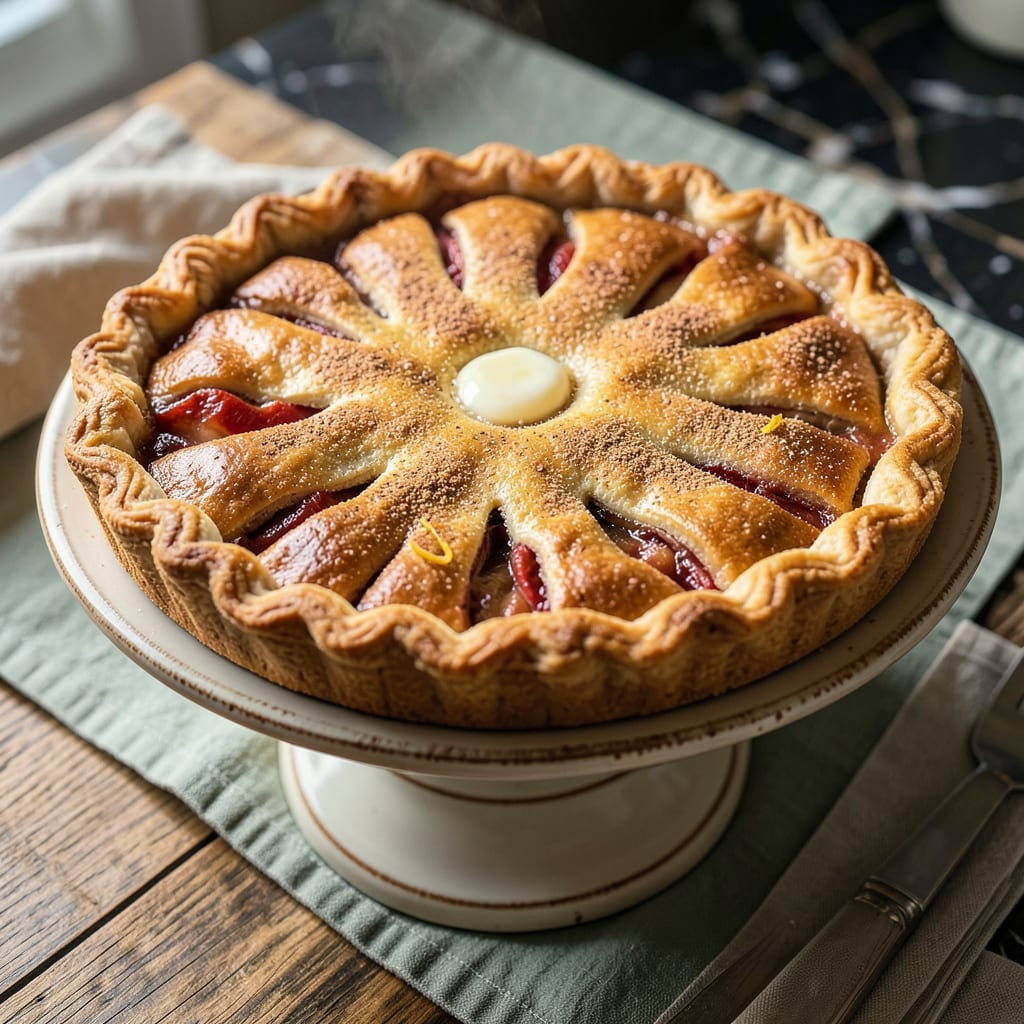
Most pies need 2–4 hours to cool completely at room temperature. Fruit pies often require the full 4 hours to set properly, while custard or cream pies may need refrigeration after 1–2 hours of cooling.
Patience is your secret weapon for that perfect slice. 🔥 The cooling process isn’t just about temperature—it’s about giving fillings time to thicken and crusts time to crisp. I’ve seen too many beautiful pies turn to mush because someone couldn’t wait for the filling to fully set. Fruit pies need that extra time for the juices to gel, while custard pies risk weeping if moved too soon.
Think of it like this: the last hour of cooling is when the magic happens. That’s when the filling transforms from liquid to that ideal sliceable consistency, and the crust reaches its peak texture. Skipping this step is like pulling cookies out of the oven too early—they might look done, but they won’t deliver that perfect experience.
💡 In This Article
- Why Proper Pie Cooling Time Matters for Texture
- Best Cooling Methods for Different Pie Types
Why Proper Pie Cooling Time Matters for Texture
Here’s what’s actually happening during those critical cooling hours: fruit pie fillings rely on pectin—a natural thickener in fruits—to transform from bubbling liquid into a sliceable gel. When hot, pectin molecules float freely, but as the pie cools below 140°F, they form a mesh network that traps juices.
🔥 This process takes 3-4 hours for most fruit pies because the center cools last, and disturbing it prematurely breaks those delicate pectin bonds.
Custard and cream pies operate on a different science. Their fillings contain eggs or starches that set as they cool—typically between 160-180°F—but need refrigeration to fully stabilize. The proteins in eggs coagulate during baking, but they don’t reach maximum firmness until chilled to 40°F or below.
Skipping this step means your pumpkin or chocolate pie might slice like pudding rather than holding clean edges. ✨
The crust tells its own story during cooling. A just-baked crust is soft from steam and butter melting. As it cools, moisture evaporates and the gluten structure firms up—this is what gives you that satisfying crunch. Cutting too soon traps steam inside, creating that dreaded “soggy bottom” effect.
I’ve found that 2 hours is the minimum for crust integrity, with flakier pastry (like pâte brisée) needing the full 4 hours to reach peak crispness. 💫
Temperature gradients matter more than you think. The outer inch of pie cools fastest, while the center can stay warm for hours. This is why fruit pies often “weep” when sliced early—the center filling hasn’t thickened while the edges have.
Custard pies face the opposite problem: their edges set first, so refrigerating too soon can create a “skin” on top while the center remains undercooked. The solution? Let all pies rest at room temperature first—1-2 hours for custards, 3-4 hours for fruit. ⚡
Consider the sugar factor too. Fruit pies with high sugar content (like pecan) need extra cooling time because sugar absorbs moisture as it cools, which affects texture. A pecan pie sliced after 2 hours will ooze syrup, but after 4 hours, those sugars crystallize slightly, giving you clean slices with that perfect chewy-crust contrast.
This is why professional bakers often cool sugar-heavy pies overnight before serving. 🌟
Even the type of fruit changes the equation. Berries release juices quickly and set faster (about 3 hours), while apples and stone fruits need the full 4 hours because their cell structures break down more slowly.
The same pie made with frozen berries versus fresh will have different cooling requirements—frozen fruit releases more liquid during baking, requiring additional setting time. This is why recipe timing is always an estimate, not an absolute. 💛
Pro tip: The “jiggle test” works for custards, but fruit pies need the “knife test.” Insert a thin knife into the center—if it comes out clean with no liquid clinging, your filling has set. For double-crust pies, listen for the crust to make a hollow sound when tapped.
These sensory cues are more reliable than any clock when determining true doneness. 🎯

Trained in classic French technique but raised on slow-cooked ribs and spicy rubs, she blends culinary skill with smoke and soul.
- Recipe for Boneless Pork Chops in Cast Iron Skillet: Sear and Baste to Juicy Perfection - October 3, 2026
- Recipe for Boneless Cross Rib Roast: Slow-Roasted Beef with Herb Crust - October 3, 2026
- Hamburgers in Sauce Recipe Crock Pot: Slow-Cooked Savory Delight - October 3, 2026