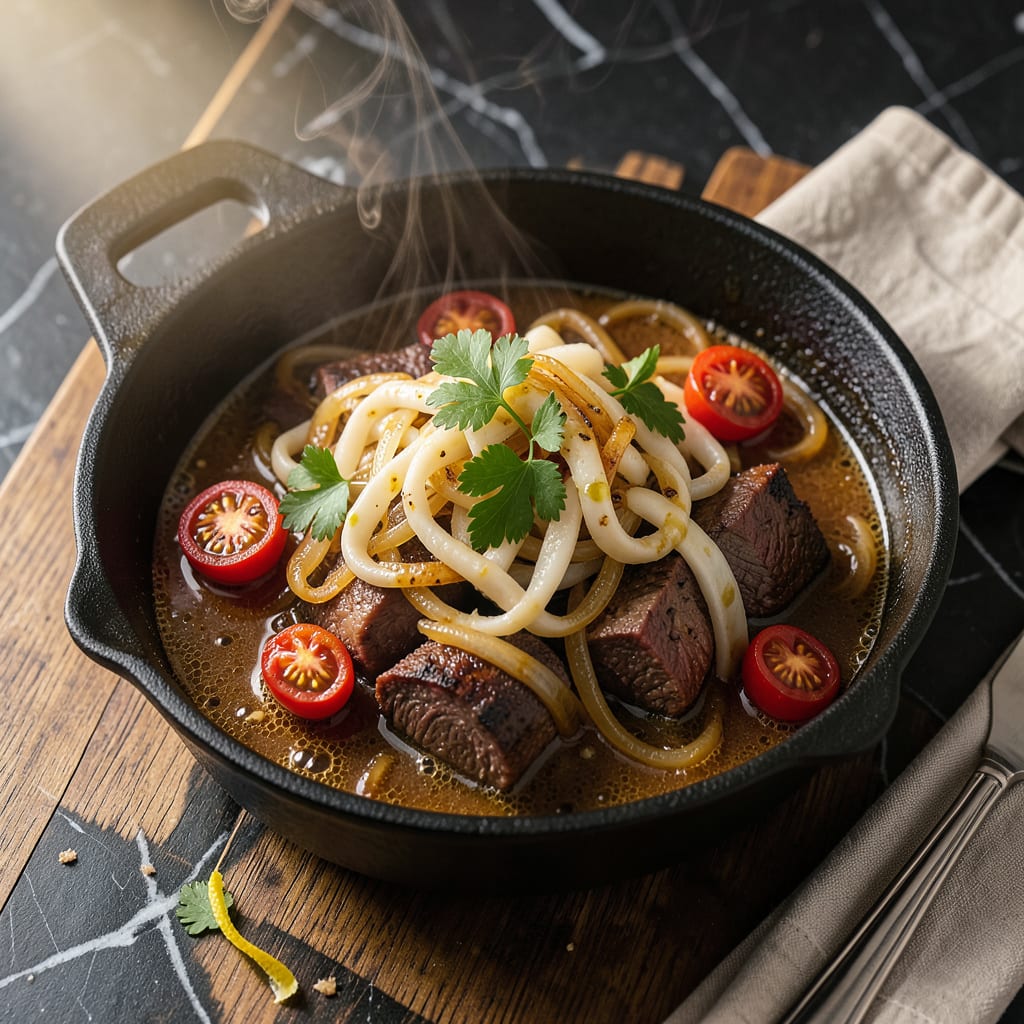
Beef tripe typically requires 1.5 to 3 hours of simmering for tender results, depending on preparation method. Honeycomb tripe cooks faster (1.5-2 hours), while plain or book tripe may need up to 3 hours for ideal texture.
As a pitmaster who’s worked with tough cuts for years, I can tell you that tripe’s cooking time isn’t just about the clock—it’s about transforming that chewy texture into something melt-in-your-mouth tender. 🔥 The secret lies in the slow breakdown of collagen, which happens at a steady simmer between 180-200°F. Honeycomb tripe’s natural ridges actually help it cook faster than the denser plain tripe, which needs that extra time to soften completely.
What many home cooks overlook is how preparation affects timing. A quick 10-minute blanch in salted water before simmering can cut your cooking time by up to 30 minutes. And here’s my pro tip: adding a splash of vinegar to your cooking liquid helps tenderize while keeping the tripe’s distinctive texture intact. ✨
💡 In This Article
- Factors Affecting Beef Tripe Cooking Duration
- Step-by-Step Guide for Perfectly Cooked Beef Tripe
Factors Affecting Beef Tripe Cooking Duration
The cooking time difference between honeycomb and plain tripe comes down to structural biology. Honeycomb tripe’s accordion-like ridges create more surface area, allowing heat and liquid to penetrate faster. This unique texture means it breaks down in 90-120 minutes of simmering. Meanwhile, plain tripe’s denser, flatter structure requires 2.5-3 hours for the same tenderizing effect.
The connective tissue in both types needs prolonged heat to convert into gelatin, but the honeycomb’s physical structure gives it a head start. 🔥
Thickness plays a surprisingly large role in cooking duration. A 1-inch thick piece of book tripe might need the full 3 hours, while thinner slices (about ½-inch) could be ready in 2 hours. Pre-boiling for 15-20 minutes before the main cook can reduce total time by up to 45 minutes by jumpstarting the collagen breakdown.
I’ve found that maintaining a steady 185-195°F simmer is ideal—any hotter and the exterior can become mushy before the center tenderizes. ✨
The acidity level of your cooking liquid dramatically impacts timing. A broth with pH 5.5-6.0 (like tomato-based or vinegar-added liquids) can shorten cooking by 30-45 minutes by accelerating collagen hydrolysis. However, too much acid (below pH 5.0) can make the tripe tough by causing proteins to coagulate prematurely.
My go-to ratio is 1 tablespoon vinegar per quart of broth—enough to tenderize without over-acidifying. 💫
Here’s what most recipes don’t tell you: the type of heat matters. A rolling boil creates uneven cooking, while a gentle simmer allows for consistent collagen conversion. I use a diffused flame or heat diffuser to maintain that perfect 185°F range.
And don’t overlook the resting period—letting tripe sit in its cooking liquid for 20-30 minutes after heat removal allows residual heat to finish the tenderizing process without overcooking. ⚡
Consider these key factors when planning:
- Tripe type: Honeycomb (1.5-2 hours) vs plain (2.5-3 hours)
- Thickness: 1-inch pieces take 30% longer than ½-inch
- Pre-treatment: Blanching reduces total time by 25-30%
- Liquid acidity: pH 5.5-6.0 optimizes tenderizing without toughening
The magic happens during that 160-180°F range where collagen melts into gelatin. This transformation is what gives properly cooked tripe its signature silky-yet-firm texture. Undercooked tripe feels rubbery because the collagen fibers haven’t fully converted, while overcooked becomes mushy as the gelatin network breaks down.
That perfect window is why monitoring with a fork (it should slide in with slight resistance) is more reliable than strict timing. 🌟

Trained in classic French technique but raised on slow-cooked ribs and spicy rubs, she blends culinary skill with smoke and soul.
- Recipe for Boneless Cross Rib Roast: Slow-Roasted Beef with Herb Crust - October 3, 2026
- Hamburgers in Sauce Recipe Crock Pot: Slow-Cooked Savory Delight - October 3, 2026
- Sanjeev Kapoor Egg Biryani Recipe: Fragrant Spiced Rice With Boiled Eggs - October 3, 2026