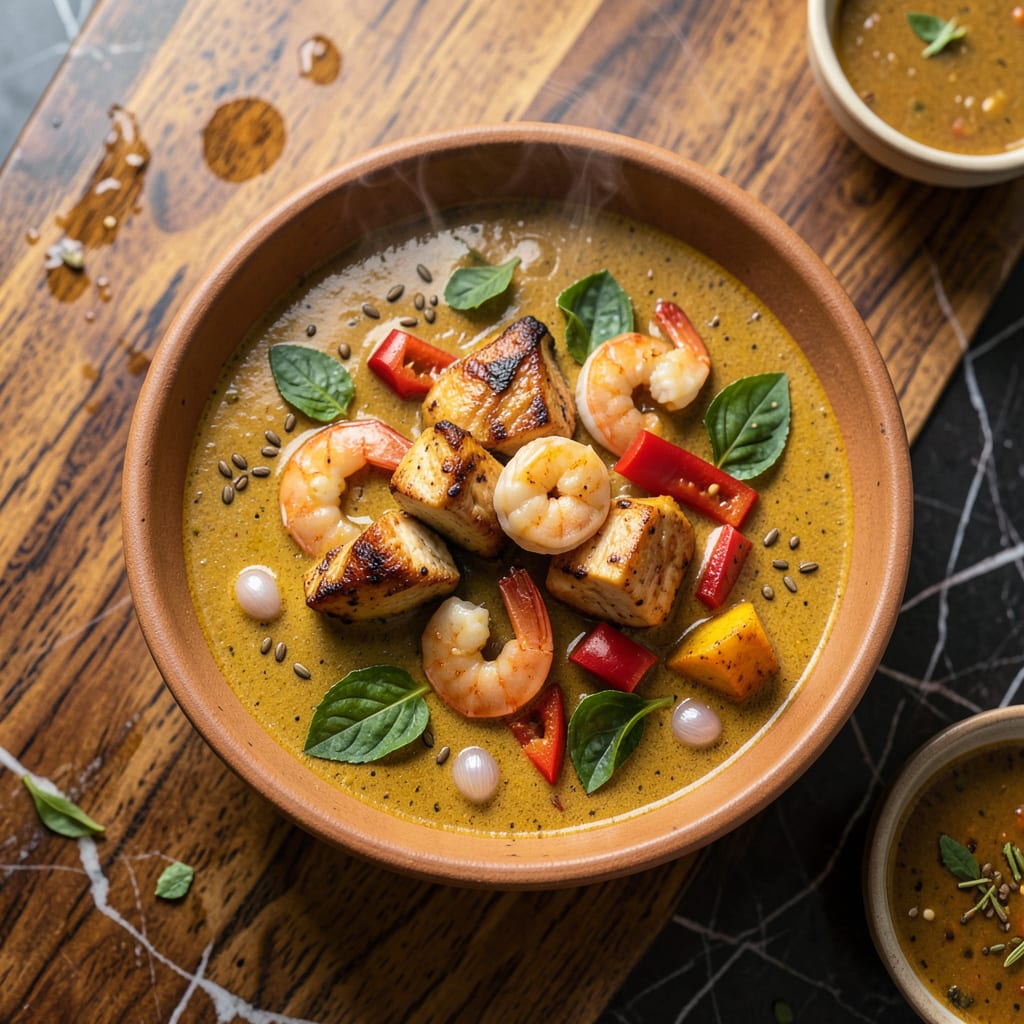
Curry should never sit unrefrigerated for more than 2 hours (1 hour if above 90°F). Beyond this, bacterial growth like Bacillus cereus—which causes food poisoning—accelerates rapidly, making it unsafe to eat.
This isn’t just about flavor loss—it’s a food safety red flag. 🔥 The moment curry enters that 40°F–140°F danger zone, bacteria like Clostridium perfringens start multiplying exponentially. I’ve seen too many cases where people assume “it smells fine” means it’s safe, but invisible pathogens don’t always announce themselves with odors.
What makes curry particularly risky is its complex composition. The rice, dairy, or coconut milk in many recipes create an ideal breeding ground for microbes. Even if your kitchen feels cool, ambient temperatures can deceive you—especially in humid climates where bacterial growth speeds up even faster.
💡 In This Article
- Why Unrefrigerated Curry Becomes Dangerous Quickly
- Safe Handling and Storage Tips for Leftover Curry
Why Unrefrigerated Curry Becomes Dangerous Quickly
The moment curry sits at room temperature, it enters what food scientists call the temperature danger zone (between 40°F–140°F). In this range, bacteria like Bacillus cereus and Clostridium perfringens double their numbers every 20-30 minutes. These aren’t just ordinary microbes—they produce heat-resistant spores that survive cooking and thrive in the moist, nutrient-rich environment of curry.
🔥
Ingredients like rice, coconut milk, or yogurt make curry particularly vulnerable. Cooked rice, for example, contains spores that can produce toxins even after reheating. The moisture content (typically 60-70% in curries) creates ideal conditions for bacterial growth, while proteins from meat or legumes provide ample food for microbes.
A study from the Journal of Food Protection found that B. cereus levels in rice dishes can become dangerous within just 2 hours at room temperature.
Humidity and ambient temperature play critical roles too. In a warm kitchen (75°F+), bacterial growth accelerates by 30-50% compared to cooler environments. The spices in curry might mask early spoilage signs, but that doesn’t mean the bacteria aren’t multiplying.
I’ve seen cases where curry left out for 3 hours developed enough toxins to cause vomiting within 6-12 hours of consumption. ✨
What’s particularly insidious is how some bacteria produce heat-stable toxins. Even if you reheat the curry to 165°F, these toxins remain active and can cause illness. The USDA confirms that B. cereus toxins can withstand boiling temperatures, making prevention through proper storage the only reliable defense against foodborne illness.
The texture changes you might notice—like separation of oils or thickening of sauces—aren’t just culinary issues. They indicate protein breakdown and microbial activity. While not all bacterial growth is immediately dangerous, the risk increases exponentially after that 2-hour mark, especially in dishes containing multiple protein sources like chicken, shrimp, or lentils. 💫
Consider this: A single bacterium can multiply to over 2 million in just 7 hours at room temperature. That’s why professional kitchens follow strict time-temperature control protocols—because what you can’t see (or smell) can indeed hurt you. The golden rule remains: when in doubt about how long it’s been out, throw it out.

Trained in classic French technique but raised on slow-cooked ribs and spicy rubs, she blends culinary skill with smoke and soul.
- Recipe for Boneless Pork Chops in Cast Iron Skillet: Sear and Baste to Juicy Perfection - October 3, 2026
- Recipe for Boneless Cross Rib Roast: Slow-Roasted Beef with Herb Crust - October 3, 2026
- Hamburgers in Sauce Recipe Crock Pot: Slow-Cooked Savory Delight - October 3, 2026