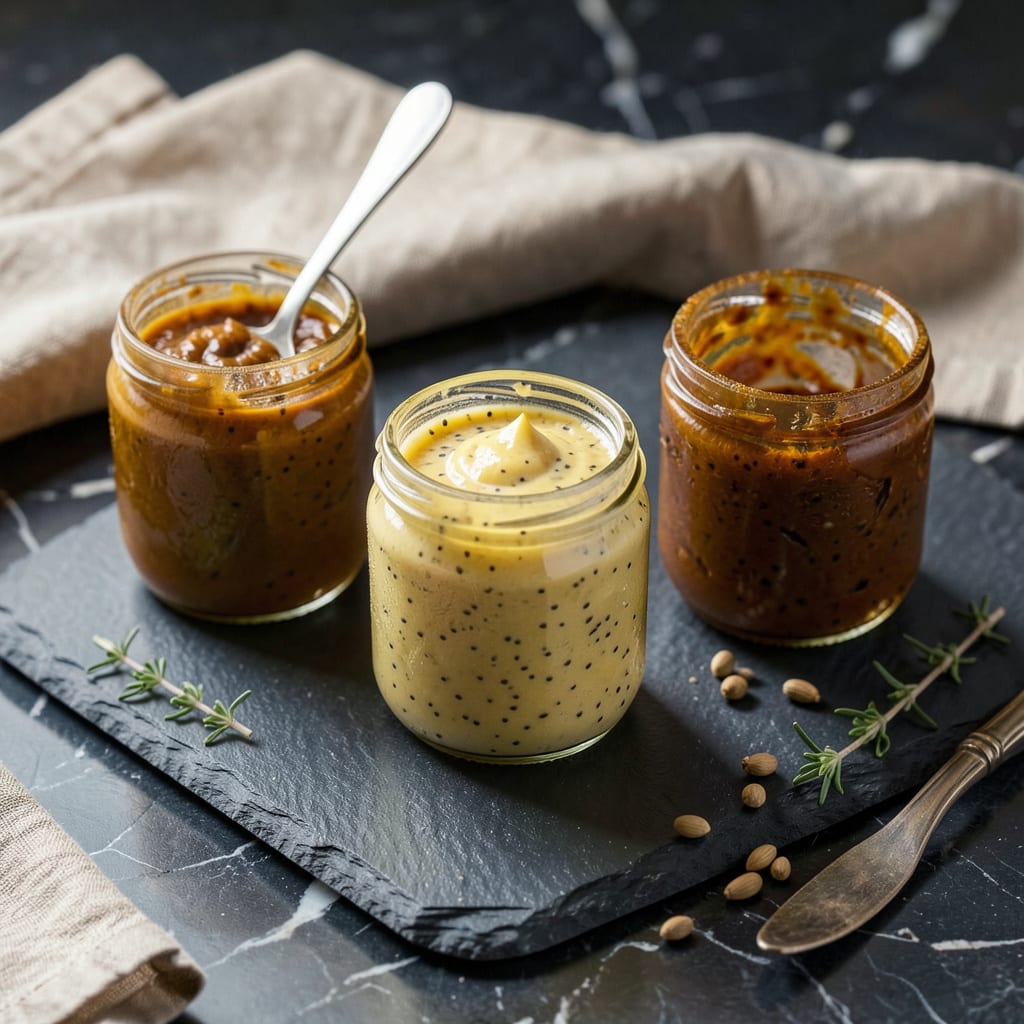
Unopened Dijon mustard lasts 2-3 years past its printed date when stored properly. Once opened, it stays fresh for 1 year in the fridge, though flavor may gradually fade over time.
This longevity comes from Dijon’s high acidity and natural preservatives, which create an inhospitable environment for bacteria. 🔥 I’ve found that the quality of ingredients matters—artisanal versions with fewer additives may lose their sharpness faster than commercial brands. The key is consistent refrigeration after opening, as temperature swings can accelerate flavor degradation. Even when safe to eat, older mustard might develop a milder, less complex taste profile.
💡 In This Article
- Factors That Affect Dijon Mustard Shelf Life
- Proper Storage and Spoilage Signs for Dijon Mustard
Factors That Affect Dijon Mustard Shelf Life
The secret to Dijon’s longevity lies in its acidity levels—traditional versions contain white wine vinegar with a pH around 3.0-3.5, creating an environment where most bacteria can’t survive. This acidity acts like a natural preservative, similar to how pickling extends vegetable shelf life.
Commercial brands often add citric acid or sodium benzoate to push the pH even lower, which explains why store-bought versions typically outlast artisanal batches by 6-12 months. ✨
Oxygen exposure dramatically accelerates flavor degradation. When you open that jar, the mustard seeds’ volatile oils begin oxidizing—this is why the sharp, pungent aroma fades first. I’ve noticed that mustards in squeeze bottles last about 20% longer than jarred versions because the airtight dispensing system minimizes air contact.
Even with the lid screwed tight, a standard jar gets oxygen exposure every time you dip a knife in, which is why I recommend using a clean spoon each time. 🔥
The processing method makes a surprising difference too. Stone-ground Dijon (where seeds are crushed between granite millstones) retains more natural oils that can turn rancid faster than industrially ground versions.
The particle size matters—finer grinds have more surface area exposed to air, which is why smooth Dijon typically degrades 3-4 months sooner than whole-grain varieties when both are opened. Temperature fluctuations are another silent killer: each degree above 40°F doubles the rate of flavor compound breakdown.
Light exposure causes photodegradation of the mustard’s pigment compounds (mainly curcumin from turmeric), which is why commercial mustards come in opaque containers.
I once stored an opened jar near my fridge’s LED light and watched it lose its vibrant yellow color in just 3 weeks—the same mustard kept in the back stayed bright for 8 months. The takeaway? Treat your Dijon like fine wine: keep it cool, dark, and sealed tight. 💫
Here’s what most people overlook: the seed quality itself. Mustard seeds contain myrosinase enzymes that break down glucosinolates (the compounds responsible for that signature heat) over time. Higher-quality seeds with intact enzyme systems will actually develop more complex flavors during the first 6 months of storage, while inferior seeds may taste flat from the start.
This is why some artisanal Dijon actually improves briefly after opening before eventually declining.

Trained in classic French technique but raised on slow-cooked ribs and spicy rubs, she blends culinary skill with smoke and soul.
- Recipe for Boneless Pork Chops in Cast Iron Skillet: Sear and Baste to Juicy Perfection - October 3, 2026
- Recipe for Boneless Cross Rib Roast: Slow-Roasted Beef with Herb Crust - October 3, 2026
- Hamburgers in Sauce Recipe Crock Pot: Slow-Cooked Savory Delight - October 3, 2026