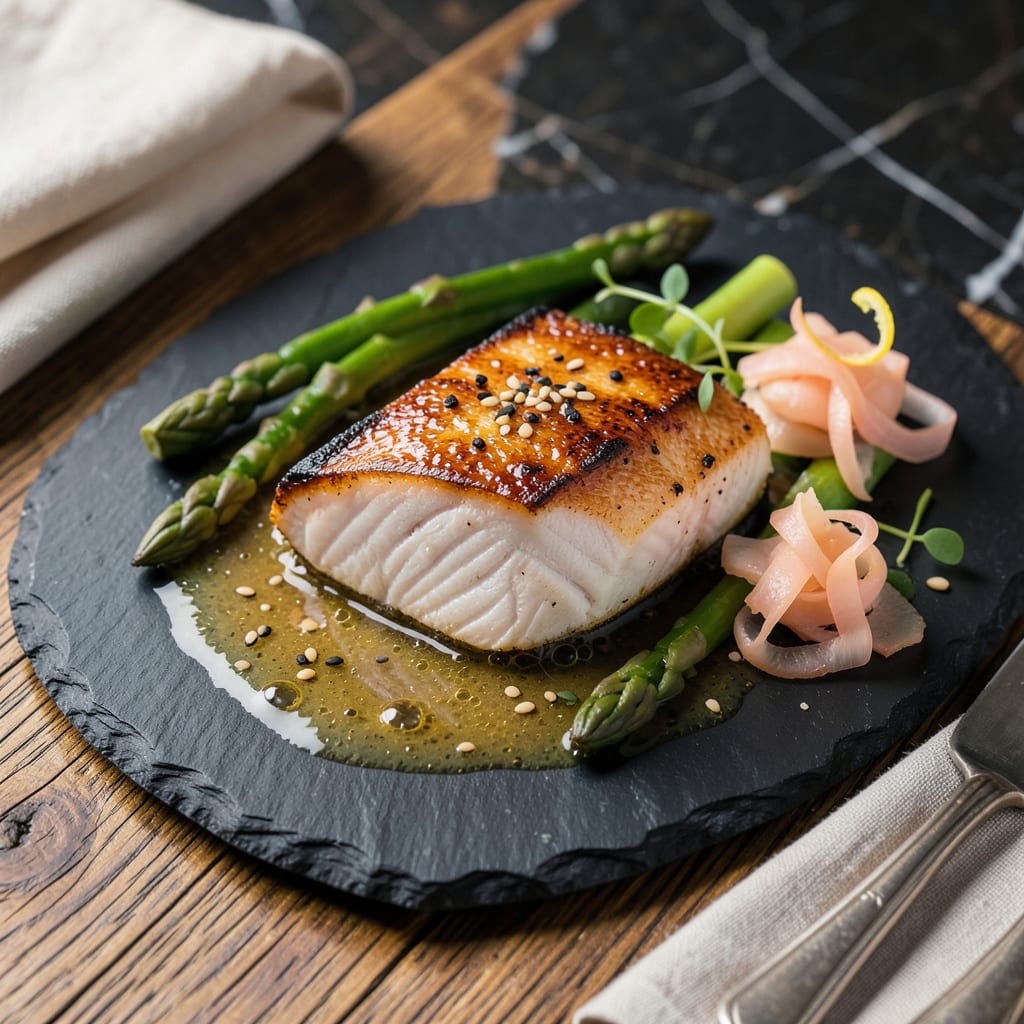
Black cod delivers an exceptionally rich, buttery flavor with a delicate sweetness and velvety, almost custard-like texture that melts in your mouth. Its high fat content gives it a luxurious, almost decadent quality that stands out among white fish.
This fish is often called the “foie gras of the sea” because of its unmatched richness and silky mouthfeel. 🌟 The natural oils create a luscious quality that’s rare in leaner fish, while the subtle sweetness makes it incredibly versatile. I’ve found it absorbs marinades beautifully without losing its signature character—whether you’re grilling, steaming, or preparing it Nobu-style with miso. The texture is what really surprises first-time tasters: it flakes apart effortlessly yet maintains a satisfying density that holds up to bold flavors.
💡 In This Article
- Why Black Cod Has Such a Unique Flavor Profile
- Best Cooking Methods to Enhance Black Cod’s Taste
Why Black Cod Has Such a Unique Flavor Profile
The secret to black cod’s extraordinary taste lies in its biology. This fish contains up to 30% fat content—mostly heart-healthy omega-3s—which is dramatically higher than Atlantic cod (0.5-1%) or halibut (2-3%). These oils are stored in the muscle tissue rather than concentrated in the liver, creating that signature buttery quality throughout every bite.
The cold, deep waters of the North Pacific where black cod thrives force the fish to develop these fat reserves for energy, resulting in flesh that’s naturally richer than warm-water species.
What really sets black cod apart is how its fat composition changes with temperature. When cooked gently between 120-140°F, the omega-3s remain in liquid form, giving that luxurious, almost custard-like mouthfeel. 🔥 Compare this to Chilean sea bass, which has similar fat levels but a firmer texture because its fat is distributed differently.
The sweetness comes from naturally occurring amino acids like glycine and alanine, which intensify when the fish is cured or marinated—this is why Nobu’s famous miso preparation works so beautifully with this species.
The texture is equally fascinating. Black cod’s muscle fibers are shorter and more delicate than most white fish, with connective tissue that breaks down easily when heated. This creates those perfect, large flakes that separate cleanly yet hold their shape.
I’ve noticed that even when overcooked slightly, it retains moisture better than leaner fish because those natural oils act as a built-in basting mechanism. The flesh actually becomes more tender the longer it’s exposed to gentle heat, unlike most fish that dry out quickly.
Environmental factors play a huge role too. Black cod feed on a diet rich in krill and small crustaceans, which contributes to their unique flavor profile. The pristine, nutrient-dense waters of Alaska and Northern Japan where they’re commonly caught add mineral notes that you won’t find in farmed fish.
This is why wild-caught black cod often has a cleaner, more complex taste than its farmed counterparts—those natural feeding patterns create subtle umami undertones that elevate every preparation.
Here’s what most people don’t realize: the fat content varies by season. Fish caught in winter months (December-February) typically have 10-15% more fat than summer catches, making them even more decadent. 💫 The flesh also takes on a slightly paler color in colder months, which is actually a sign of higher oil content.
This seasonal variation is why sushi chefs pay premium prices for winter-caught black cod—they call it “shimo-garei” (frost cod) for its superior texture and flavor.
When comparing to similar fish, black cod sits in a league of its own. It’s richer than halibut but more delicate than salmon, with a sweetness that’s more pronounced than cod but less cloying than scallops. The fat distribution is more even than in Chilean sea bass, which can sometimes have oily pockets.
This balance of richness and refinement is why it’s become such a prized ingredient in both traditional Japanese cuisine and modern fine dining.

Trained in classic French technique but raised on slow-cooked ribs and spicy rubs, she blends culinary skill with smoke and soul.
- Recipe for Boneless Pork Chops in Cast Iron Skillet: Sear and Baste to Juicy Perfection - October 3, 2026
- Recipe for Boneless Cross Rib Roast: Slow-Roasted Beef with Herb Crust - October 3, 2026
- Hamburgers in Sauce Recipe Crock Pot: Slow-Cooked Savory Delight - October 3, 2026