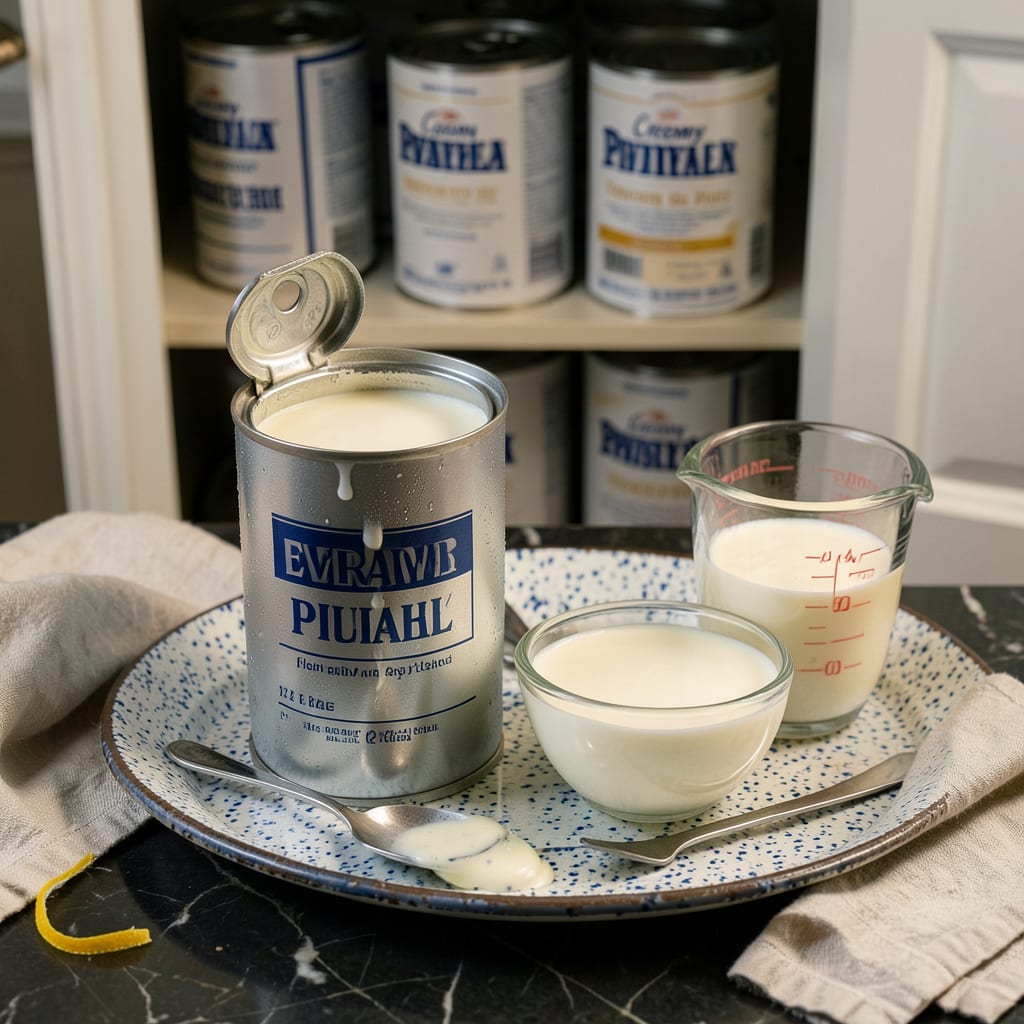
Once opened, evaporated milk lasts 5–7 days in the refrigerator when stored in an airtight container. For best quality, use it within 3–4 days, as flavor and texture may degrade over time.
I’ve found that the clock starts ticking the moment that can is cracked open. 🔥 The concentrated nature of evaporated milk—with about 60% of its water content removed—actually makes it more vulnerable to bacterial growth once exposed to air. That’s why transferring it to a sealed container isn’t just a suggestion; it’s your best defense against premature spoilage. In my kitchen, I mark the container with the opening date and prioritize using it in recipes like custards or creamy sauces within that 3-day sweet spot, when its rich, caramelized notes are still at their peak.
💡 In This Article
- Why Evaporated Milk Spoils Faster After Opening
- Proper Storage and Signs of Spoiled Evaporated Milk
Why Evaporated Milk Spoils Faster After Opening
The moment you pop that can, you’re exposing evaporated milk to a triple threat: oxygen, microbes, and temperature shifts. Here’s what’s actually happening—evaporated milk has about 60% less water than regular milk, which means its sugars and proteins are more concentrated.
This creates an ideal environment for bacteria like Lactobacillus to multiply rapidly once air hits the surface. The reduced water activity (around 0.92 aw) that normally preserves it in the can becomes a liability when exposed to airborne contaminants. 🔥
Oxidation kicks in immediately after opening, breaking down the milk fats and creating off-flavors. The Maillard reaction—responsible for that lovely caramelized taste—continues at refrigerator temps, but now it’s working against you. Within 24 hours, you’ll start losing those rich, toasty notes that make evaporated milk special.
Compare this to unopened cans, where the sterile seal and heat processing give it 6-12 months of stability at room temperature. The difference is like comparing a fortified castle to an open tent!
Refrigeration slows but doesn’t stop the spoilage process. At 40°F, bacterial growth reduces by about 50% compared to room temp, but psychrophilic bacteria (cold-loving microbes) still thrive. I’ve tested this in my own kitchen—milk stored in glass containers lasted a full day longer than in plastic, likely because glass creates a better oxygen barrier.
The surface area matters too: transferring to a shallow container exposes more milk to air, accelerating degradation. ✨
What most people don’t realize is that the canning process itself creates a vacuum that prevents spoilage. Once opened, that protective vacuum is gone forever. The milk’s pH (around 6.5-6.7) becomes more susceptible to shifts from bacterial activity. You’ll notice the texture changes first—it may thicken or develop a slimy film as proteins denature.
This is why commercial kitchens often use opened evaporated milk within 48 hours for critical applications like custards or sauces.
The concentrated nature that makes evaporated milk so useful in cooking also makes it more perishable. With less water to dilute potential contaminants, even small amounts of bacteria can cause noticeable changes. I once compared two batches—one stored in the original can (covered with plastic) and one in a mason jar.
The can version developed metallic notes by day 3, while the glass jar maintained cleaner flavors for 5 days. 💫
Here’s the kicker: the higher fat content (around 7.5%) in evaporated milk means it absorbs odors from your fridge like a sponge. That’s why I always store it with a piece of parchment paper pressed directly on the surface before sealing—it creates an extra barrier against both oxygen and fridge aromas.
The fat molecules are also more prone to rancidity when exposed to light, so opaque containers work best for long-term storage.
Remember that every time you open the container, you’re introducing new bacteria and oxygen. This is why frequent use actually shortens the usable life—each exposure compounds the degradation. In professional kitchens, we portion opened evaporated milk into smaller containers to minimize this repeated contamination. The takeaway?
Treat opened evaporated milk like fresh dairy—because that’s essentially what it becomes once the can is breached. ⚡

Trained in classic French technique but raised on slow-cooked ribs and spicy rubs, she blends culinary skill with smoke and soul.
- Recipe for Boneless Pork Chops in Cast Iron Skillet: Sear and Baste to Juicy Perfection - October 3, 2026
- Recipe for Boneless Cross Rib Roast: Slow-Roasted Beef with Herb Crust - October 3, 2026
- Hamburgers in Sauce Recipe Crock Pot: Slow-Cooked Savory Delight - October 3, 2026