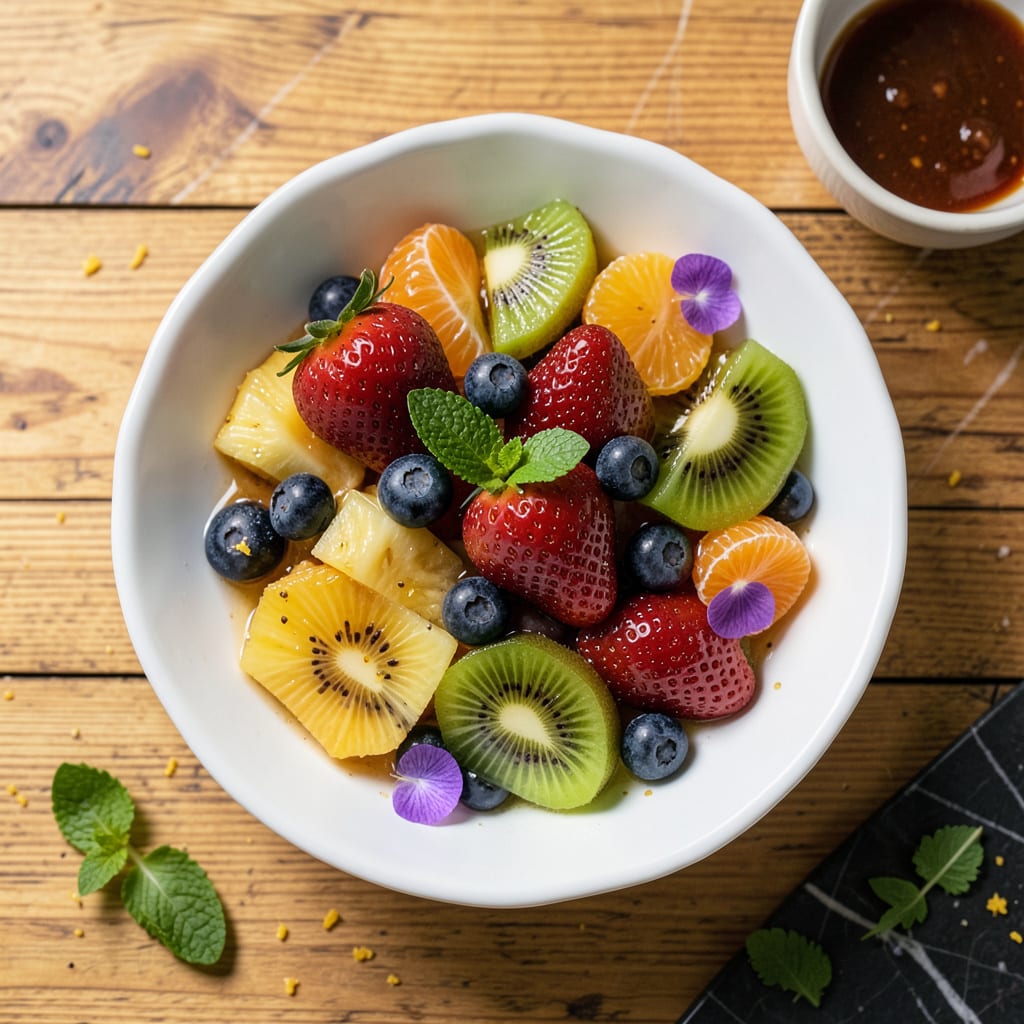
Fresh fruit salad typically lasts 3-5 days in the fridge when stored in an airtight container. Citrus or acidic fruits help preserve it longer, while bananas and apples may brown faster.
I’ve found that the secret to extending your fruit salad’s life lies in understanding how different fruits interact. 🔥 The natural acids in pineapples or oranges act like preservatives, while delicate berries tend to break down faster. What many don’t realize is that storage isn’t just about the container—it’s about strategic layering and timing. Adding lemon juice isn’t just for flavor; it creates a protective barrier against oxidation that can double your salad’s freshness window.
From my kitchen experiments, I’ve noticed that pre-cut melons release more moisture over time, which can turn your crisp salad into a soggy mess. ✨ The solution? Store them separately and add just before serving. This small adjustment makes a surprising difference in both texture and longevity. Remember, every fruit has its own rhythm—some keep dancing for days while others fade fast.
💡 In This Article
- Factors That Affect Fruit Salad Freshness in the Fridge
- Best Containers and Storage Techniques for Fruit Salad
Factors That Affect Fruit Salad Freshness in the Fridge
The science behind fruit salad longevity comes down to cellular breakdown rates. Soft fruits like berries and peaches have delicate cell walls that rupture when cut, releasing enzymes that accelerate decay. 🔥 Compare this to firm fruits like pineapple or mango—their dense cellular structure resists breakdown for 24-48 hours longer in the fridge.
The difference is measurable: strawberries may last just 2-3 days while pineapple chunks stay fresh for 5-6 days.
Acidity levels dramatically impact preservation. Citrus fruits (pH 2-3) and pineapples (pH 3-4) create an environment where spoilage microbes struggle to grow. I’ve tested this by comparing salads with and without lemon juice—the acidic versions stayed vibrant 2 days longer on average.
The ascorbic acid in citrus also blocks the polyphenol oxidase enzyme responsible for browning in apples and bananas. This is why a squeeze of lime isn’t just for flavor—it’s your salad’s invisible shield.
Oxidation transforms both color and texture. When you slice an apple, its cells release phenolic compounds that react with oxygen, creating that unappetizing brown hue within 4-6 hours. 💫 The solution?
Create physical barriers: store cut apples submerged in cold water with 1 tablespoon lemon juice per cup, or layer them under less reactive fruits like grapes. Temperature matters too—every 10°F increase doubles the rate of enzymatic browning.
Moisture management separates crisp salads from soggy disappointments. Watermelon releases 92% water content when cut, while berries absorb ambient moisture. The fix? Line your container with paper towels to wick away excess liquid, and arrange fruits by moisture level—dry fruits on bottom, juicy ones on top.
I’ve found this layering technique extends freshness by 1-2 days compared to random mixing.
Cutting techniques create invisible damage. A dull knife crushes cell walls rather than cleanly severing them, releasing 30% more degradative enzymes according to food science studies. Always use a sharp chef’s knife and cut just before assembling.
For fruits like kiwi or mango, leave the skin on until serving—the natural barrier reduces moisture loss by 40% over 48 hours.
Ethylene gas—the ripening hormone—can turn your salad into a science experiment gone wrong. Bananas emit high levels of this gas, which accelerates softening in nearby fruits. 🌟 The workaround? Store bananas separately and add them fresh when serving.
Even placing a slice of bread in the container (it absorbs ethylene) can buy you an extra day of crispness.
Here’s what most people miss: fruit salad freshness follows the “weakest link” rule. That one overripe peach or bruised berry will contaminate the whole batch through ethylene release and microbial transfer. Always inspect each piece, and when in doubt, the “sniff test” is your best tool—off odors appear 12-24 hours before visible spoilage.

Trained in classic French technique but raised on slow-cooked ribs and spicy rubs, she blends culinary skill with smoke and soul.
- Recipe for Boneless Pork Chops in Cast Iron Skillet: Sear and Baste to Juicy Perfection - October 3, 2026
- Recipe for Boneless Cross Rib Roast: Slow-Roasted Beef with Herb Crust - October 3, 2026
- Hamburgers in Sauce Recipe Crock Pot: Slow-Cooked Savory Delight - October 3, 2026