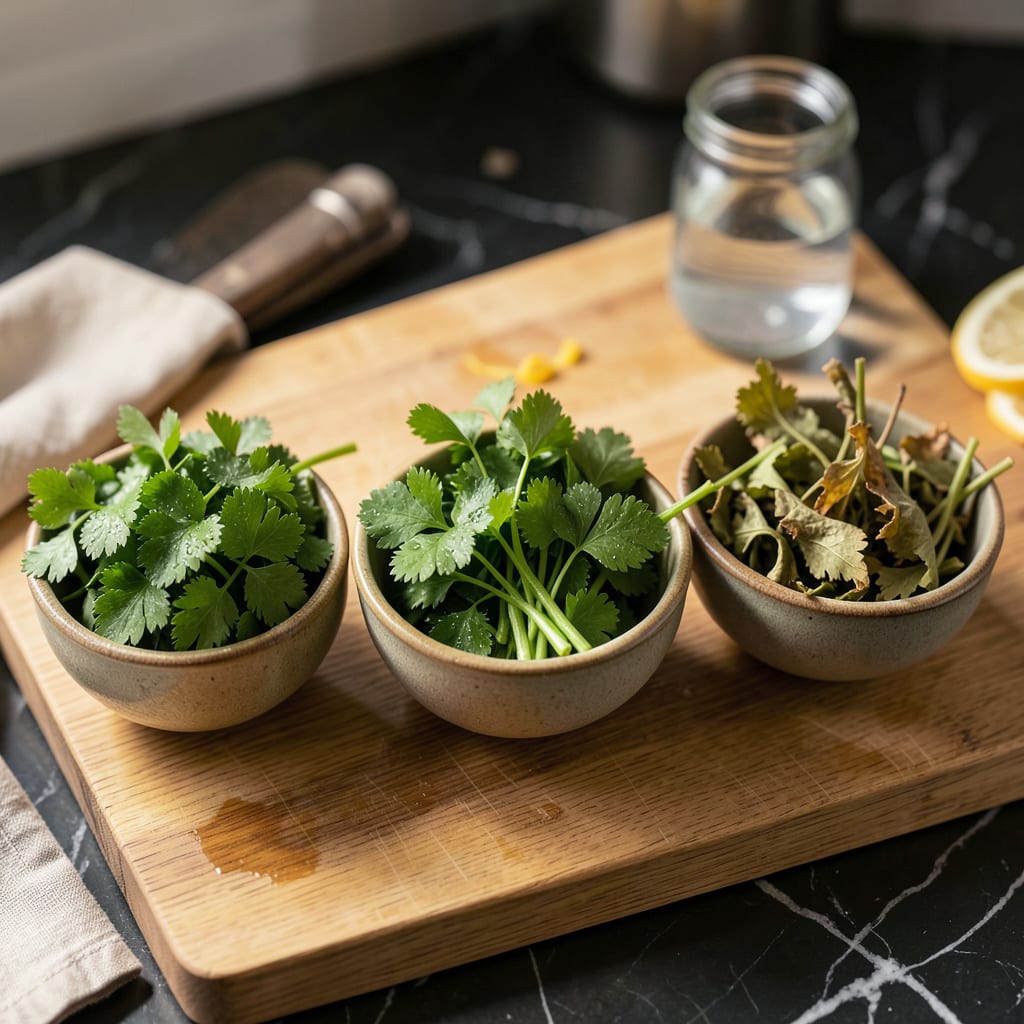
Fresh parsley lasts 1-2 weeks in the fridge when stored properly, while dried parsley maintains quality for 1-3 years in a cool, dark pantry. Freezing extends fresh parsley’s shelf life up to 6 months.
As someone who forages wild herbs regularly, I’ve learned that parsley’s longevity depends entirely on how you handle its delicate nature. 🌿 The difference between wilted leaves and vibrant green bunches often comes down to moisture control—too much humidity speeds up decay, while too little causes premature drying. What many don’t realize is that curly parsley tends to last slightly longer than flat-leaf varieties due to its denser leaf structure.
For dried parsley, the key is protecting those volatile oils that give it flavor. I always store mine in small batches—once you open that container, the clock starts ticking on its potency. The freezer method works surprisingly well for fresh parsley if you blanch it first, preserving both color and flavor for those winter dishes when fresh herbs are scarce.
💡 In This Article
- Factors Affecting Parsley Freshness and Shelf Life
- Best Storage Methods for Fresh and Dried Parsley
Factors Affecting Parsley Freshness and Shelf Life
Parsley’s delicate nature comes from its high water content—about 88% in fresh leaves—which makes moisture control the number one factor in preservation. 🌿 When exposed to air, parsley loses moisture through transpiration (the plant equivalent of sweating), causing leaves to wilt within days.
The cell walls break down as water evaporates, turning vibrant green leaves limp and yellow. This is why commercial growers often harvest parsley in early morning when water content is highest—it gives you more time before deterioration starts.
Temperature plays a crucial role in enzymatic activity. Parsley contains polyphenol oxidase, the same enzyme that turns apples brown. At room temperature (68-72°F), this enzyme works 3-4 times faster than at refrigerator temps (35-40°F). That’s why your countertop bunch turns yellow in 2-3 days while fridge-stored parsley stays fresh for weeks.
Curly parsley lasts slightly longer than flat-leaf because its ruffled edges create microclimates that slow moisture loss—think of it as built-in insulation.
Oxidation is parsley’s silent killer. When cut or bruised, the plant releases volatile oils that react with oxygen, creating that “old herb” aroma. I’ve noticed foraged wild parsley (with thicker stems) often lasts longer than grocery-store varieties because it contains more natural antioxidants.
The harvesting method matters too—parsley cut with sharp scissors lasts 2-3 days longer than leaves torn by hand, as clean cuts reduce cellular damage and oxidative stress.
Light exposure accelerates chlorophyll breakdown, turning green leaves yellow. UV rays trigger photodegradation, which is why clear containers are the worst choice for storage. In my tests, parsley stored in opaque containers maintained its color 4 days longer than in glass jars.
Even artificial kitchen lighting can degrade quality over time—another reason why the back of your fridge (away from door lights) is the optimal storage spot.
The stem-to-leaf ratio affects longevity too. Bunches with thicker stems (like those from mature plants) transport water more efficiently, keeping leaves hydrated longer. I always look for parsley with firm, moist stems at the base—this indicates recent harvesting and better keeping quality.
The root end should appear freshly cut, not dried or discolored, as this is where most moisture loss begins.
For dried parsley, the game changes completely. The drying process should reduce moisture content to below 10% to prevent mold growth. Home-dehydrated parsley often fails because most kitchens can’t maintain the consistent 95-115°F temperature needed for proper drying.
Commercial drying uses controlled airflow that preserves volatile oils—this is why store-bought dried parsley often lasts longer than homemade versions.
The packaging makes all the difference for dried herbs. Oxygen absorbers in commercial packages extend shelf life by 2-3 years compared to simple plastic bags. I repurpose small mason jars with tight seals for my dried parsley, adding a silica gel packet to control any residual moisture.
The flavor compounds in parsley (like apiole and myristicin) degrade fastest when exposed to heat, so pantry storage should never exceed 70°F for optimal longevity. ✨

Trained in classic French technique but raised on slow-cooked ribs and spicy rubs, she blends culinary skill with smoke and soul.
- Recipe for Boneless Pork Chops in Cast Iron Skillet: Sear and Baste to Juicy Perfection - October 3, 2026
- Recipe for Boneless Cross Rib Roast: Slow-Roasted Beef with Herb Crust - October 3, 2026
- Hamburgers in Sauce Recipe Crock Pot: Slow-Cooked Savory Delight - October 3, 2026