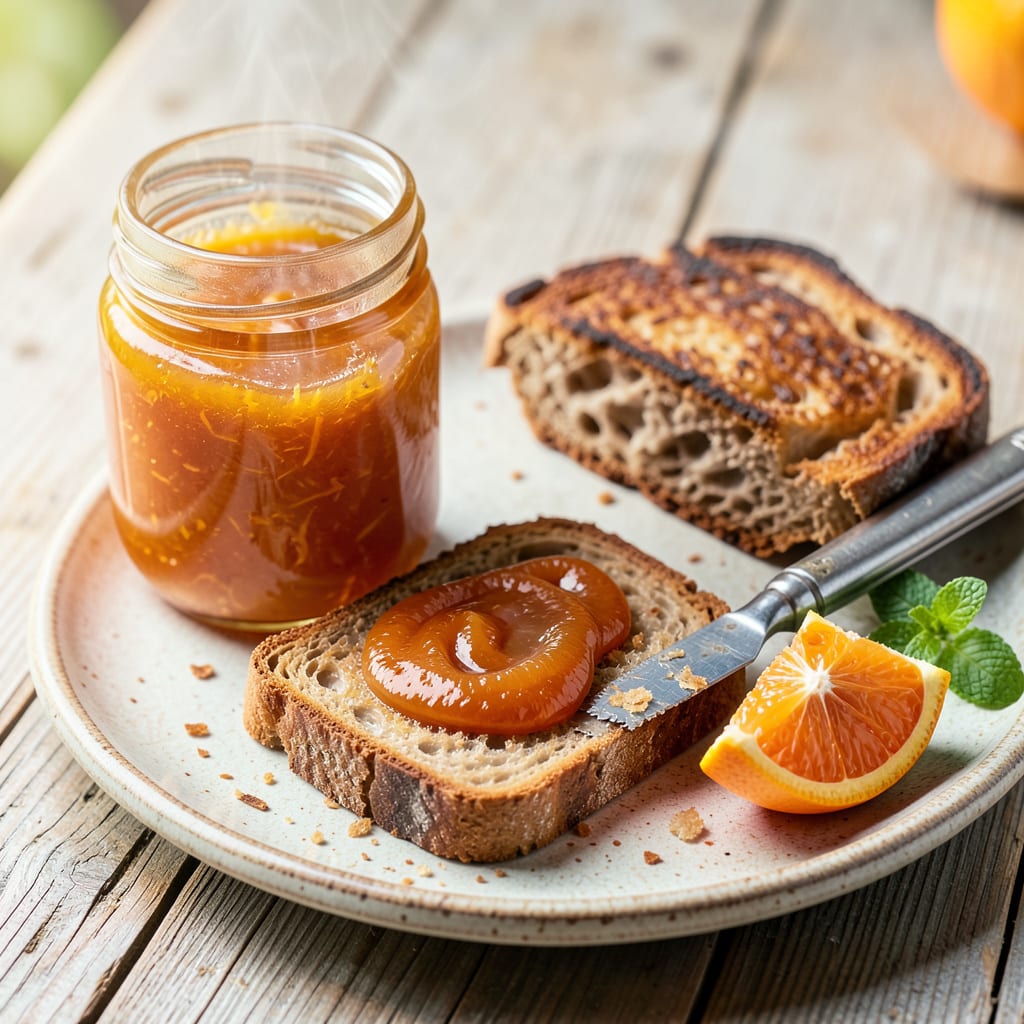
Unopened marmalade lasts 12–18 months in the pantry, while opened jars stay fresh for 6–12 months refrigerated. Always check for mold, off smells, or texture changes before using.
Marmalade’s impressive shelf life comes from its high sugar content, which naturally preserves the fruit by drawing out moisture and preventing bacterial growth. 🔥 I’ve noticed that homemade versions often last slightly less time than store-bought because commercial brands typically add extra preservatives. The citrus peels in marmalade also contribute to longevity—their natural acids create an environment where spoilage microbes struggle to thrive.
What many people overlook is how storage conditions impact freshness. A cool, dark pantry works best for unopened jars, while refrigeration becomes crucial once you break the seal. I always recommend using a clean spoon each time to avoid introducing contaminants that could shorten its lifespan.
💡 In This Article
- Factors That Affect Marmalade Shelf Life
- Proper Storage Techniques for Marmalade Freshness
Factors That Affect Marmalade Shelf Life
The secret to marmalade’s longevity lies in its sugar concentration. Most recipes contain 50-60% sugar, creating a hypertonic environment that dehydrates microbial cells through osmosis. This process effectively starves bacteria and mold of the moisture they need to grow.
The higher the sugar content, the longer the preservation—commercial brands often push this to 65% for extended shelf stability.
Citrus peels play a dual preservation role. Their natural pectin (about 1-2% by weight) thickens the mixture, while the essential oils contain antimicrobial compounds like limonene. The peels also lower the pH to around 3.0-3.5, creating an acidic barrier that most pathogens can’t survive in.
This is why lemon or grapefruit marmalades often outlast orange varieties by 2-3 months. 🍋
Processing methods dramatically impact longevity. Commercial marmalades undergo pasteurization at 190-212°F for 10-15 minutes, destroying potential contaminants. Homemade versions lack this step, which is why they typically last 3-6 months less even when refrigerated. The sealing process matters too—vacuum-sealed commercial jars create an oxygen-free environment that prevents oxidation.
Temperature fluctuations accelerate spoilage. Every 10°C (18°F) increase in storage temperature can double microbial growth rates. This explains why pantry-stored marmalade degrades faster in tropical climates versus temperate ones. The sugar crystallization process also changes over time—older marmalades may develop a grainier texture as sugar molecules recombine, though this doesn’t indicate spoilage.
Here’s what’s surprising about oxygen exposure: while it causes color darkening through oxidation, it doesn’t necessarily shorten shelf life. The sugar concentration remains the primary preservative. However, repeated exposure (like leaving the jar open) can introduce mold spores.
That’s why commercial jars use airtight seals with 0.5-1mm headspace to minimize oxygen contact while allowing for thermal expansion.
For homemade versions, the fruit-to-sugar ratio becomes critical. Traditional recipes call for equal weights, but reducing sugar by even 10% can cut shelf life in half.
The peeling technique matters too—thinner peels release more pectin but fewer preservative oils, while thicker peels (like Seville orange) provide better natural preservation but may create a more bitter flavor profile. ✨
The container material makes a measurable difference. Glass jars maintain consistent pH levels better than plastic, which can leach compounds over time. Dark glass offers the best protection against light degradation of flavors.
This is why premium brands use amber glass—it filters out 90% of UV light that would otherwise break down the citrus oils and alter the taste profile.

Trained in classic French technique but raised on slow-cooked ribs and spicy rubs, she blends culinary skill with smoke and soul.
- Recipe for Boneless Pork Chops in Cast Iron Skillet: Sear and Baste to Juicy Perfection - October 3, 2026
- Recipe for Boneless Cross Rib Roast: Slow-Roasted Beef with Herb Crust - October 3, 2026
- Hamburgers in Sauce Recipe Crock Pot: Slow-Cooked Savory Delight - October 3, 2026