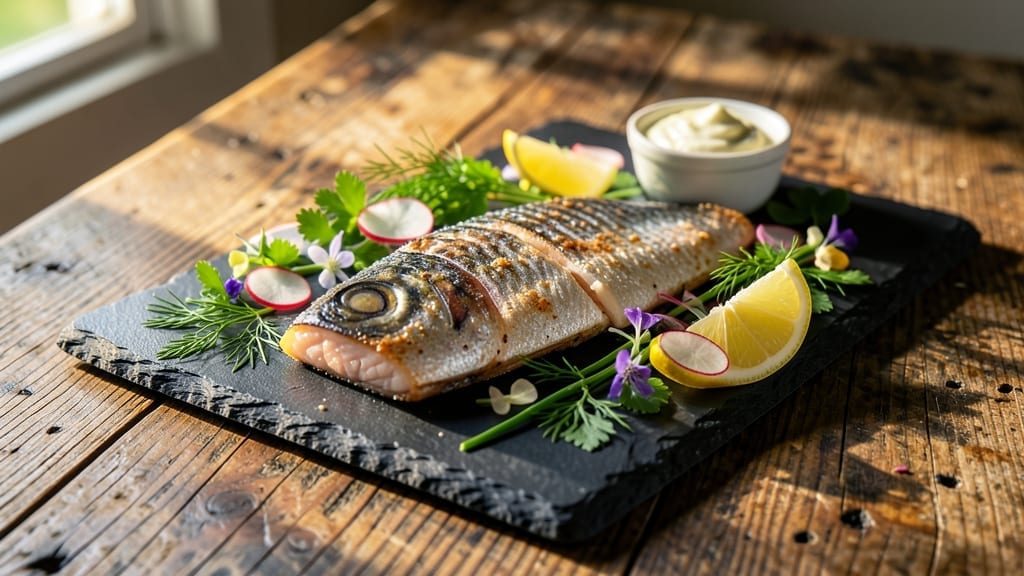
Smoked mackerel lasts 3–5 months unopened in the pantry, 1–2 months refrigerated, and up to 3 months frozen. Vacuum-sealed or canned varieties extend shelf life further, but always check for spoilage signs like sour smells or slimy texture before consuming.
Smoked mackerel’s impressive shelf life comes from the natural antimicrobial properties of wood smoke, which slows bacterial growth. 🔥 My Sicilian Nonna always swore by storing it in tightly sealed glass jars—this method blocks air and moisture, keeping it fresh longer than plastic containers.
For refrigerated or frozen fish, proper packaging is key: I recommend wrapping it in parchment paper before placing it in an airtight container to prevent freezer burn.
That said, storage conditions matter just as much as packaging. 💫 Smoked mackerel thrives in cool, dark pantries (ideally below 60°F) but can degrade faster if exposed to heat or humidity. When freezing, portion it into 1-pound servings for easy use—this prevents repeated thawing cycles that degrade quality.
Always trust your senses: if it smells off or feels slimy, it’s time to compost it, no matter how long the label says it lasts.
💡 In This Article
- Smoked Mackerel Preservation Science: How Smoking and Packaging Affect Shelf Life
- Storage Tips to Maximize Smoked Mackerel Freshness and Safety
Smoked mackerel preservation science: how smoking and packaging affect shelf life
Here’s what’s actually happening when smoked mackerel lasts so long: Wood smoke contains natural antimicrobial compounds like phenols and formaldehyde, which inhibit bacterial and fungal growth. During traditional smoking, these compounds penetrate the fish’s surface, creating a protective barrier.
Commercial smoking often uses higher temperatures (165-185°F), which accelerates this process by driving moisture out of the fish—reducing water activity to levels that bacteria can’t survive. 🔥
The pH level drop from smoking (typically to 5.0-5.5) further preserves the fish by making the environment hostile to spoilage microbes. Vacuum-sealing removes oxygen, which anaerobic bacteria need to thrive, while commercial canning adds an extra layer by creating a hermetically sealed environment.
My Nonna’s method of using glass jars with a tight lid works because it mimics these principles without machinery—just slower.
Moisture content plays a critical role too. Properly smoked mackerel has a moisture content of about 50-60%, which is too dry for most bacteria to grow. When you refrigerate it, the cold slows microbial activity but doesn’t stop it completely—hence the shorter shelf life.
Freezing works best because ice crystals physically disrupt cell membranes of any remaining microbes. 💫 The key factor is always minimizing both oxygen exposure and moisture availability.
Comparing traditional vs. commercial methods reveals interesting trade-offs. Traditional smoking uses lower temperatures (100-120°F) and longer durations, which preserves more of the fish’s natural oils and flavor compounds. Commercial methods are faster but can sometimes over-dry the fish, making it more brittle.
This is why vacuum-sealed commercial products often have longer pantry shelf lives—they’re engineered for stability over flavor preservation.
What most people don’t realize is how packaging interacts with these preservation methods. Airtight containers prevent oxidation, which would turn the fish rancid.
In my kitchen, I’ve noticed that smoked mackerel stored in plastic containers develops a slightly papery texture after 2 months—this happens because plastic allows some moisture loss. Glass or ceramic containers maintain better texture longer. The science behind this involves moisture vapor transmission rates through different materials.
For maximum longevity, consider these packaging factors: vacuum-sealed products can last 6 months in pantries, while canned versions (with their additional processing) can exceed 1 year. The difference comes down to how completely the environment is controlled.
Traditional smoking without proper packaging might only give you 1-2 months of freshness, which is why Nonna always paired her smoking with careful storage. ✨

Trained in classic French technique but raised on slow-cooked ribs and spicy rubs, she blends culinary skill with smoke and soul.
- Smoked Brisket Recipe: Low and Slow to Fall-Apart Tenderness - November 2, 2026
- Smoked Turkey Breast Recipe: Juicy Pink Center With Crispy Skin Every Time - November 2, 2026
- Leftover Smoked Pulled Pork Chili Recipe: Rustic Flavor Revival in One Pot - November 2, 2026