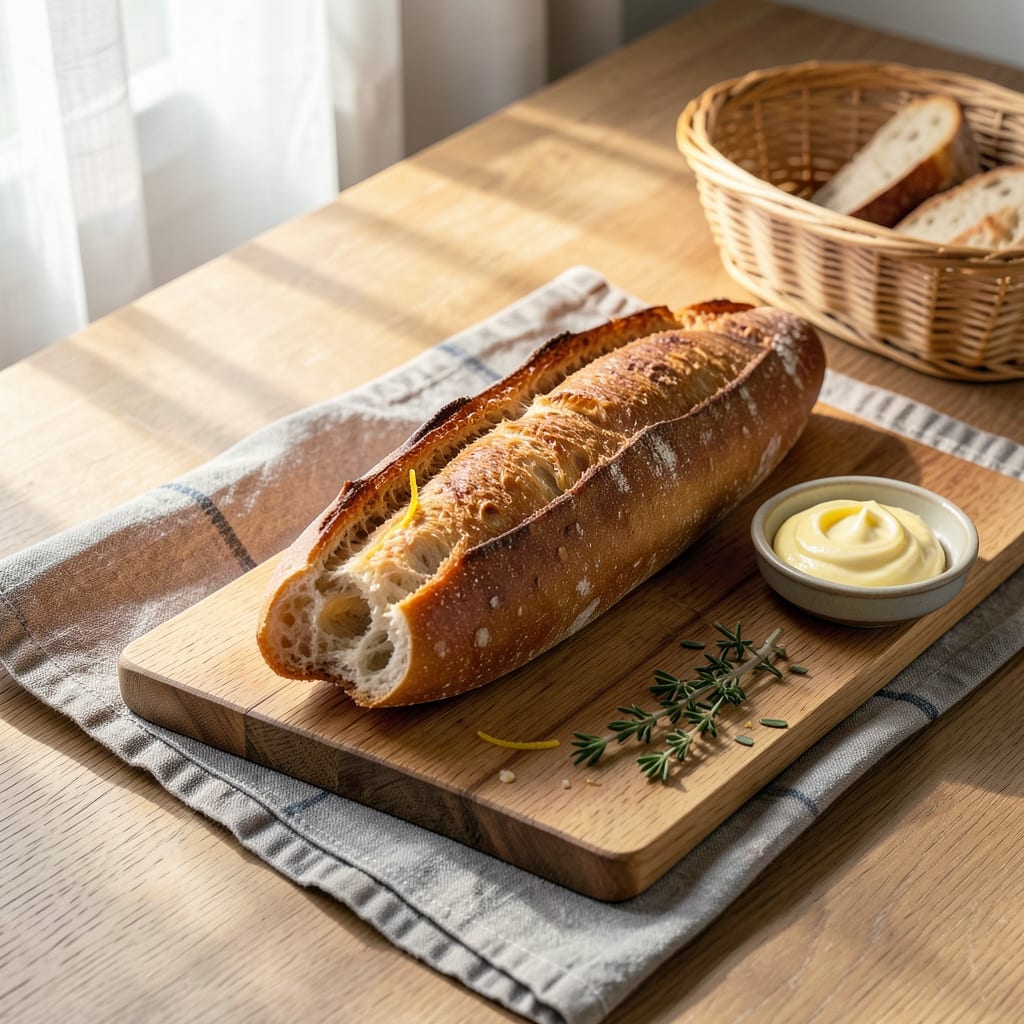
A fresh baguette stays at peak quality for 1-2 days at room temperature. Proper storage in a paper bag or bread box extends freshness to 3 days, while freezing can preserve it for up to 3 months.
That short shelf life comes down to the baguette’s thin crust and open crumb structure—both designed for that perfect crispy-chewy experience but terrible for moisture retention. 🔥 I’ve found that even a single day on the counter can transform that crackling crust into something disappointingly soft. The key is controlling airflow: too much dries it out, too little makes the crust soggy. That’s why paper bags work better than plastic—they let just enough moisture escape while protecting the crust.
💡 In This Article
- Why Baguettes Stale So Quickly and How to Slow It Down
- Best Ways to Store and Revive a Stale Baguette
Why Baguettes Stale So Quickly and How to Slow It Down
The secret to a baguette’s rapid staling lies in its starch structure. When bread cools after baking, the starch molecules begin to crystallize—a process called retrogradation. This happens faster in baguettes because their thin crust and open crumb structure expose more surface area to air.
Within 6-12 hours, you’ll notice the crust softens while the interior becomes dry and crumbly. The magic of a fresh baguette comes from its high moisture content (about 35-40%), which evaporates quickly once exposed to room air. 🔥
Temperature and humidity play massive roles in this process. At room temperature (68-72°F), starch retrogradation occurs at its fastest rate. Refrigeration actually accelerates staling because the cold temperatures speed up starch crystallization—this is why you should never store bread in the fridge.
Humidity levels below 50% cause the crust to dry out while levels above 70% make it soggy. The ideal storage environment maintains 60-65% humidity, which is why bread boxes work so well—they create a microclimate that slows moisture loss. ✨
Here’s what most people don’t realize: the crust and crumb stale at different rates. The crust loses crispness first as it absorbs moisture from the air, while the interior dries out from within.
This is why a paper bag works better than plastic—it allows just enough airflow to prevent condensation (which makes crusts soggy) while protecting the bread from drying too quickly. I’ve tested this with side-by-side comparisons: baguettes in paper bags stayed crisp for 48 hours, while those in plastic became soft and gummy within 12 hours.
💫
The baking process itself affects how quickly your baguette will stale. Properly baked baguettes with a thick, caramelized crust (achieved through high heat and steam during baking) create a better moisture barrier. Underbaked bread with a pale crust stales much faster because the starch granules haven’t fully gelatinized.
This is why artisanal bakery baguettes often last longer than grocery store versions—they’re baked at higher temperatures (450-475°F) for that perfect crust development. ⚡
For maximum freshness, consider the flour type too. Baguettes made with higher protein flour (like 11-12% protein) retain moisture better than those made with all-purpose flour. The gluten network in high-protein flour creates a more elastic structure that resists drying.
Some French bakers even add a small percentage of whole wheat flour, which contains natural oils that help preserve freshness. This is why you might notice some artisanal baguettes staying fresh for 3 days while others go stale overnight. 🌟
The size matters more than you think. A standard 2-foot baguette has more surface area relative to its volume than a shorter loaf, meaning it loses moisture faster. This is why mini baguettes (about 12 inches) often seem to stale more quickly—they have even more surface area exposed to air. The solution?
Buy what you’ll eat within 24-36 hours, or be prepared to revive it using proper techniques. 💛
What really surprises people is that freezing actually pauses the staling process completely. At 0°F, starch retrogradation stops entirely, and moisture migration halts. This is why properly frozen baguettes can taste nearly fresh when revived—they haven’t undergone the chemical changes that cause staleness.
The key is freezing them at peak freshness (within 6 hours of baking) and using an airtight wrap to prevent freezer burn. ❄️

Trained in classic French technique but raised on slow-cooked ribs and spicy rubs, she blends culinary skill with smoke and soul.
- Recipe for Boneless Pork Chops in Cast Iron Skillet: Sear and Baste to Juicy Perfection - October 3, 2026
- Recipe for Boneless Cross Rib Roast: Slow-Roasted Beef with Herb Crust - October 3, 2026
- Hamburgers in Sauce Recipe Crock Pot: Slow-Cooked Savory Delight - October 3, 2026