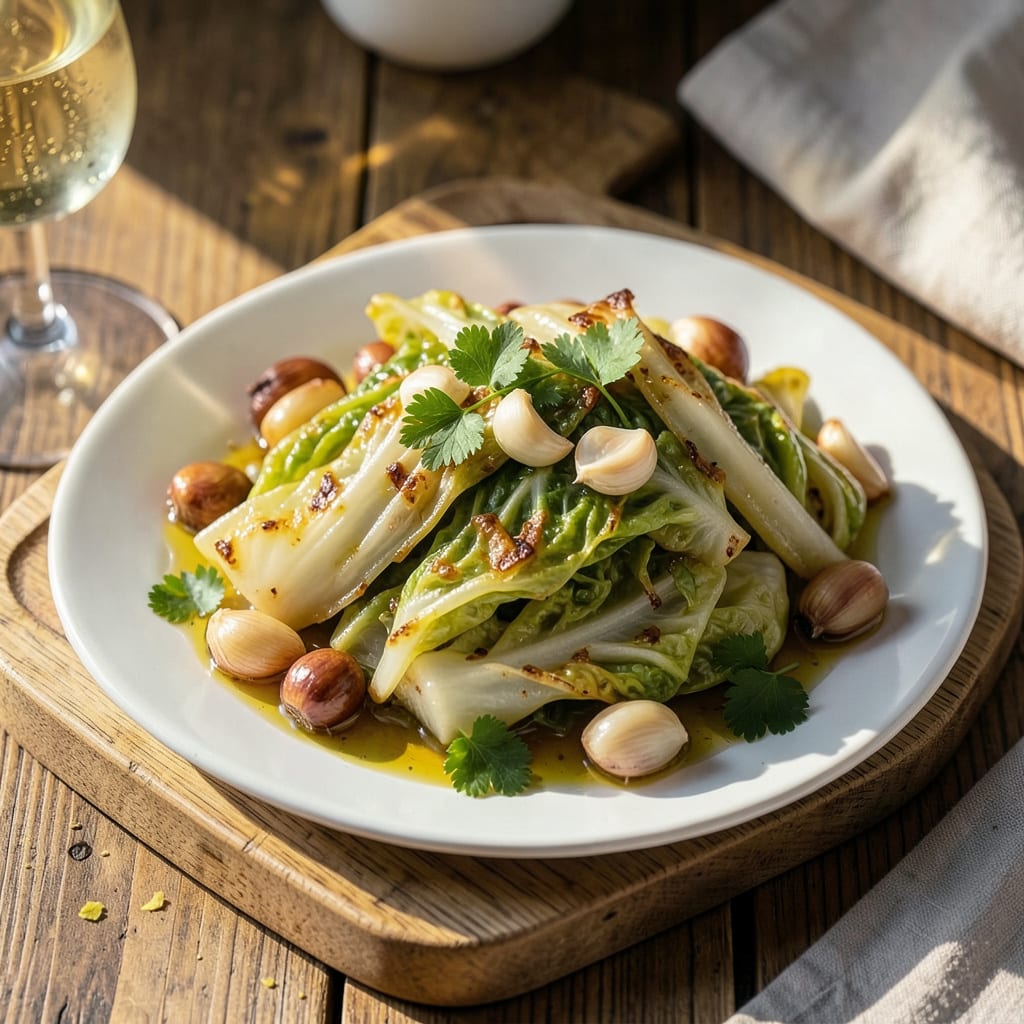
Cooked cabbage stays fresh in the fridge for 3–5 days when stored in an airtight container. For best quality, cool it quickly after cooking and avoid leaving it at room temperature for more than 2 hours.
I’ve learned through years of cooking that the key to preserving leftovers lies in controlling moisture and temperature. 🔥 Cabbage’s high water content makes it particularly vulnerable to bacterial growth, which is why rapid cooling and proper sealing are non-negotiable. When I meal prep, I divide portions into shallow containers—this speeds up chilling and minimizes the risk of soggy, spoiled greens.
What many don’t realize is that even small temperature fluctuations can cut shelf life in half. A fridge that hovers above 40°F turns that 5-day window into a risky gamble. I always double-check my fridge thermometer and use glass containers—they’re better at maintaining consistent cold and don’t absorb odors like plastic.
💡 In This Article
- Why Cooked Cabbage Spoils and How to Extend Shelf Life
- Best Containers and Freezing Tips for Leftover Cabbage
Why Cooked Cabbage Spoils and How to Extend Shelf Life
The moment cabbage is cooked, its high water content (about 92% moisture) becomes a breeding ground for bacteria. Unlike raw cabbage, which has protective outer layers, cooked cabbage loses its natural defenses when cell walls break down from heat. This exposes sugars and nutrients that bacteria like Lactobacillus and Pseudomonas feast on, accelerating spoilage.
The process starts within hours if left at room temperature, which is why rapid cooling is critical.
Oxidation also plays a major role in degradation. When cabbage is cut and cooked, enzymes react with oxygen, turning vibrant greens into dull yellows and creating off-flavors. I’ve noticed this happens fastest with red cabbage due to its anthocyanin pigments—those beautiful purples fade to grayish-blue when exposed to air.
Adding a splash of lemon juice or vinegar (about 1 tablespoon per cup) lowers the pH, slowing both bacterial growth and enzymatic browning. 🔥
Temperature control is your best defense. Bacteria multiply exponentially between 40°F and 140°F, which is why the “danger zone” rule exists. When I cool cooked cabbage, I spread it in a thin layer on a baking sheet for 10-15 minutes before transferring to containers.
This drops the core temperature faster than just putting a hot pot in the fridge. Glass containers work better than plastic here—they conduct cold more efficiently and don’t retain heat pockets.
Here’s what most people miss: moisture management. Cabbage releases water as it cools, creating a soggy environment perfect for mold. My trick is to line containers with a paper towel to absorb excess liquid, then seal tightly. For braised or stewed cabbage, I leave a ½-inch headspace in containers to account for expansion.
This small step prevents vacuum-sealed containers from popping open as gases build up during storage.
The fridge environment matters too. Cabbage absorbs odors easily, so I store it away from strong-smelling foods like onions or fish. Ideal fridge placement is on the middle shelf where temperatures stay most consistent—never in the door where fluctuations occur with every opening.
For maximum freshness, I’ve found that reheating only what I’ll eat immediately (using gentle heat and a splash of water) preserves texture better than multiple reheats.
What about when you see condensation inside the container? That’s a red flag. It means temperature fluctuations have occurred, creating micro-environments where bacteria thrive. If the cabbage smells sour or develops slimy film before day 5, it’s time to compost it—no amount of reheating will make it safe.
The 3-5 day window assumes perfect conditions, so always trust your senses over the calendar. ✨

Trained in classic French technique but raised on slow-cooked ribs and spicy rubs, she blends culinary skill with smoke and soul.
- Recipe for Boneless Pork Chops in Cast Iron Skillet: Sear and Baste to Juicy Perfection - October 3, 2026
- Recipe for Boneless Cross Rib Roast: Slow-Roasted Beef with Herb Crust - October 3, 2026
- Hamburgers in Sauce Recipe Crock Pot: Slow-Cooked Savory Delight - October 3, 2026