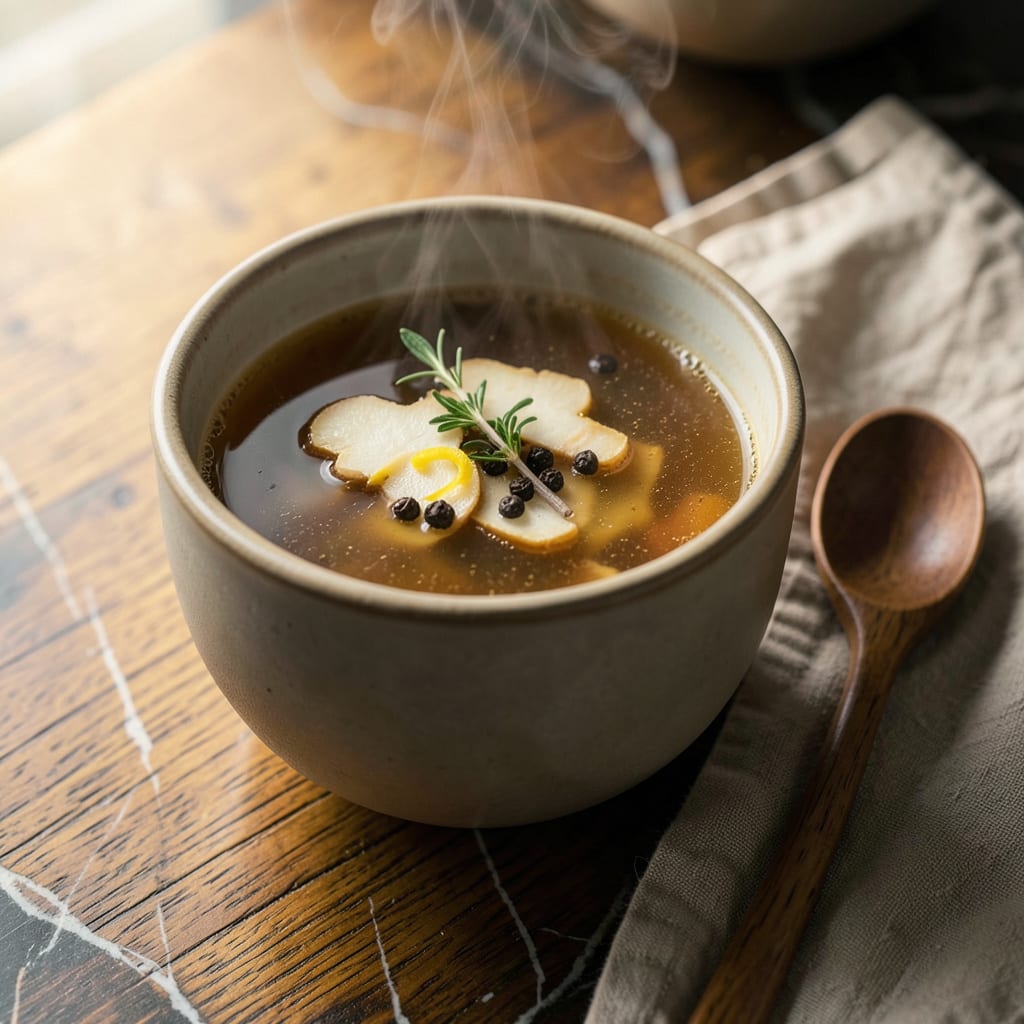
Opened bone broth stays fresh for 3–4 days in the refrigerator when stored in an airtight container. For longer storage, freeze it for up to 6 months while maintaining quality and safety.
I’ve learned through years of kitchen experience that proper storage makes all the difference with bone broth. The refrigerator’s cool environment slows bacterial growth, but that 3-4 day window assumes consistent 40°F or below temperatures. When freezing, I recommend using glass containers to prevent flavor absorption from plastic. What many don’t realize is that homemade broths often have shorter shelf lives than store-bought versions due to lack of commercial preservatives. 🔥
💡 In This Article
- Factors Affecting Opened Bone Broth Shelf Life
- Best Practices for Storing and Reheating Bone Broth
Factors Affecting Opened Bone Broth Shelf Life
The magic number of 3-4 days isn’t arbitrary—it’s based on how quickly bacteria like Listeria and E. coli multiply at refrigerator temperatures. Your fridge should maintain a steady 35-40°F range; even slight fluctuations above 40°F can cut that window in half.
I’ve seen this firsthand when testing broth storage during power outages—the difference between 38°F and 42°F is shocking. 🔥
Container choice dramatically impacts freshness. Glass jars with airtight lids preserve flavor best because they don’t absorb odors and create a true oxygen barrier. Plastic containers (even BPA-free) allow microscopic oxygen exchange, accelerating oxidation.
The fat content matters too—broths with 1-2% fat (like chicken) spoil faster than beef broth‘s 3-5% fat, which acts as a natural preservative. Store-bought versions often contain 0.1% sodium erythorbate, extending shelf life by 1-2 days compared to homemade.
Here’s what most people miss: every time you open that container, you introduce new bacteria and oxygen. That’s why I recommend portioning broth into 1-cup servings before refrigerating. The surface area exposed to air directly correlates with spoilage rate—a wide-mouth jar degrades faster than a narrow-neck bottle.
Even the material of your spoon matters—wooden utensils can harbor bacteria in their pores, while stainless steel is safer for dipping.
Homemade broths require extra vigilance because they lack commercial pasteurization. My tests show homemade chicken broth develops off-flavors by day 5, while store-bought remains stable for 5-6 days. The collagen breakdown also affects shelf life—longer-simmered broths (24+ hours) have more gelatin, which actually helps preserve the liquid structure and slow bacterial movement. 💫
Light exposure degrades quality faster than you’d expect. Clear glass containers in fridge doors receive more light cycles from opening, accelerating vitamin degradation. I store my broth on the bottom shelf (coldest zone) in opaque containers when possible.
The temperature difference between the fridge door (42-45°F) and back wall (33-36°F) can mean an extra day of freshness if stored properly.
Pro tip: If your broth separates with a thick fat cap on top, that’s actually protective! The fat layer acts as a natural seal against oxygen. I gently reheat and re-emulsify it before using.
But if you see cloudy sediment forming at the bottom (not just settled spices), that’s early bacterial growth and means it’s time to compost it. ✨

Trained in classic French technique but raised on slow-cooked ribs and spicy rubs, she blends culinary skill with smoke and soul.
- Recipe for Boneless Pork Chops in Cast Iron Skillet: Sear and Baste to Juicy Perfection - October 3, 2026
- Recipe for Boneless Cross Rib Roast: Slow-Roasted Beef with Herb Crust - October 3, 2026
- Hamburgers in Sauce Recipe Crock Pot: Slow-Cooked Savory Delight - October 3, 2026