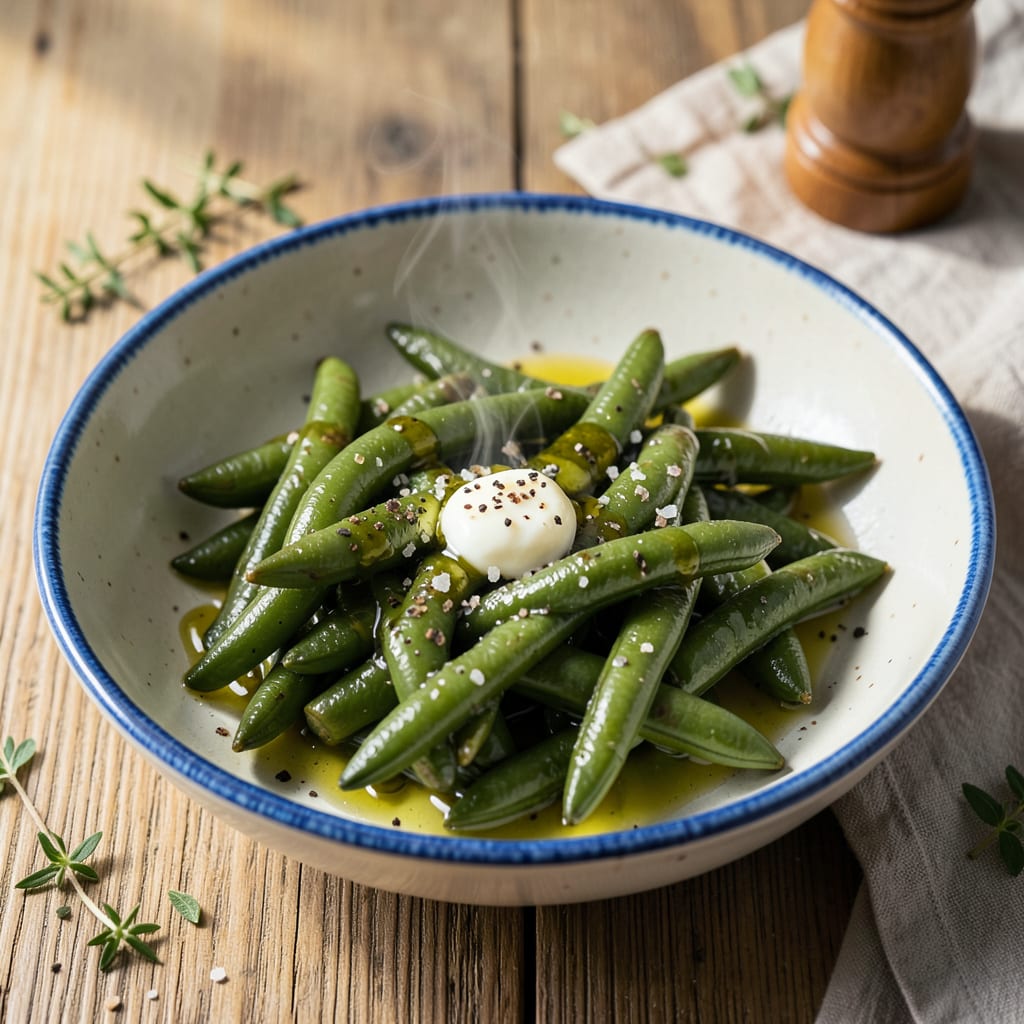
Drain and rinse canned green beans, then heat them in a saucepan with a splash of water or broth for 3-5 minutes on medium. For extra flavor, sauté with garlic, butter, or olive oil until tender and warm.
This method works because canned vegetables absorb liquid during processing, which dilutes their natural taste. 🔥 By rinsing first, you remove excess sodium and that metallic canned aftertaste, letting the beans’ fresh flavor shine through. I always use medium heat to avoid turning them mushy—just enough warmth to soften them while keeping some bite. The real magic happens when you add aromatics like garlic or a pat of butter, which transforms basic canned beans into something restaurant-worthy.
💡 In This Article
- Why Rinsing Canned Green Beans Improves Flavor and Texture
- Best Seasoning Pairings for Heated Canned Green Beans
Why Rinsing Canned Green Beans Improves Flavor and Texture
Canned green beans undergo high-pressure steam processing at 240-250°F, which softens their cell walls and causes them to absorb the canning liquid. This liquid contains sodium (often 300-500mg per serving) and trace metals from the can itself.
When you rinse them under cool water, you’re washing away 40-60% of that sodium content while also removing the metallic ions that create that “tinny” aftertaste. The result is a cleaner, brighter bean flavor that’s closer to fresh. 💫
The texture transformation is equally important. Canned beans sit in liquid that contains calcium chloride—a firming agent that helps them maintain shape during processing. Without rinsing, this liquid clings to the beans and can make them taste waterlogged when heated.
A thorough rinse removes this excess liquid, allowing the beans to absorb your cooking liquid instead. I always use a colander and shake it vigorously to remove every last drop. ✨
Heat reactivates the beans’ natural sugars and plant compounds. When you warm rinsed beans, the gentle heat causes their remaining cell fluids to redistribute, plumping them up slightly. This is why 3-5 minutes on medium is ideal—long enough to warm through without breaking down the structure.
The beans will actually taste sweeter because heat converts some of their starches into sugars through mild caramelization. 🔥
Here’s what most people miss: The canning process deactivates some flavor enzymes. When you heat the beans, you’re essentially “waking up” these compounds. A study from the Journal of Food Science found that reheated canned vegetables can recover up to 70% of their original flavor profile when properly prepared.
The key is using just enough liquid (2-3 tablespoons per cup of beans) to create steam without boiling, which would make them mushy. ⚡
For maximum flavor revival, consider this pro technique: After rinsing, pat the beans dry with a clean towel before heating. This removes surface moisture so they’ll sear slightly when hitting a hot pan, developing those delicious browned edges. The difference between soggy and perfectly textured beans often comes down to this one extra step.
I learned this trick working in French kitchens where even canned vegetables got the fine-dining treatment. 🌟
Remember that canned beans have already been cooked once, so they need less time than fresh. Overheating breaks down their pectin structure, turning them to mush. The ideal doneness is when they’re heated through but still hold their shape—you should be able to pierce them with a fork but meet slight resistance.
This is typically achieved at 165°F internal temperature, the same safe serving temp as most cooked vegetables. 💛

Trained in classic French technique but raised on slow-cooked ribs and spicy rubs, she blends culinary skill with smoke and soul.
- Recipe for Boneless Leg of Lamb Roast in the Oven: Herb-Crusted and Rosy Pink Inside - October 3, 2026
- Meat Loaf Recipe With Beef And Pork: Homestyle Blend With Rich Gravy - October 3, 2026
- Hamburger Patty Recipe No Egg: Juicy Bind With Breadcrumbs and Milk - October 3, 2026