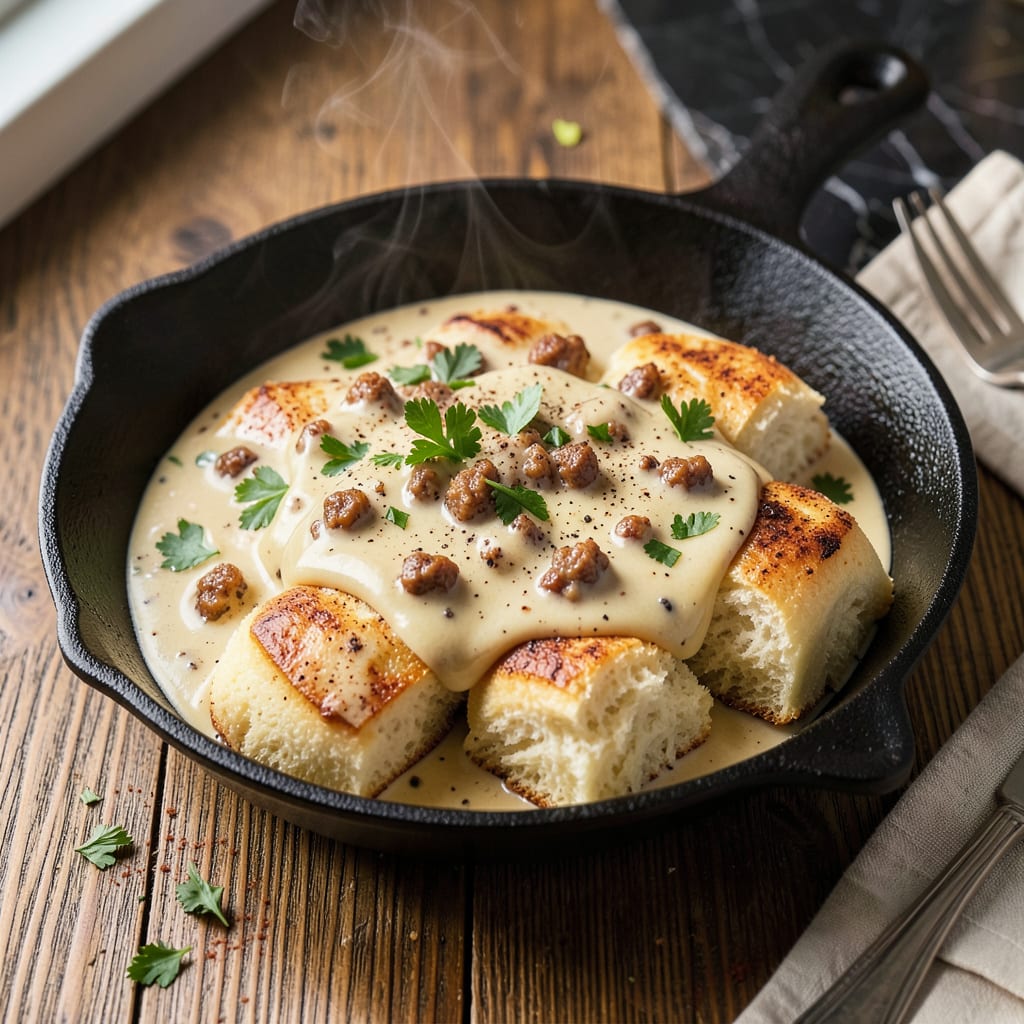
Properly stored sausage gravy lasts 3–4 days in the refrigerator when kept in an airtight container. Discard it if you notice off smells, mold, or texture changes like separation or sliminess.
As someone who’s spent years perfecting gravy textures, I can tell you that dairy-based sauces like this are particularly vulnerable to bacterial growth. The combination of milk, sausage fat, and flour creates an environment where microorganisms thrive if not properly handled. 🔥
What many home cooks overlook is the cooling process—letting gravy sit at room temperature for more than 2 hours significantly reduces its shelf life. I always transfer mine to shallow containers immediately after cooking to speed up the cooling process before refrigeration. This simple step makes a noticeable difference in maintaining quality.
💡 In This Article
- Why Sausage Gravy Spoils and Food Safety Risks
- Best Practices for Storing and Reheating Sausage Gravy
Why Sausage Gravy Spoils and Food Safety Risks
Sausage gravy’s short shelf life comes down to its dairy base and protein content. The milk or cream in gravy creates an ideal environment for bacteria like Listeria and Salmonella to multiply rapidly. These microorganisms thrive in the temperature “danger zone” between 40°F and 140°F, which is why proper cooling and refrigeration are critical.
The sausage fat adds another layer of risk—its high protein content breaks down over time, releasing compounds that accelerate spoilage. 🔥
The flour used as a thickener also plays a role in degradation. As gravy sits, the starch molecules in flour begin to retrogradate—a process where they recrystallize and separate from the liquid. This is what causes that unappetizing watery layer on top after 24-48 hours.
Meanwhile, the fat from sausage tends to rise and congeal, creating texture issues. I’ve noticed commercial gravies last slightly longer due to stabilizers, but homemade versions lack these preservatives.
You’ll first notice spoilage through smell—sour or rancid aromas indicate bacterial growth. Visually, look for mold spots (especially green or black) or a curdled appearance where proteins have coagulated.
The 3-4 day window exists because that’s typically how long it takes for harmful bacteria to reach dangerous levels in dairy-based mixtures at refrigerator temperatures (40°F or below). Trust me, when gravy turns, the smell is unmistakable and immediate. ✨
Temperature fluctuations make matters worse. Every time you open the fridge door, the internal temperature rises slightly. This creates micro-environments where bacteria can become more active. That’s why I recommend storing gravy in the coldest part of your fridge—usually the back of the bottom shelf—where temperatures stay most consistent.
Even small variations can shave hours off that 3-4 day safe storage period.
The sausage itself introduces additional variables. Fresh sausage contains more moisture than cured varieties, which means homemade gravy made with fresh breakfast sausage will spoil faster than versions made with dried, cured sausages.
The water activity level (a measure of available moisture for microbial growth) in fresh sausage gravy typically sits around 0.95—nearly ideal for bacterial proliferation. 💫
Here’s what’s happening at the microbial level: Pseudomonas bacteria (common in dairy) produce enzymes that break down proteins and fats, creating that slimy texture you might encounter. Meanwhile, Lactic acid bacteria ferment lactose in milk, producing that characteristic sour smell. These processes accelerate dramatically if your fridge isn’t maintaining a consistent 38-40°F temperature range.
For those who love making big batches, remember that depth matters in storage containers. Gravy stored in containers deeper than 2 inches cools more slowly, giving bacteria extra time to multiply in that danger zone. I always divide large batches into multiple shallow containers to maximize surface area for quick cooling.
This simple step can mean the difference between gravy that lasts 4 days versus one that turns by day 2. ⚡

Trained in classic French technique but raised on slow-cooked ribs and spicy rubs, she blends culinary skill with smoke and soul.
- Recipe for Boneless Pork Chops in Cast Iron Skillet: Sear and Baste to Juicy Perfection - October 3, 2026
- Recipe for Boneless Cross Rib Roast: Slow-Roasted Beef with Herb Crust - October 3, 2026
- Hamburgers in Sauce Recipe Crock Pot: Slow-Cooked Savory Delight - October 3, 2026