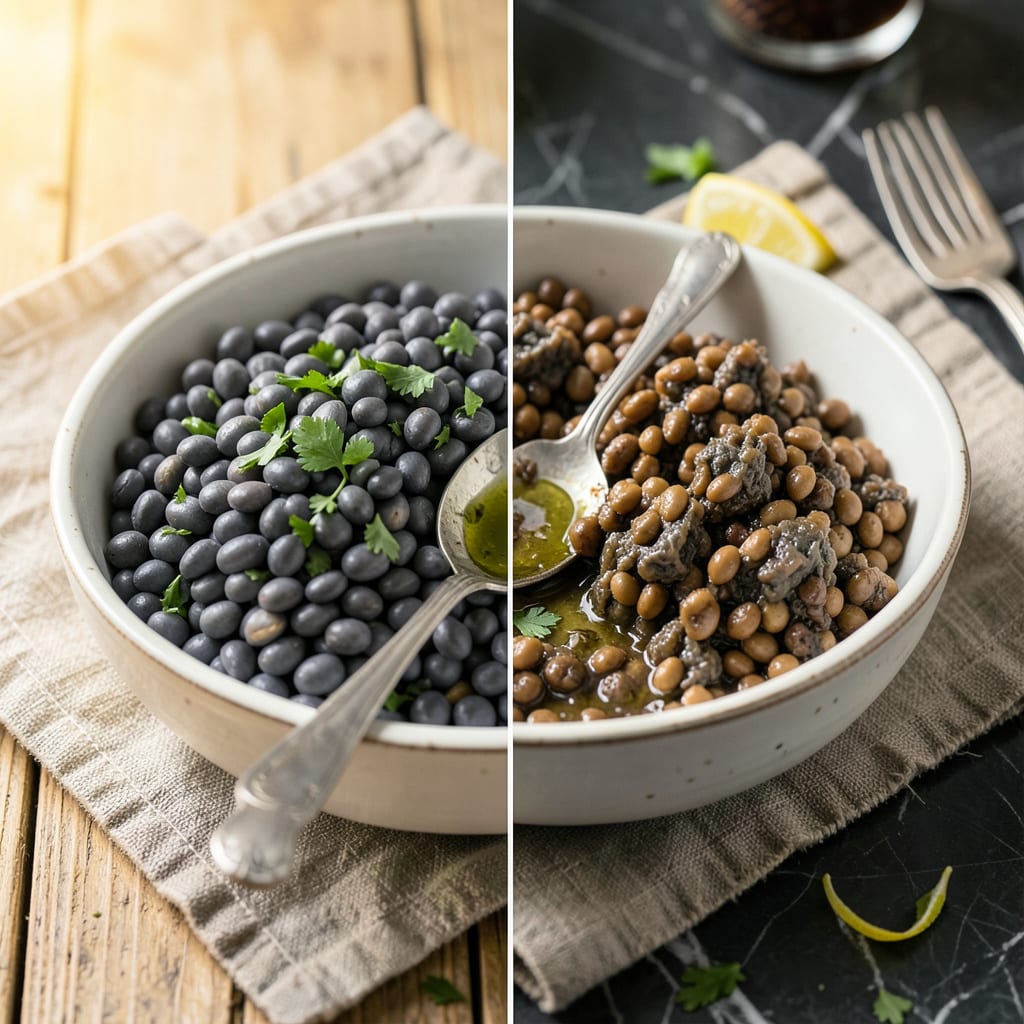
Cooked lentils are bad if they develop an off smell (sour, ammonia-like), slimy texture, or visible mold. Discard if stored over 5 days in the fridge or if left at room temperature for more than 2 hours.
I’ve seen too many kitchens where perfectly good lentils turn dangerous because of simple oversights. The sour, almost chemical-like odor comes from bacterial growth breaking down proteins, while that slick film means enzymes have started degrading the lentils’ structure. 🔥 What most people miss is that even without visible mold, lentils left too long in the fridge can develop harmful toxins that cooking won’t destroy. Always use airtight containers and refrigerate within 2 hours of cooking—this isn’t just about taste, it’s about food safety.
💡 In This Article
- Visual and Sensory Signs of Spoiled Cooked Lentils
- Safe Storage and Handling of Cooked Lentils
Visual and Sensory Signs of Spoiled Cooked Lentils
When lentils begin to spoil, the first red flag is often a color shift from their original earthy brown or green to a dull, grayish hue. This happens because oxidation breaks down the natural pigments, while bacterial growth produces metabolic byproducts that alter the appearance.
I’ve noticed that properly stored lentils maintain their vibrant color for 3-4 days, but beyond that, the fading becomes noticeable. 🔥
The texture transformation is equally telling. Freshly cooked lentils should feel tender yet slightly firm, but spoiled ones develop a slimy coating—this is the result of bacteria breaking down the lentils’ starches into dextrins and sugars. At room temperature, this process can begin within 4 hours, which is why refrigeration is critical.
The sliminess isn’t just unpleasant; it’s a clear sign that microbial activity has compromised the food’s safety.
Odor is the most reliable indicator. Spoiled lentils emit a sour, ammonia-like smell caused by protein breakdown and the production of volatile organic compounds. In my experience, this scent becomes detectable before visible mold appears—usually around day 5 in the fridge.
Unlike the mild, nutty aroma of fresh lentils, spoiled ones smell sharp and chemical, similar to overripe cheese or fermenting vegetables. ✨
Mold growth is the final stage, appearing as fuzzy white, green, or black spots. This occurs when spores (present in the air) land on the lentils and find enough moisture to germinate. Even if you only see mold on the surface, its root-like structures (hyphae) have likely penetrated deeper.
The USDA confirms that moldy lentils should never be salvaged—discard the entire batch to avoid consuming mycotoxins.
Time and temperature accelerate these changes. Lentils left at room temperature (70°F/21°C) for more than 2 hours enter the “danger zone” where bacteria multiply rapidly. In the fridge (40°F/4°C or below), this process slows but doesn’t stop completely. That’s why the 5-day rule exists—it’s the safety threshold before bacterial loads become risky. 💫
Pro tip: If you’re unsure, perform the “sniff and stick” test. Stir the lentils and smell them directly—if the odor makes you recoil, trust your instincts. When in doubt, remember that foodborne pathogens like Bacillus cereus (common in rice and legumes) don’t always change the food’s appearance but can still cause illness.
Better safe than sorry!

Trained in classic French technique but raised on slow-cooked ribs and spicy rubs, she blends culinary skill with smoke and soul.
- Recipe for Boneless Pork Chops in Cast Iron Skillet: Sear and Baste to Juicy Perfection - October 3, 2026
- Recipe for Boneless Cross Rib Roast: Slow-Roasted Beef with Herb Crust - October 3, 2026
- Hamburgers in Sauce Recipe Crock Pot: Slow-Cooked Savory Delight - October 3, 2026