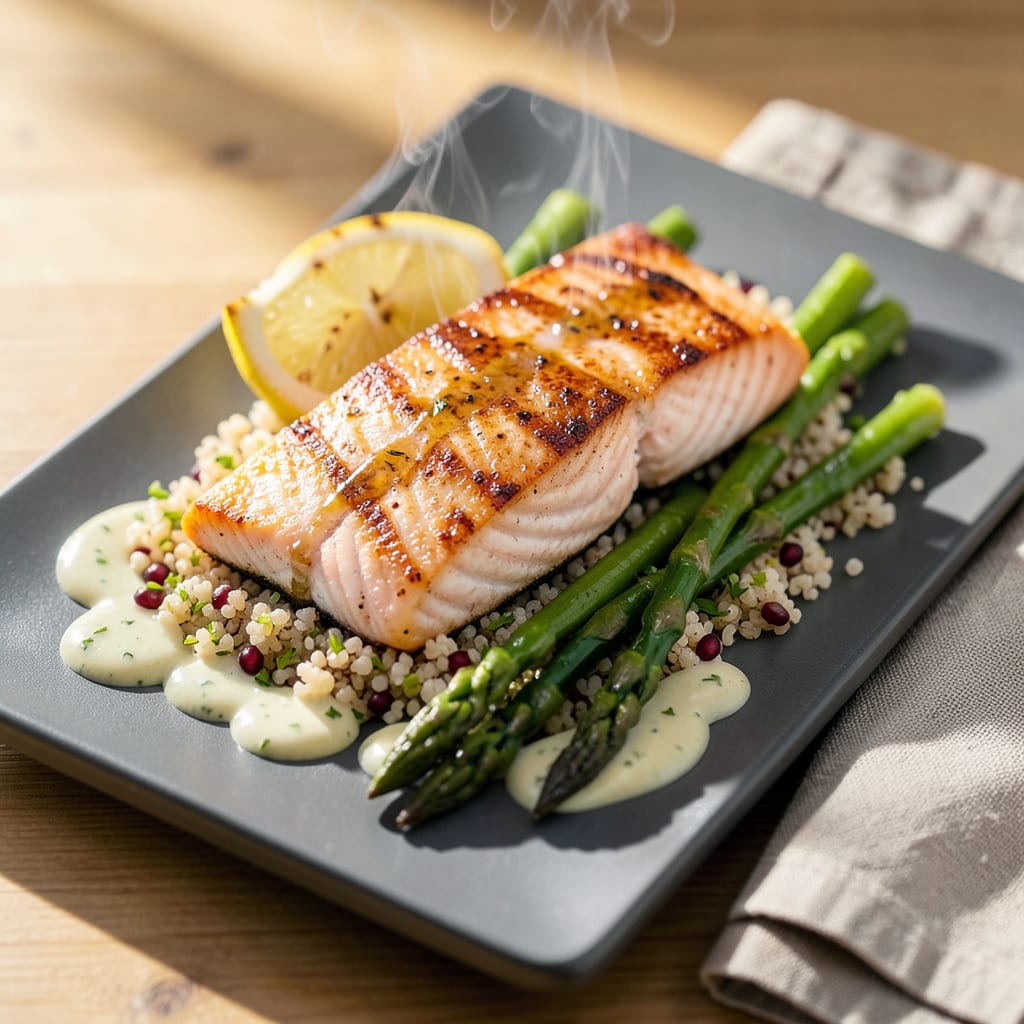
Cook salmon fillets in a preheated toaster oven at 400°F for 12-15 minutes, depending on thickness. Aim for 145°F internal temperature—thinner cuts need less time, while thicker pieces may require up to 18 minutes.
Toaster ovens deliver concentrated heat that cooks salmon beautifully when you nail the timing. 🔥 I’ve found that the key is monitoring thickness—1-inch fillets typically hit perfect doneness at the 12-minute mark, while 1.5-inch cuts need closer to 15-16 minutes. The compact space means heat circulates differently than a full oven, so keep an eye on color changes: that opaque pink hue signals it’s ready. Always let it rest 3-5 minutes after cooking to redistribute juices.
💡 In This Article
- Factors Affecting Salmon Cooking Time in a Toaster Oven
- Pro Tips for Perfect Toaster Oven Salmon Every Time
Factors Affecting Salmon Cooking Time in a Toaster Oven
The thickness of your salmon fillet is the biggest game-changer. A 1/2-inch thick piece will cook through in about 8-10 minutes at 400°F, while a 1.5-inch thick cut needs closer to 18 minutes.
This happens because heat penetrates from both sides, so thicker pieces require more time for the center to reach that critical 145°F mark. 🔥 I always measure the thickest part with my fingers—if it feels like the base of your thumb, you’re in the 1-inch range.
Starting temperature makes a dramatic difference. A fresh, room-temperature fillet cooks about 20% faster than one straight from the fridge. Frozen salmon? That’s a whole different beast—it needs 50% more time because the ice crystals must first melt before cooking begins.
The toaster oven’s compact space means heat recovery takes longer when you add cold fish, so preheating for 10 full minutes is non-negotiable for consistent results.
Your toaster oven’s wattage plays a sneaky role too. Most countertop models run between 1200-1800 watts, but higher-wattage units (like my 1800W Breville) can cook 15-20% faster than lower-powered versions. The heating elements are also closer to the food, creating more intense radiant heat.
I’ve noticed my salmon develops a better crust in high-wattage ovens, but requires more vigilant monitoring to prevent overcooking.
Here’s what most home cooks overlook: the USDA’s 145°F recommendation isn’t just about doneness—it’s the temperature where harmful bacteria like Vibrio and Salmonella are instantly destroyed. Salmon’s proteins also begin denaturing at 120°F, which is why you’ll see the color change from translucent to opaque.
The 5°F carryover cooking during resting means you can pull it at 140°F and let residual heat finish the job perfectly. ✨
Even the rack position affects timing. Placing salmon on the middle rack gives the most even cooking, while the top rack can shave off 1-2 minutes but risks drying the surface. Skin-on fillets need 1-2 extra minutes because the skin acts as an insulator.
I always check doneness by gently pressing the thickest part—it should flake slightly but still feel slightly resistant, like pressing your cheek.
Humidity levels in your kitchen can influence cooking too. On humid days, the salmon’s surface stays moister, which can add 1-2 minutes to achieve that perfect golden crust. The toaster oven’s small volume means ambient moisture has a bigger impact than in a full-size oven.
That’s why I sometimes crack the door for the last 2 minutes to let excess steam escape and encourage browning.
Remember that salmon continues cooking after you remove it. That 3-5 minute rest isn’t optional—it allows the muscle fibers to relax and reabsorb juices. Cutting too soon releases up to 30% more moisture, leaving you with drier fish. The rest also lets the internal temperature equalize, ensuring no cold spots remain in thicker cuts. 💫

Trained in classic French technique but raised on slow-cooked ribs and spicy rubs, she blends culinary skill with smoke and soul.
- Recipe for Boneless Pork Chops in Cast Iron Skillet: Sear and Baste to Juicy Perfection - October 3, 2026
- Recipe for Boneless Cross Rib Roast: Slow-Roasted Beef with Herb Crust - October 3, 2026
- Hamburgers in Sauce Recipe Crock Pot: Slow-Cooked Savory Delight - October 3, 2026