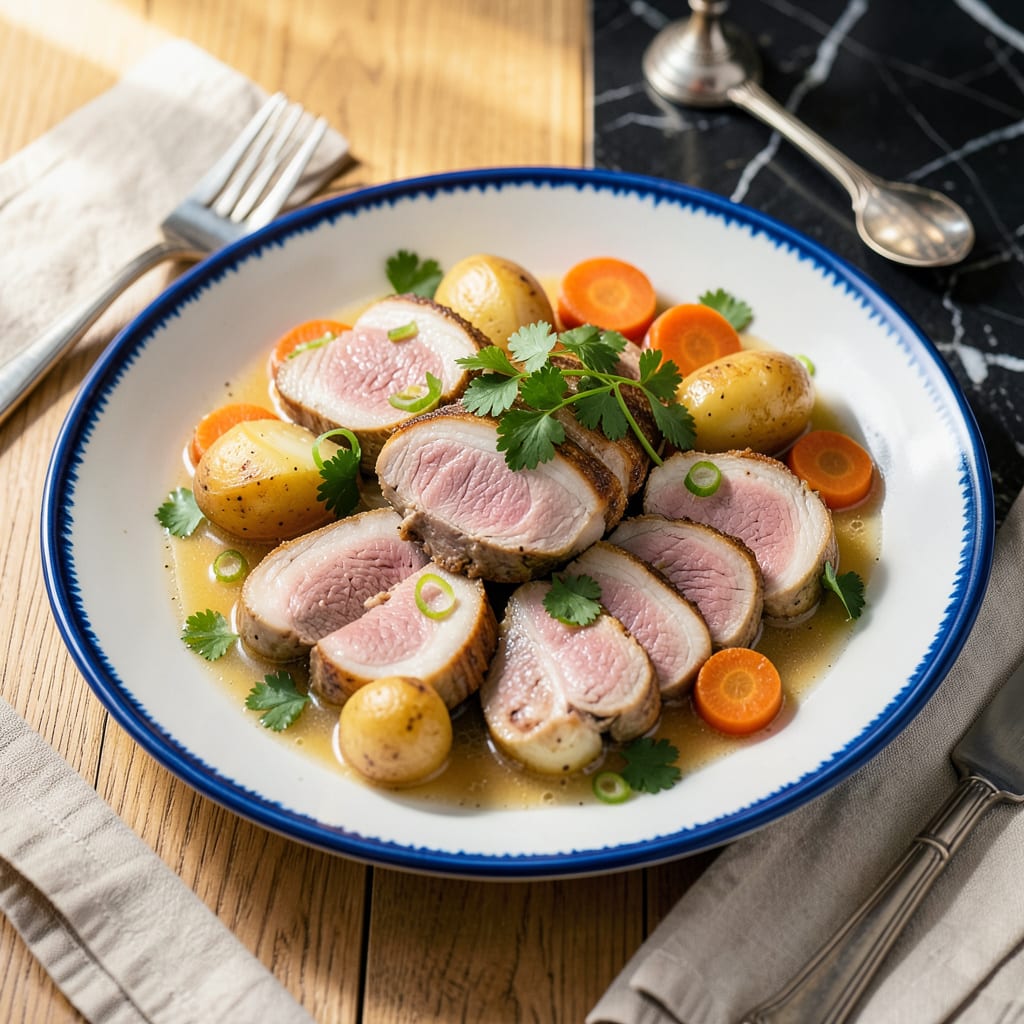
Boil lamb for 20-30 minutes per pound at a gentle simmer. For tender cuts like shoulder or shanks, 1.5-2 hours typically yields fall-off-the-bone results. Start checking doneness at 145°F internal temperature for medium-rare.
As a pitmaster who’s spent years perfecting slow-cooked meats, I’ve learned that lamb’s connective tissue is the secret to its transformation. The magic happens when collagen slowly melts into gelatin—this is why those tougher cuts become luxuriously tender with time. 🔥 What most home cooks miss is that maintaining a true simmer (not a rolling boil) prevents the meat from seizing up, while allowing the flavors to develop deeply.
I always recommend using a meat thermometer for precision, as visual cues can be deceiving with lamb. The difference between 145°F and 160°F might seem small, but it’s what separates juicy perfection from dry disappointment. And here’s my pro tip: save that flavorful broth—it’s liquid gold for your next stew or sauce. ✨
💡 In This Article
- Why Boiling Time Varies for Different Lamb Cuts
- Pro Tips for Boiling Lamb Without Losing Flavor
Why Boiling Time Varies for Different Lamb Cuts
The secret lies in the muscle structure and connective tissue. Lamb shoulder, with its dense network of collagen and elastin, requires 1.5-2 hours of gentle simmering to break down completely. This transformation happens when collagen melts into gelatin at temperatures above 160°F, creating that signature “fall-off-the-bone” texture.
The shoulder’s complex muscle fibers need this extended time to relax and become tender.
Compare that to lamb loin or rib chops, which contain far less connective tissue. These leaner cuts cook in just 20-30 minutes per pound because their muscle fibers are shorter and more delicate. The science here is about protein coagulation—when heated, the muscle proteins contract and squeeze out moisture.
With less connective tissue to break down, they reach perfect doneness much faster. 🔥
Bone-in cuts like shanks present another variable. The bone acts as an insulator, slowing heat penetration by about 25%. This is why bone-in shanks take nearly twice as long as boneless cuts of similar size. The marrow also releases rich flavors during cooking, which is why shank broth develops such incredible depth.
I always recommend adding an extra 30 minutes for bone-in cuts to account for this heat barrier effect.
Leg of lamb sits in the middle spectrum. With moderate connective tissue and larger muscle groups, it benefits from 1-1.5 hours of simmering. The key is watching the internal temperature—leg meat is done at 145-150°F for medium-rare, but needs that time to render the fat cap properly.
The fat distribution in leg cuts creates a self-basting effect that keeps the meat moist during longer cooking.
Here’s what most recipes don’t tell you: the water-to-meat ratio dramatically affects cooking time. Insufficient liquid causes temperature spikes that can toughen the meat. I maintain at least 2 quarts of water per pound of lamb to ensure even heat distribution.
The liquid should cover the meat by 1-2 inches throughout cooking to prevent hot spots that could lead to uneven doneness.
Age matters too. Younger lamb (under 1 year) cooks about 20% faster than mutton because its connective tissue hasn’t fully developed. The fibers are more delicate and the collagen breaks down more readily.
This is why spring lamb recipes often call for shorter cooking times—those tender muscles simply don’t need as much time to become perfectly tender.
Pro tip: Start checking doneness with a thermometer when the meat begins to pull away from the bones slightly. This visual cue typically appears when internal temps reach about 135°F, giving you a 10°F buffer to hit your target doneness without overcooking. ✨

Trained in classic French technique but raised on slow-cooked ribs and spicy rubs, she blends culinary skill with smoke and soul.
- Recipe for Boneless Pork Chops in Cast Iron Skillet: Sear and Baste to Juicy Perfection - October 3, 2026
- Recipe for Boneless Cross Rib Roast: Slow-Roasted Beef with Herb Crust - October 3, 2026
- Hamburgers in Sauce Recipe Crock Pot: Slow-Cooked Savory Delight - October 3, 2026