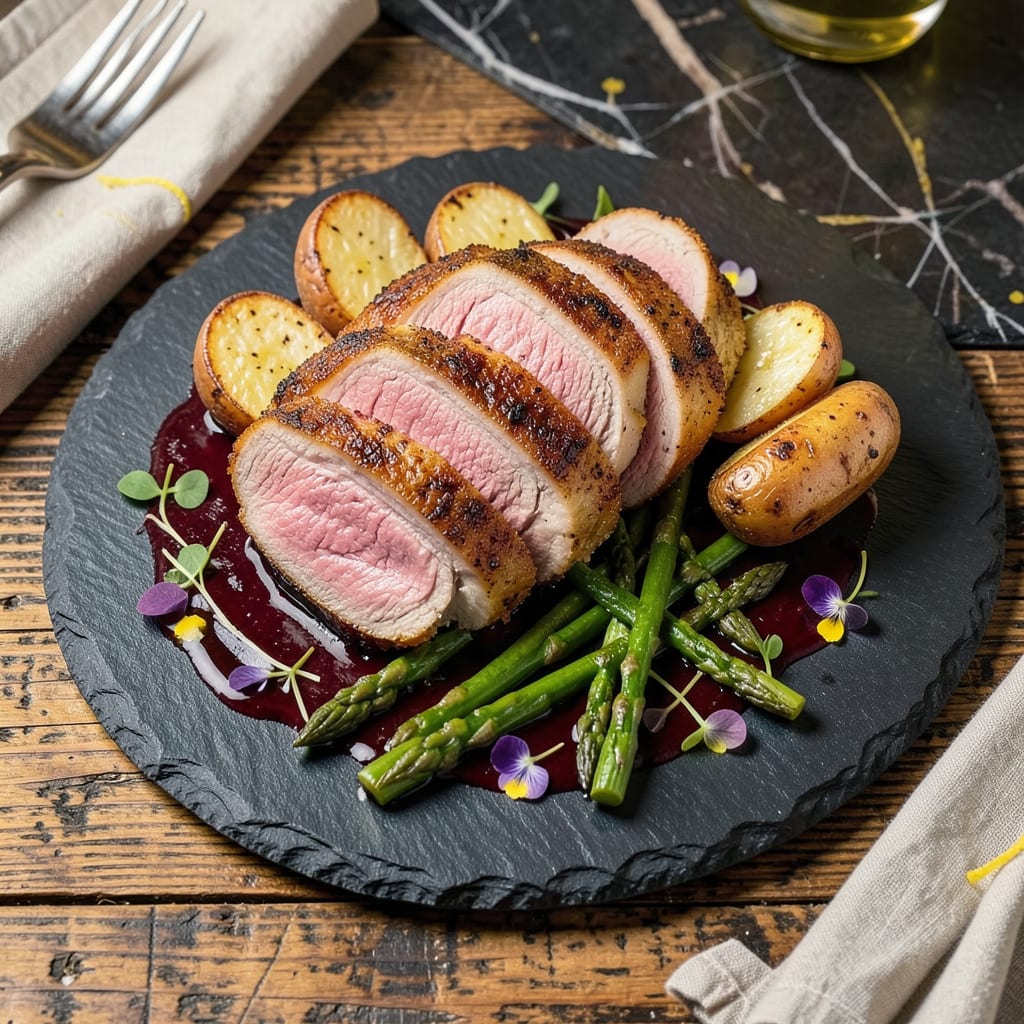
Yes, pork can safely be pink when cooked to the USDA-recommended internal temperature of 145°F (63°C) followed by a 3-minute rest. The pink color comes from myoglobin, not undercooking, and doesn’t indicate unsafe meat.
I’ve seen many home cooks panic when they cut into pork and see a rosy center, but here’s the deal: modern pork is far safer than what previous generations handled. 🔥 The USDA lowered the safe temperature from 160°F to 145°F in 2011 after decades of improved farming practices virtually eliminated parasite risks. That pink hue actually means you’ve hit the sweet spot—juicy, tender meat without overcooking it into dryness.
What most people don’t realize is that myoglobin (the protein that gives meat its red color) changes to pink when exposed to heat, not just in pork but in other meats too. The 3-minute rest after cooking lets the juices redistribute, ensuring both safety and perfect texture. Trust your thermometer more than the color—it’s the only foolproof way to know your pork is done right. ✨
💡 In This Article
- Why Properly Cooked Pork Stays Pink Inside
- How to Safely Check Pork Doneness Without Overcooking
Why Properly Cooked Pork Stays Pink Inside
The pink color in cooked pork comes from myoglobin, the same protein that makes raw meat red. When exposed to heat, myoglobin changes structure but doesn’t disappear completely. At 145°F, the protein denatures into a pinkish-brown form called hemichrome. This is identical to what happens in medium-rare steak—just with pork’s naturally lighter color base.
The transformation is chemical, not a sign of undercooking. 🔥
Modern farming practices have dramatically reduced trichinella parasites, which is why the USDA lowered the safe temperature from 160°F to 145°F in 2011. Commercial pork operations now use controlled feeding and processing that virtually eliminates parasite risks. The 3-minute rest after cooking allows residual heat to complete pasteurization while letting juices redistribute.
This combination ensures safety while preserving moisture and that desirable pink hue.
pH levels also play a role in color retention. Pork naturally has a slightly acidic pH (around 5.6-5.8), which helps stabilize the pink myoglobin compounds during cooking. Cured meats like ham stay pink due to nitrites, but even uncured pork maintains color because of this pH effect.
What you’re seeing is perfectly normal protein chemistry, not a safety concern. ✨
Different cuts show varying degrees of pinkness. Lean tenderloin might appear more uniformly pink, while fattier ribs can have a gradient from white to rosy. The key factor is temperature, not color. A well-calibrated thermometer is your best tool—insert it into the thickest part, avoiding bones.
When it reads 145°F and you’ve rested the meat, that pink center is exactly what you want for juicy, flavorful pork.
Here’s what most home cooks miss: the pink ring just beneath the surface (called the “smoke ring” in BBQ) is actually a good sign. It forms when myoglobin reacts with combustion gases during cooking. This reaction happens at safe temperatures and indicates proper heat penetration.
The ring’s depth varies by cooking method—deeper in smoked pork, shallower in pan-seared chops. 💫
For those still skeptical, consider this: the same myoglobin chemistry applies to all mammals. Lamb chops served medium-rare are celebrated, yet they’re just as pink as properly cooked pork. The difference is cultural perception, not food science.
When you understand the protein transformations happening, that pink center becomes a badge of perfectly cooked meat, not a cause for concern.

Trained in classic French technique but raised on slow-cooked ribs and spicy rubs, she blends culinary skill with smoke and soul.
- Recipe for Boneless Pork Chops in Cast Iron Skillet: Sear and Baste to Juicy Perfection - October 3, 2026
- Recipe for Boneless Cross Rib Roast: Slow-Roasted Beef with Herb Crust - October 3, 2026
- Hamburgers in Sauce Recipe Crock Pot: Slow-Cooked Savory Delight - October 3, 2026