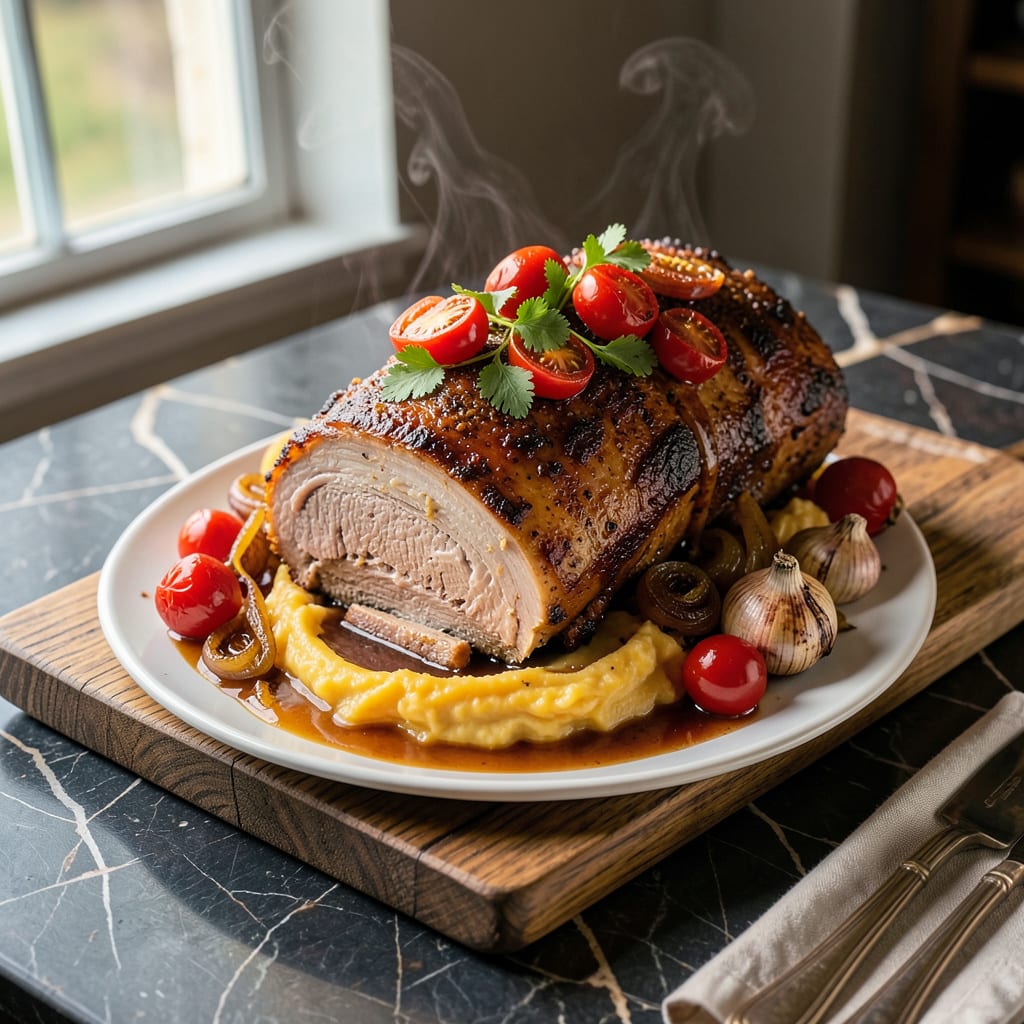
A 10 lb pork shoulder typically requires 1.5 to 2 hours per pound at 225°F (107°C) when smoked or slow-roasted, totaling 15–20 hours for fall-apart tenderness. For oven braising at 325°F (163°C), plan for 6–8 hours until internal temperature reaches 195–205°F (90–96°C).
This isn’t just about time—it’s about transforming tough connective tissue into buttery perfection. 🔥 The low-and-slow method at 225°F gives collagen time to melt, while higher heat at 325°F speeds things up but requires careful monitoring. I’ve found that bone-in cuts often take longer than boneless, and wrapping halfway through can shave off hours by powering through the stall phase. The magic happens when that internal probe slides in like warm butter—no resistance, just tender, juicy meat.
💡 In This Article
- Why Cooking Time Varies for 10 Lb Pork Shoulder
- Pro Tips for Perfect 10 Lb Pork Shoulder Every Time
Why Cooking Time Varies for 10 Lb Pork Shoulder
The secret lies in the shoulder’s tough connective tissue network. At temperatures below 160°F (71°C), collagen remains rubbery and unyielding. But between 160-205°F (71-96°C), something magical happens: collagen molecules begin hydrolyzing into gelatin, transforming chewy meat into silky, pull-apart perfection.
This isn’t an instant process—it requires sustained heat exposure, which is why we commit to those long cooking windows. 🔥
Ever heard of “the stall”? Around 150-170°F (65-77°C), evaporation from the meat’s surface creates a cooling effect that can plateau temperatures for hours. A 10 lb shoulder might stall for 2-4 hours in a smoker, while an oven’s drier environment often shortens this phase.
Bone-in cuts add another variable—the dense bone mass acts as a heat sink, requiring about 20% more time than boneless to reach the same internal temperature throughout.
The temperature gradient from surface to center matters more than you’d think. At 225°F (107°C), heat penetrates at about 0.5 inches per hour, meaning the very center of your shoulder might not hit 195°F (90°C) until hour 12 or beyond.
Higher oven temps at 325°F (163°C) accelerate this, but risk drying the outer layers before the core renders properly. That’s why I always recommend probing multiple spots—not just the thickest part—to ensure even doneness.
Here’s what most home cooks miss: the final 10°F (5°C) rise from 195°F to 205°F (90-96°C) can take as long as the previous 20°F (11°C) combined. This is where collagen fully surrenders to gelatinization. I’ve seen shoulders jump from “almost there” to “perfect” in just 30 minutes during this critical window.
Patience pays off—rushing this phase leaves you with meat that’s technically “done” but still fighting your fork. ✨
Humidity plays a sneaky role too. In a smoker with 70% humidity, the stall lasts longer but the meat retains more moisture. Dry oven heat at 325°F might cut cook time by 25%, but you’ll need to baste or wrap to compensate. My pro move?
For every 1,000 ft above sea level, add about 5% to your estimated cook time—those thinner air molecules just don’t transfer heat as efficiently at altitude.
Remember that fat cap? A 1/4-inch layer insulates beautifully, while anything over 1/2-inch can create temperature barriers. I trim to precisely 0.3 inches—enough to protect the meat during the stall but not so much that it delays the collagen breakdown we’re working so hard to achieve.
The difference between “good” and “transcendent” often comes down to these millimeter-level decisions. 💫
Internal temperature is your north star, but probe tenderness is the real test. When your thermometer slides into the thickest part with the resistance of room-temperature butter, you’ve arrived. I’ve pulled shoulders at 203°F (95°C) that probed like velvet, and others at 198°F (92°C) that still needed another hour.
Trust the probe over the numbers—your senses know better than the display. ⚡

Trained in classic French technique but raised on slow-cooked ribs and spicy rubs, she blends culinary skill with smoke and soul.
- Recipe for Boneless Pork Chops in Cast Iron Skillet: Sear and Baste to Juicy Perfection - October 3, 2026
- Recipe for Boneless Cross Rib Roast: Slow-Roasted Beef with Herb Crust - October 3, 2026
- Hamburgers in Sauce Recipe Crock Pot: Slow-Cooked Savory Delight - October 3, 2026