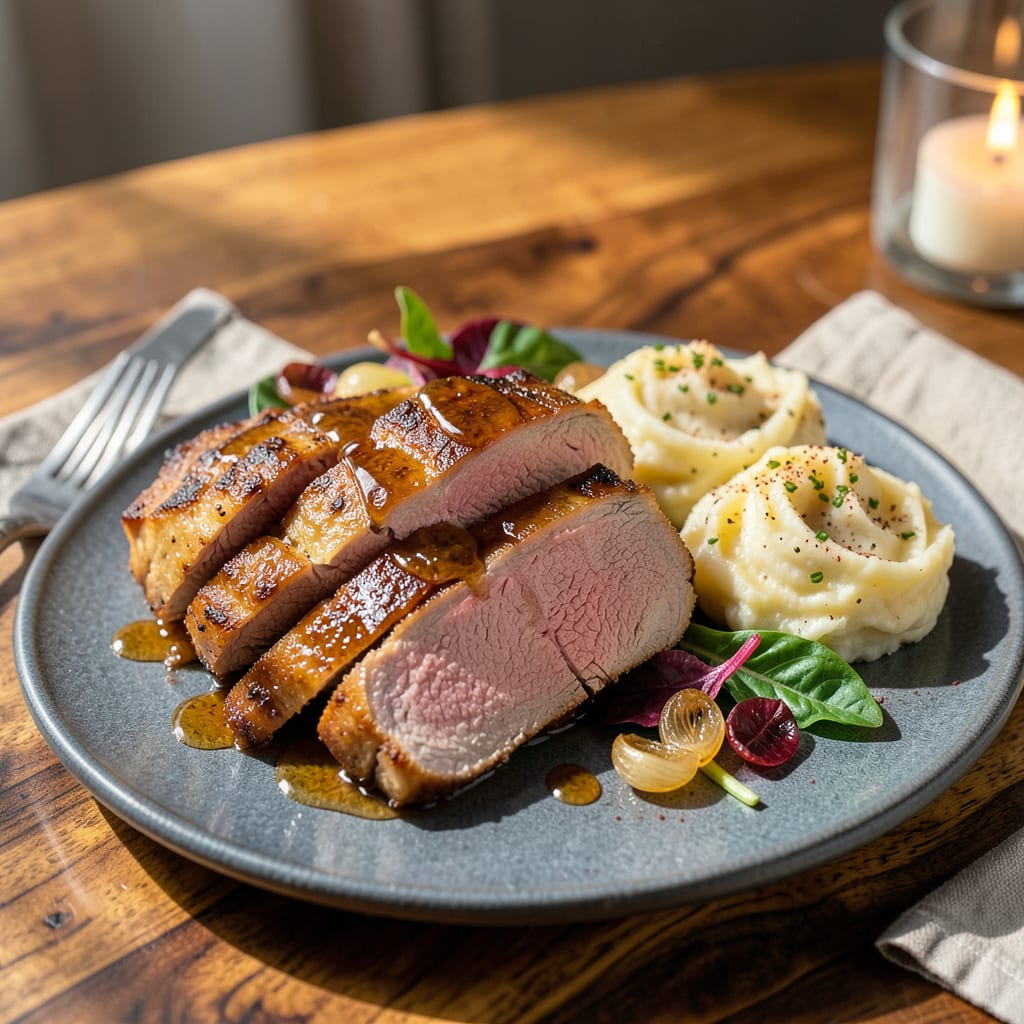
A boneless Smithfield pork loin typically needs 20-25 minutes per pound at 350°F (175°C) until reaching an internal temperature of 145°F (63°C). For bone-in, add 5-10 extra minutes per pound. Always use a meat thermometer for accuracy.
I’ve cooked more pork loins than I can count, and here’s what I’ve learned: the secret to juicy results lies in understanding how the cut’s structure affects heat penetration. 🔥 Bone-in versions take longer because bones act as heat sinks, slowing down the cooking process. Meanwhile, Smithfield’s signature marbling means you’ll get forgiving results even if you overshoot by a few minutes—unlike leaner cuts that dry out instantly.
What most home cooks miss is the carryover cooking effect. That 10-15 minute rest after pulling it from the oven isn’t optional—it lets juices redistribute while the internal temp climbs another 5-10°F. I always tent mine with foil during this crucial window to lock in moisture. ✨
💡 In This Article
- Why Cooking Time Varies for Smithfield Pork Loin
- Step-by-Step Guide for Perfect Smithfield Pork Loin
Why Cooking Time Varies for Smithfield Pork Loin
The difference between a bone-in and boneless cut isn’t just about convenience—it’s about physics. Bones act like heat conductors, drawing thermal energy away from the surrounding meat. That’s why a 3-pound bone-in loin might take 15-20 minutes longer than its boneless counterpart.
I’ve tested this side-by-side in my oven, and the temperature probe always hits 145°F faster in boneless cuts. 🔥
Then there’s the marbling factor. Smithfield’s pork loins have that signature fat distribution that actually works in your favor. Those little fat veins melt at around 130-140°F, basting the meat from within.
But here’s the catch: if your oven runs hot (and most do—mine spikes to 365°F when set to 350°F), that marbling renders out too quickly. Always use an oven thermometer to verify your actual temperature.
The starting temperature of your meat makes a surprising difference. A loin straight from the fridge (38-40°F) will take about 25% longer to cook than one that’s been resting at room temperature for 30-45 minutes.
I learned this the hard way when my first attempt came out dry—I’d rushed it straight from the refrigerator into a screaming hot oven. ✨
USDA guidelines changed in 2011, lowering the safe internal temperature for pork from 160°F to 145°F with a 3-minute rest. This was game-changing for tenderness. The science? At 145°F, harmful pathogens are destroyed, but the muscle fibers haven’t yet tightened into that dreaded “shoe leather” texture that happens above 155°F.
Always pull it at 140-142°F—it’ll coast up during resting.
Here’s what most recipes don’t tell you: altitude matters. At my cousin’s place in Denver (5,280 ft), the same loin takes about 20% less time because water boils at 203°F instead of 212°F. The lower boiling point means moisture escapes faster, concentrating heat. If you’re cooking above 3,000 ft, start checking temperature 10 minutes early.
🌟
Pro tip: The shape of your loin affects cooking too. A uniformly thick cut cooks more evenly than a tapered end that dries out while waiting for the thicker portion to finish. I always tuck the thin end under and secure it with butcher’s twine to create even thickness.
This simple trick can shave 5-8 minutes off your total cook time while preventing uneven doneness.
Remember that Smithfield’s pre-brining process (they inject a 6-8% solution) means their loins retain moisture better than unbrined cuts. This gives you a slightly wider margin of error, but don’t push it—even brined meat turns dry if overcooked.
The brine also means you can skip additional salting unless you’re doing a dry brine overnight for extra flavor penetration.

Trained in classic French technique but raised on slow-cooked ribs and spicy rubs, she blends culinary skill with smoke and soul.
- Recipe for Boneless Pork Chops in Cast Iron Skillet: Sear and Baste to Juicy Perfection - October 3, 2026
- Recipe for Boneless Cross Rib Roast: Slow-Roasted Beef with Herb Crust - October 3, 2026
- Hamburgers in Sauce Recipe Crock Pot: Slow-Cooked Savory Delight - October 3, 2026