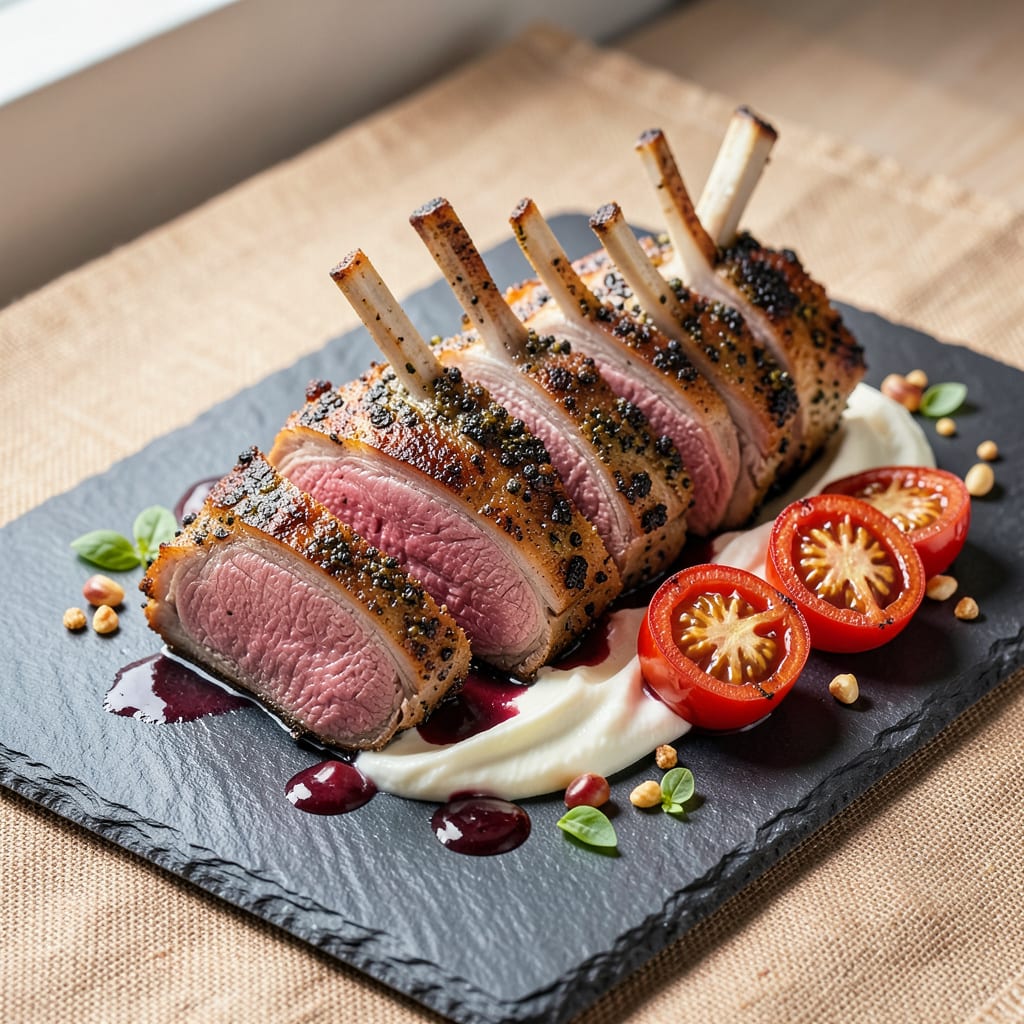
For medium-rare rack of lamb at 400°F, cook for 20-25 minutes (about 15 minutes per pound). Use a meat thermometer to check for 130-135°F internal temperature before resting 10 minutes.
High heat transforms rack of lamb by creating that coveted crispy crust while keeping the interior tender. 🔥 The 400°F temperature works magic on the fat cap, rendering it perfectly while allowing the meat to cook evenly. I always recommend using a meat thermometer because visual cues can be deceiving—especially with bone-in cuts where heat distribution varies. That 10-minute rest isn’t just tradition; it lets juices redistribute so every slice stays succulent.
💡 In This Article
- Science Behind Perfect Rack of Lamb Cooking Times at 400°F
- Step-by-Step Guide for Cooking Rack of Lamb at High Heat
Science Behind Perfect Rack of Lamb Cooking Times at 400°F
At 400°F, you’re hitting the sweet spot where heat penetrates the lamb at an optimal rate—about 1°F per minute for the center. This temperature is high enough to trigger the Maillard reaction on the surface (creating that golden crust) while allowing the interior to reach medium-rare before the exterior overcooks.
The fat cap renders beautifully at this heat, basting the meat as it cooks. 🔥
The bones act as heat conductors, which means bone-in racks cook about 15-20% faster than boneless cuts of the same weight. A 1.5-pound rack typically hits 130°F in 20-22 minutes, while a 2-pound rack needs closer to 25 minutes.
The collagen in connective tissues begins breaking down at 120°F, but you want to pull it at 130-135°F to avoid over-softening the texture.
Carryover cooking is the hidden factor here. When you remove the lamb at 130°F, residual heat will push the internal temperature up another 5-10°F during resting. This is why that 10-minute rest isn’t optional—it lets the juices redistribute while the temperature stabilizes. Skipping this step means dry meat, even if your timing was perfect. ✨
The fat content (about 25-30% in rib chops) creates a self-basting effect at 400°F. As the external fat renders, it coats the meat, preventing moisture loss. This is why you’ll notice the crust stays crisp while the interior remains juicy.
For comparison, cooking at 350°F would require 30-40 minutes but wouldn’t develop the same depth of flavor.
Here’s what most home cooks miss: oven placement matters. The top third of your oven runs about 25°F hotter than the center. For even cooking, place your rack on the middle shelf and rotate it halfway through. This prevents one side from developing too dark a crust before the center reaches temperature. 💫
Pro tip: If your rack has uneven thickness (common with frenched bones), shield the thinner ends with foil after 15 minutes. This prevents the tips from overcooking while the thicker center finishes. The difference between perfect medium-rare and dry meat can be just 3-4 minutes at this temperature.
Remember, altitude affects cooking times too. At elevations above 3,000 feet, reduce cooking time by about 5% since water boils at lower temperatures. The same rack that takes 22 minutes at sea level might only need 20 minutes in Denver. Always verify with that thermometer! ⚡

Trained in classic French technique but raised on slow-cooked ribs and spicy rubs, she blends culinary skill with smoke and soul.
- Recipe for Boneless Pork Chops in Cast Iron Skillet: Sear and Baste to Juicy Perfection - October 3, 2026
- Recipe for Boneless Cross Rib Roast: Slow-Roasted Beef with Herb Crust - October 3, 2026
- Hamburgers in Sauce Recipe Crock Pot: Slow-Cooked Savory Delight - October 3, 2026