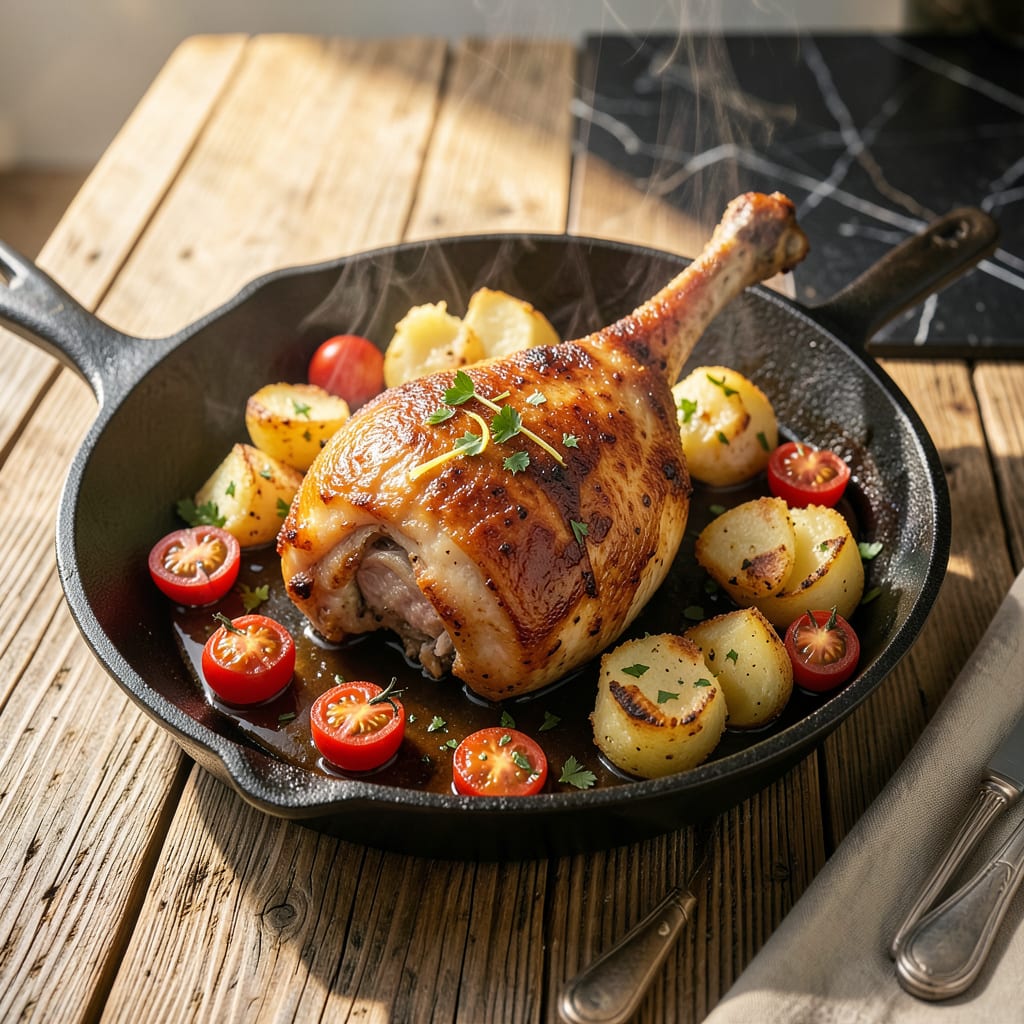
Pan-fry chicken leg quarters skin-side down for 8–10 minutes at medium-high heat, then flip and cook 10–12 minutes more until internal temperature reaches 165°F. Adjust time for bone-in thickness or crispiness preference.
Getting that golden crust while keeping the meat tender is all about heat control and patience. 🔥 I’ve found that starting with a properly heated pan (a drop of water should sizzle immediately) creates the ideal sear. The bone acts as a heat conductor, so thicker quarters near the joint may need an extra minute or two—always check with a meat thermometer for foolproof results.
What many home cooks overlook is the resting phase after cooking. Letting the chicken sit for 5-10 minutes allows juices to redistribute throughout the meat. This simple step transforms good fried chicken into restaurant-quality perfection with every bite. ✨
💡 In This Article
- Why Cooking Time Varies for Chicken Leg Quarters
- Pro Tips for Perfectly Pan-Fried Chicken Leg Quarters
Why Cooking Time Varies for Chicken Leg Quarters
The bone in chicken leg quarters acts like a heat sink, conducting temperature differently than boneless cuts. Dark meat near the bone (thigh area) cooks slower than the drumstick portion because of its higher fat content and density.
This uneven heat distribution means you’ll often see the drumstick reach 165°F faster while the thigh lags behind by 5-10°F. The solution? Focus your thermometer probe near the thickest part where thigh meets drumstick. 🔥
Skin thickness dramatically impacts crispiness and cooking duration. Commercial chicken often has skin 1/8-inch thick, while heritage breeds may have 1/4-inch or more. Thicker skin requires 2-3 extra minutes per side to render fat properly and achieve that coveted crackling texture.
I’ve found that patting the skin completely dry before cooking (using paper towels for 30 seconds) removes moisture that would otherwise steam instead of crisp. ✨
Pan heat distribution creates micro-climates across the cooking surface. A cast iron skillet maintains 375-400°F consistently, while stainless steel may develop hot spots 50°F hotter in the center. This explains why some pieces brown unevenly. The fix? Rotate your pan 180 degrees halfway through cooking each side.
Thin-bottomed pans also lose heat faster when you add cold chicken, potentially extending cooking time by 15-20%. 💫
Internal temperature trumps clock time because chicken leg quarters vary in size. A 10-ounce quarter may hit 165°F in 18 minutes total, while a 14-ounce piece could need 22-24 minutes.
The USDA’s 165°F benchmark accounts for instant pasteurization of salmonella, but dark meat actually reaches safe doneness at 160°F (with 1-minute hold time) due to its higher pH level. ⚡
Ambient factors play a surprising role too. Cooking at high altitude (above 3,000 feet) can extend cooking time by 20% because water boils at lower temperatures. Humidity matters as well—dry winter air pulls moisture from skin faster, potentially reducing crisping time by 1-2 minutes compared to humid summer conditions. 🌟
The Maillard reaction (that beautiful browning process) occurs most efficiently between 300-350°F. When you flip the chicken, you’re resetting this chemical process on the new side. This is why maintaining consistent medium-high heat throughout cooking creates that uniform golden crust.
Too hot, and you’ll burn the outside before the inside cooks; too cool, and you’ll steam the skin instead of crisping it.
Here’s a pro trick: The “wiggle test” reveals doneness without a thermometer. When the drumstick meat near the bone wiggles slightly but the joint feels firm (not rubbery), you’re within 5°F of perfect doneness. This tactile method works because collagen in connective tissues breaks down at 160-165°F, changing the meat’s resistance. 💛

Trained in classic French technique but raised on slow-cooked ribs and spicy rubs, she blends culinary skill with smoke and soul.
- Recipe for Boneless Pork Chops in Cast Iron Skillet: Sear and Baste to Juicy Perfection - October 3, 2026
- Recipe for Boneless Cross Rib Roast: Slow-Roasted Beef with Herb Crust - October 3, 2026
- Hamburgers in Sauce Recipe Crock Pot: Slow-Cooked Savory Delight - October 3, 2026