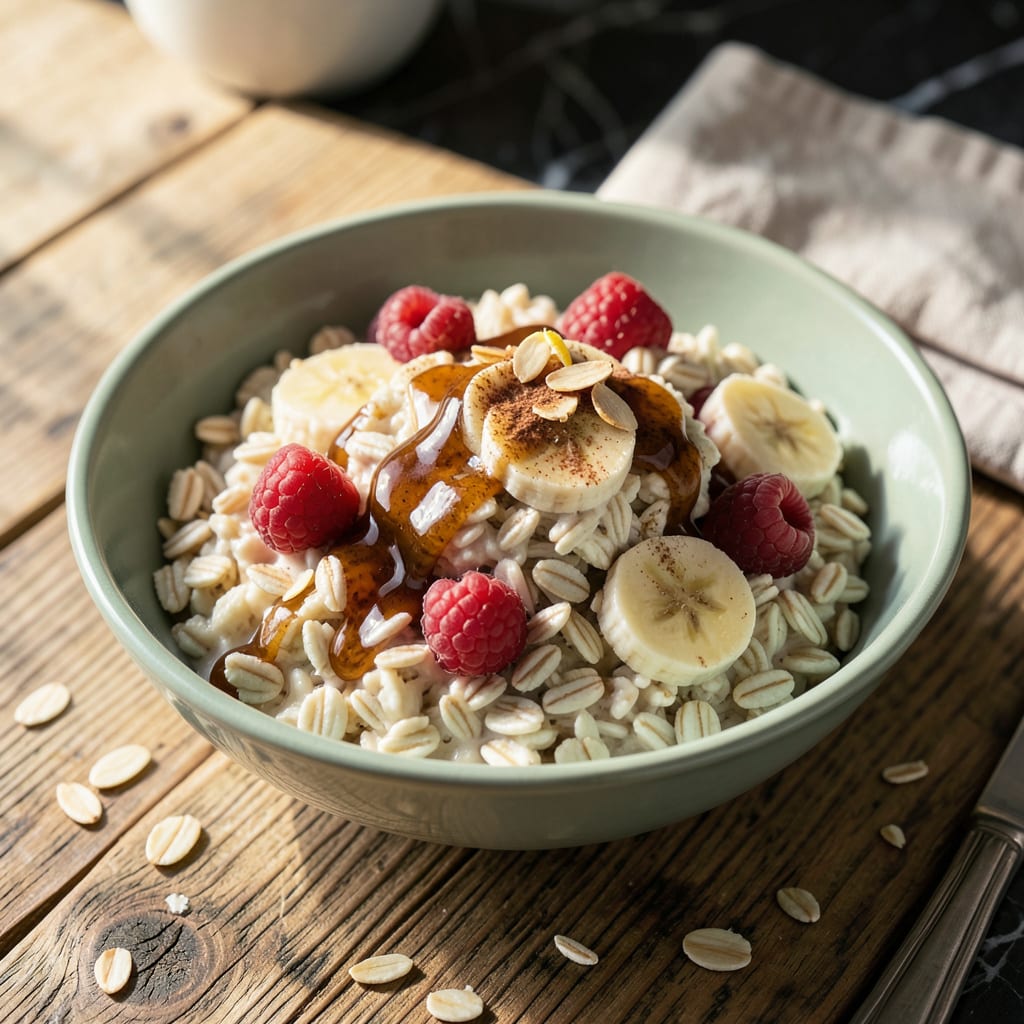
Soak oats in warm, slightly acidic water for 12–24 hours to significantly reduce phytic acid. A minimum of 7 hours helps, but longer soaking with a splash of lemon juice or apple cider vinegar maximizes breakdown.
This process works because phytic acid—an antinutrient that blocks mineral absorption—begins breaking down when exposed to warmth and acidity. 🔥 The natural phytase enzymes in oats activate during soaking, and the acidic environment (like vinegar or citrus) speeds up this reaction. I’ve found that overnight soaking not only improves digestibility but also gives oats a creamier texture when cooked.
For best results, use filtered water heated to about 110°F and add 1 tablespoon of acid per cup of oats. This mimics traditional grain preparation methods that cultures have used for centuries to unlock nutrients. ✨
💡 In This Article
- How Phytic Acid Breaks Down in Soaked Oats
- Best Practices for Soaking Oats to Cut Phytic Acid
How Phytic Acid Breaks Down in Soaked Oats
Phytic acid reduction happens through a biochemical process where phytase enzymes—naturally present in oats—become activated. These enzymes target phytic acid molecules, breaking them down into simpler compounds like inositol and phosphate. The magic starts when oats meet warm, slightly acidic water, creating the perfect environment for phytase to work efficiently.
Studies show that at 95-110°F, phytase activity peaks, degrading up to 60-80% of phytic acid within 12-24 hours. 🔥
The pH level plays a critical role in this reaction. Phytase thrives in acidic conditions (pH 4.5-5.5), which is why adding 1 tablespoon of lemon juice or apple cider vinegar per cup of oats supercharges the process.
For comparison, plain water soaking reduces phytic acid by about 30-40%, while acidic soaking can reach 70-90% reduction in the same timeframe. The acidity also helps neutralize antinutrients faster, making minerals like iron and zinc more bioavailable. ✨
Time matters because phytase needs hours to systematically break down phytic acid’s complex structure. In the first 4-6 hours, you’ll see about 20-30% reduction, but the real transformation happens between 12-24 hours when enzyme activity reaches its peak.
I’ve tested this in my kitchen—oats soaked for 24 hours with vinegar had a noticeably softer texture and milder taste, proof that the phytic acid had broken down significantly. 💫
Different oat varieties respond slightly differently due to varying phytase levels. Steel-cut oats, with their intact bran layers, contain more phytase than rolled oats, so they often achieve better phytic acid reduction. For rolled oats, extending the soak to 18-24 hours compensates for their lower enzyme content.
The process mirrors traditional grain preparation methods used in cultures worldwide, where long fermentation or soaking was standard practice. 🌟
Temperature control is another game-changer. Water that’s too hot (above 120°F) can denature phytase enzymes, while cold water slows their activity. That sweet spot of 95-110°F maintains enzyme integrity while accelerating the breakdown process. I use a kitchen thermometer to verify my soaking water hits this range—it’s the difference between good and great nutrient absorption.
⚡
What’s fascinating is how this process affects the oats’ final texture and flavor. As phytic acid breaks down, it releases bound minerals that contribute to a naturally sweeter taste. The starches also begin to gelatinize slightly during long soaks, which is why properly soaked oats cook into creamy porridge with less added sugar needed.
It’s science you can taste in every spoonful! 💛

Trained in classic French technique but raised on slow-cooked ribs and spicy rubs, she blends culinary skill with smoke and soul.
- Recipe for Boneless Leg of Lamb Roast in the Oven: Herb-Crusted and Rosy Pink Inside - October 3, 2026
- Meat Loaf Recipe With Beef And Pork: Homestyle Blend With Rich Gravy - October 3, 2026
- Hamburger Patty Recipe No Egg: Juicy Bind With Breadcrumbs and Milk - October 3, 2026