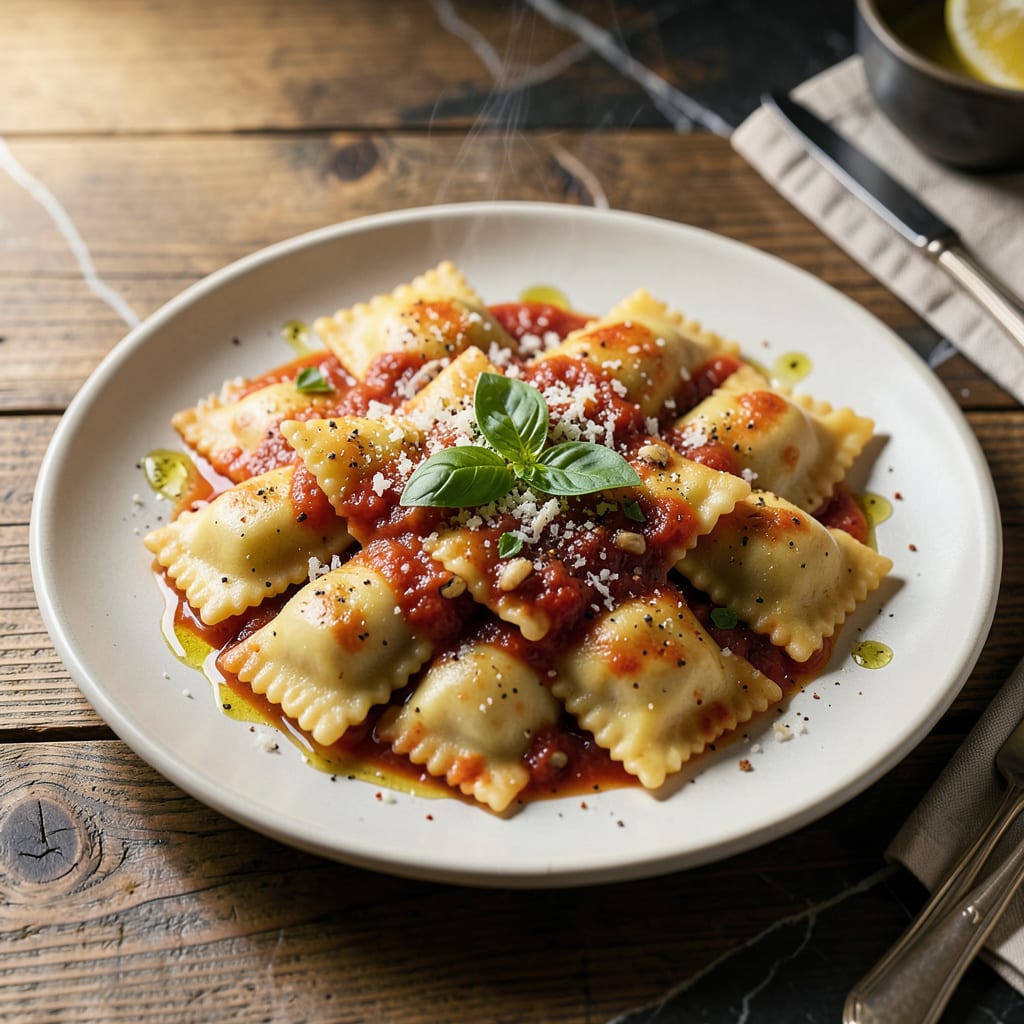
A typical serving of cheese ravioli with tomato sauce (1 cup or ~200g) contains approximately 300-350 calories. Calories vary based on filling type, sauce ingredients, and portion size.
What surprises many people is how quickly those calories add up when you consider the components separately. The pasta dough itself contributes about 120-150 calories per serving, while cheese fillings can pack another 80-120 calories depending on richness. Then there’s the sauce—store-bought versions often contain added sugars and oils that push the count higher than homemade alternatives. 🔥
I’ve found that even small tweaks make a difference. Swapping regular pasta for whole wheat or using a lighter hand with cheese can shave off 50-70 calories without sacrificing flavor. The key is balancing indulgence with mindful ingredient choices.
💡 In This Article
- Calorie Breakdown of Ravioli and Tomato Sauce Components
- Lower-Calorie Ravioli and Sauce Alternatives
Calorie Breakdown of Ravioli and Tomato Sauce Components
The calorie count in ravioli starts with the pasta dough itself. Traditional egg pasta contains about 130-150 calories per cup (cooked), coming from refined flour and eggs.
The filling makes the biggest difference: cheese-based fillings add 80-120 calories per serving (ricotta is lighter at 80, while cream cheese blends reach 120), while meat fillings can push this to 150-200 calories depending on fat content. 🔥
Tomato sauce contributes more than you might expect. A standard ½ cup serving of marinara contains 70-90 calories, but this jumps dramatically with added ingredients. Olive oil (1 tbsp = 120 calories), sugar (1 tsp = 16 calories), and butter all increase the total.
Store-bought sauces often contain hidden sugars and oils that can add 50-100 extra calories compared to homemade versions.
The cooking method plays a surprising role too. Boiled ravioli absorbs minimal additional calories, while pan-fried versions can gain 50-80 calories from the oil used for crisping.
Even the cheese topping matters: 1 tbsp of grated parmesan adds about 20 calories, while a sprinkle of pecorino romano (more flavorful) lets you use less for the same impact.
Here’s what most people overlook: portion distortion. Restaurant servings often exceed 2 cups (double the standard), and “family-style” dishes encourage overpouring sauce. A seemingly innocent extra ½ cup of sauce can add 70-90 calories you might not account for. The plate itself becomes a calorie multiplier when we’re not measuring.
For perspective, a 1-cup serving of cheese ravioli with marinara equals about 30 minutes of brisk walking to burn off. Meat-filled versions might require 45 minutes of cycling. This isn’t about restriction—it’s about understanding how small ingredient choices create that 50-100 calorie swing between a light meal and a heavier one. ✨
The texture matters too. Creamy sauces (like vodka or Alfredo) can triple the calorie count compared to simple tomato-based ones. A ½ cup of Alfredo contains about 200 calories—more than double the marinara—due to heavy cream and butter.
Even “light” cream sauces often use flour thickeners that add 30-40 calories per serving you might not consider.
What changes the game is realizing that 25% of the calories come from the sauce alone. That means you could eat 1.25 cups of plain ravioli for the same calories as 1 cup with heavy sauce.
This knowledge lets you strategize—maybe you want that rich sauce but can balance it with a smaller pasta portion and extra veggies. 💫

Trained in classic French technique but raised on slow-cooked ribs and spicy rubs, she blends culinary skill with smoke and soul.
- Recipe for Boneless Pork Chops in Cast Iron Skillet: Sear and Baste to Juicy Perfection - October 3, 2026
- Recipe for Boneless Cross Rib Roast: Slow-Roasted Beef with Herb Crust - October 3, 2026
- Hamburgers in Sauce Recipe Crock Pot: Slow-Cooked Savory Delight - October 3, 2026