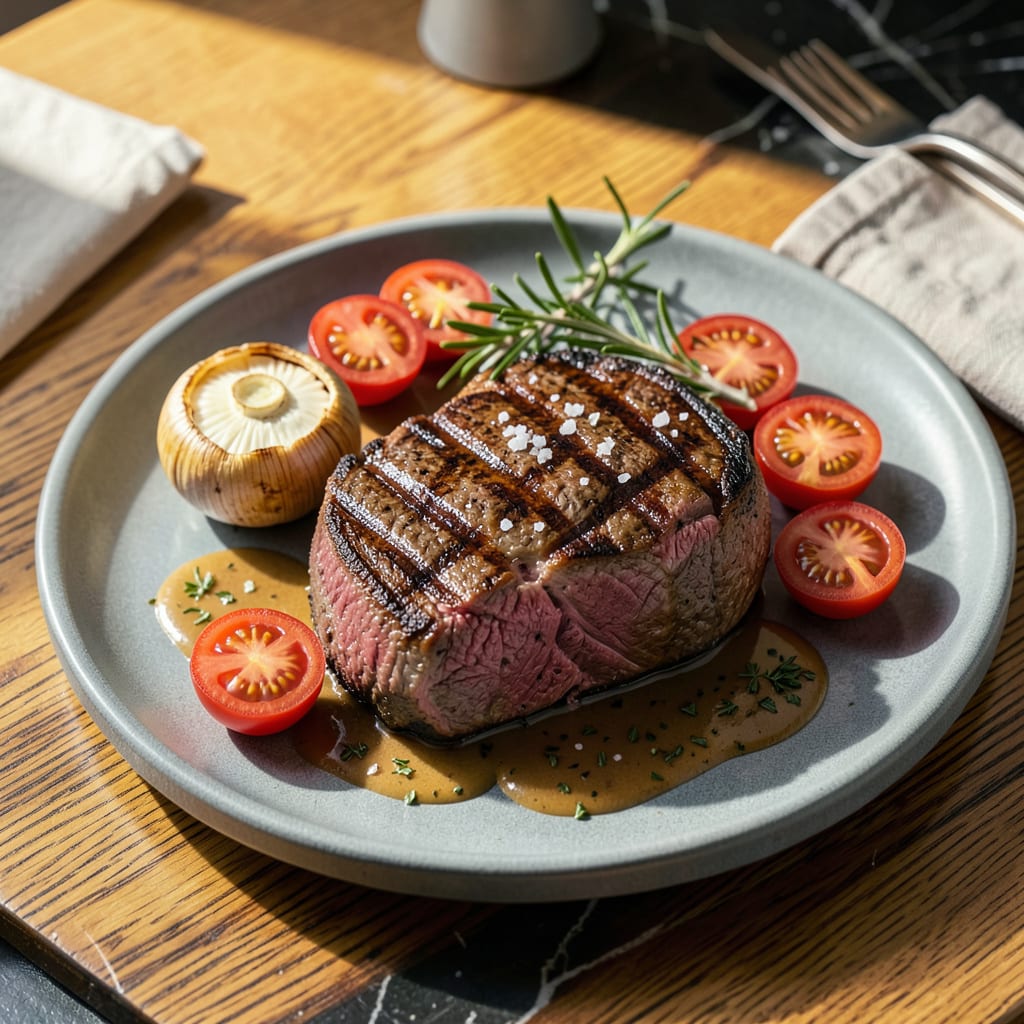
For the best flavor, use 1 teaspoon of kosher salt per pound of steak (or ½ teaspoon table salt). Apply generously at least 40 minutes before cooking—or right before for a crispier crust. Thicker cuts need more, while thinner steaks require less.
I’ve spent years perfecting steak seasoning, and here’s what most home cooks miss: salt isn’t just about taste—it’s about transforming texture. 🔥 When applied early, it acts like a dry brine, breaking down muscle fibers to create that tender, juicy bite we all crave. For thicker cuts like ribeyes, I always use a pinch more to penetrate deeper, while delicate filets need just enough to enhance their natural richness without overpowering.
The type of salt matters too—kosher’s larger flakes distribute more evenly than fine table salt, which can clump and create uneven seasoning. Pro tip: If you’re short on time, a heavy last-minute sprinkle still works wonders for crust formation, though you’ll sacrifice some of that melt-in-your-mouth tenderness. ✨
💡 In This Article
- Why Salt Timing Changes Steak Texture and Flavor
- Salting Steak Like a Pro: Techniques for Different Cuts
Why Salt Timing Changes Steak Texture and Flavor
The magic happens through osmosis when salt meets raw steak. Here’s what’s actually happening: Salt draws moisture to the surface initially, but given time (at least 40 minutes), those dissolved proteins and minerals get reabsorbed deeper into the meat. This creates a natural brine effect that tenderizes from within.
The process is most dramatic in thicker cuts like ribeye where the salt has more muscle fibers to work through. 🔥
Compare this to last-minute salting: The surface moisture gets pulled out immediately, creating that coveted crispy crust when hitting a 450°F pan or grill. But without the reabsorption time, the interior stays less seasoned.
I’ve tested this side-by-side with filet mignon—early-salted versions had flavor throughout, while last-minute salted pieces had concentrated flavor only on the exterior. The difference is night and day when you take that first bite.
Thickness plays a huge role in timing decisions. A 1-inch thick New York strip benefits from 1-2 hours of salt exposure, while a 2-inch thick bone-in ribeye might need 3-4 hours for the salt to penetrate fully. The science shows that salt molecules move about 1/4 inch per hour into meat at room temperature.
This is why I always adjust my prep timeline based on the cut’s dimensions.
Temperature accelerates the process dramatically. A steak salted and left at room temperature (70°F) will develop flavor 3x faster than one refrigerated. That’s why I recommend taking your steak out of the fridge 30-60 minutes before cooking—it gives the salt more opportunity to work its magic while the meat comes to temp.
The surface also dries slightly, which means better browning when it hits the heat. ✨
Different cuts react uniquely to salting techniques. Ribeyes with their marbling benefit from early salting as the fat renders and carries flavor deeper. Lean cuts like filet mignon need precise timing—too long and they can become mealy; too short and they lack depth.
I’ve found 45-60 minutes is the sweet spot for filets, while well-marbled cuts can handle 2-3 hours without issue.
The crust formation chemistry changes based on timing too. Early salted steaks develop a more uniform, golden-brown crust because the surface has time to dry completely. Last-minute salted steaks get a darker, more aggressive crust due to the immediate moisture draw. Both are delicious, but serve different textural purposes—something to consider when planning your meal.
💫
Pro tip: For the ultimate test, try salting half your steak early and half just before cooking. You’ll taste the difference in both flavor distribution and texture. This simple experiment changed how I approach all my steak prep—now I adjust my technique based on the specific cut and desired outcome every time. ⚡

Trained in classic French technique but raised on slow-cooked ribs and spicy rubs, she blends culinary skill with smoke and soul.
- Recipe for Boneless Pork Chops in Cast Iron Skillet: Sear and Baste to Juicy Perfection - October 3, 2026
- Recipe for Boneless Cross Rib Roast: Slow-Roasted Beef with Herb Crust - October 3, 2026
- Hamburgers in Sauce Recipe Crock Pot: Slow-Cooked Savory Delight - October 3, 2026