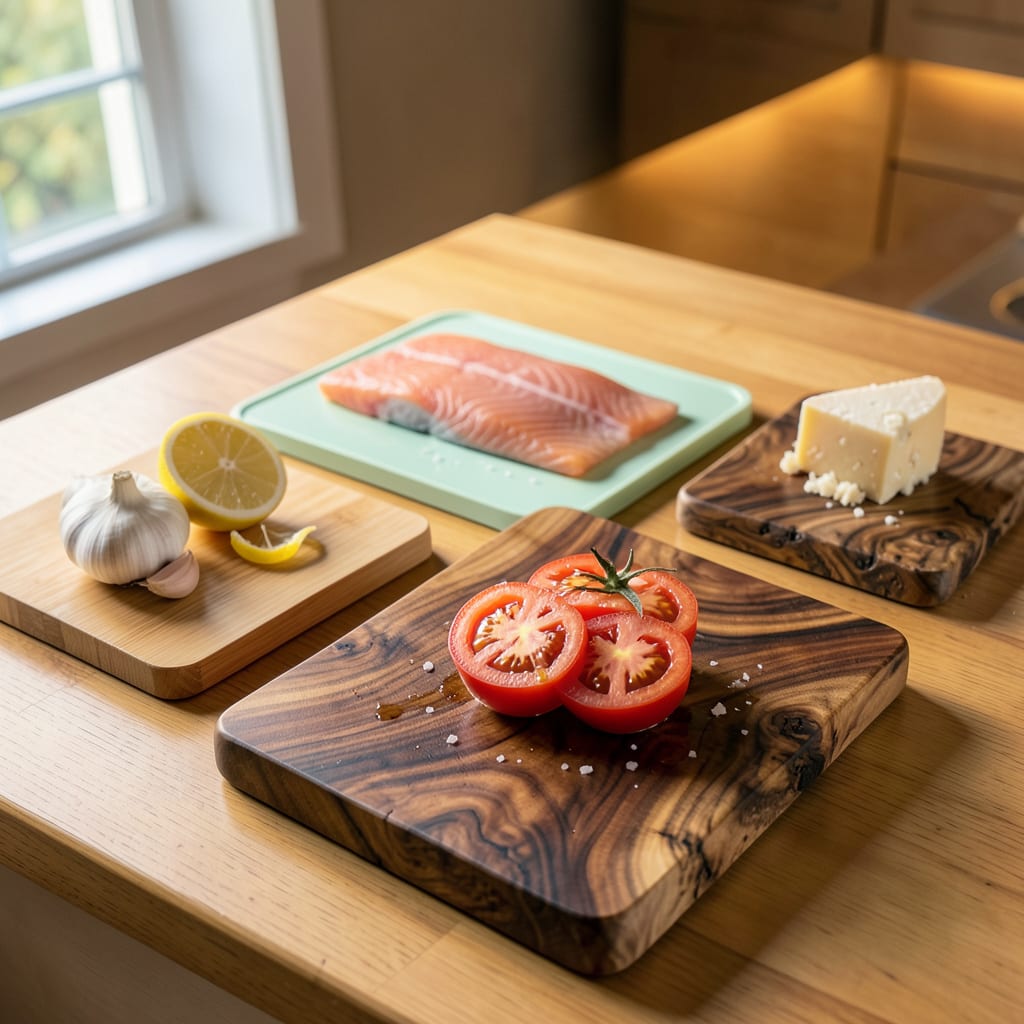
Most kitchens need at least 2-3 cutting boards: one for raw meats, one for vegetables/fruits, and one for ready-to-eat foods. This prevents cross-contamination and keeps flavors separate. Larger households or frequent cooks may benefit from 4-5 for efficiency.
I’ve found that treating cutting boards like specialized tools—rather than one-size-fits-all surfaces—completely changes kitchen workflow. 🔥 Imagine prepping garlic for a stir-fry right after slicing chicken: those lingering bacteria aren’t just a food safety hazard, they can actually alter the dish’s flavor profile. That’s why I dedicate one board to proteins, another to produce, and a third for ready-to-eat items like bread or cheese. For serious home cooks, adding a fourth board for strong-smelling ingredients (think onions or fish) keeps your kitchen running like a professional line.
💡 In This Article
- Why Multiple Cutting Boards Prevent Foodborne Illness
- Choosing the Right Cutting Board Materials and Sizes
Why Multiple Cutting Boards Prevent Foodborne Illness
Here’s what’s actually happening when you use the same board for chicken and lettuce: bacteria like Salmonella and E. coli from raw meat can survive on surfaces for hours or even days. A single drop of chicken juice contains thousands of bacteria that spread across the board’s surface.
When you then slice vegetables, those pathogens transfer directly to your food—even if you’ve wiped the board down. 🦠
The USDA confirms that wooden and plastic boards can harbor bacteria in knife grooves and micro-cracks. Their research shows that 94% of home kitchens fail to properly sanitize cutting boards after raw meat contact. What’s worse, common “cleaning” methods like rinsing with water or wiping with a damp cloth only remove about 50% of bacteria.
Proper sanitization requires either bleach solution (1 tablespoon per gallon) or 200°F+ dishwasher cycles—which most home cooks don’t do between uses.
Dedicated boards create physical barriers between food categories. I’ve seen this firsthand in professional kitchens where color-coded systems (red for meat, green for veg, blue for fish) prevent cross-contact. The FDA Food Code actually recommends separate equipment for raw animal foods and ready-to-eat items.
🔥 For allergens like nuts or shellfish, separate boards aren’t just smart—they’re potentially life-saving for sensitive individuals.
Consider this real-world example: A study from the University of Arizona found that cutting boards were the #1 kitchen item for cross-contamination in home kitchens. When they tested boards after preparing raw chicken, they found bacteria transferred to 100% of subsequent food items cut on that surface. The solution?
Designating one board exclusively for raw proteins reduces contamination risk by 99.9% when properly cleaned after each use.
Even flavor transfer becomes an issue with shared boards. That onion smell lingers in plastic pores, while garlic can permeate wood fibers. I once ruined a delicate fruit platter by arranging it on a board that had previously held salmon—the fishy aroma completely overpowered the melon and berries.
✨ Separate boards maintain both safety and sensory integrity in your cooking.
The science is clear: bacteria need three things to thrive—food, moisture, and time. A used cutting board provides all three. By rotating boards, you’re not just being organized; you’re actively disrupting the bacterial growth cycle. This is why restaurants have strict board protocols, and why your home kitchen should too. 💫

Trained in classic French technique but raised on slow-cooked ribs and spicy rubs, she blends culinary skill with smoke and soul.
- Recipe for Boneless Pork Chops in Cast Iron Skillet: Sear and Baste to Juicy Perfection - October 3, 2026
- Recipe for Boneless Cross Rib Roast: Slow-Roasted Beef with Herb Crust - October 3, 2026
- Hamburgers in Sauce Recipe Crock Pot: Slow-Cooked Savory Delight - October 3, 2026