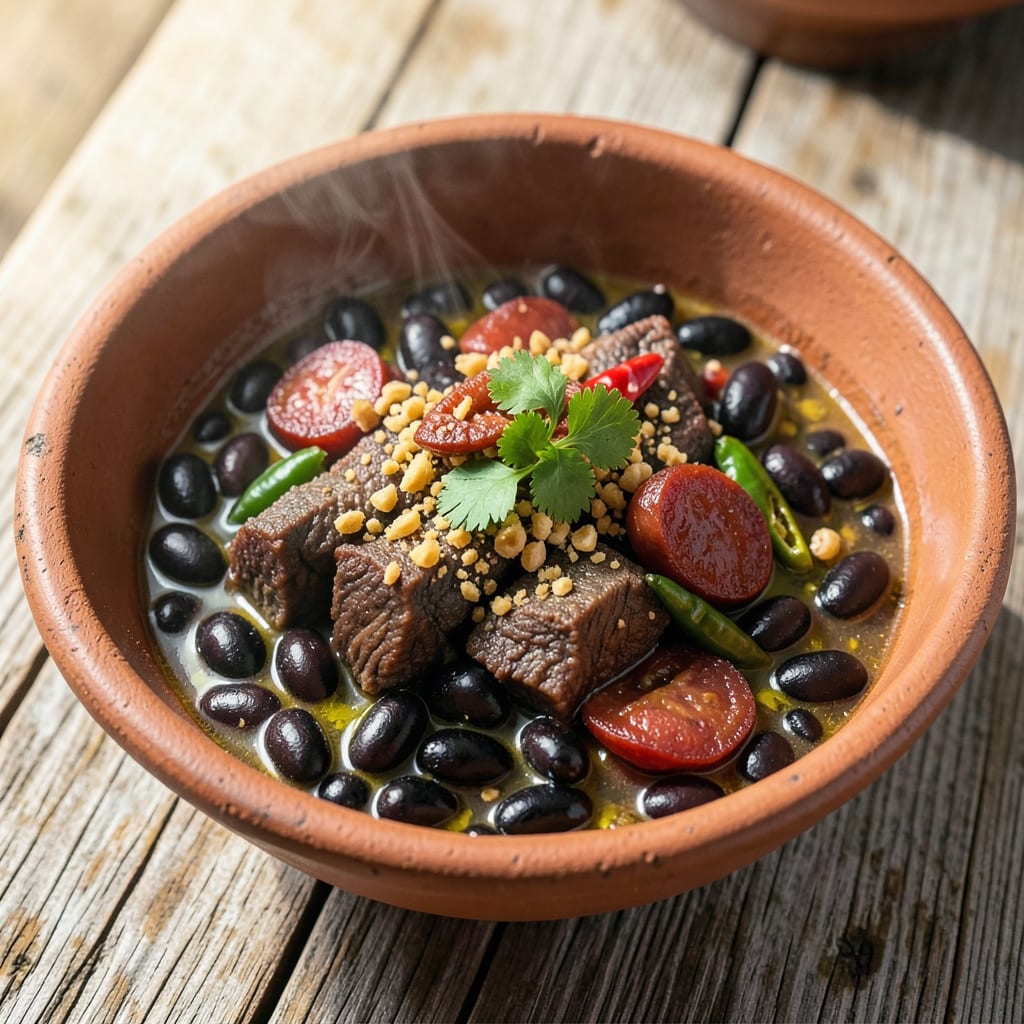
Feijão seco is Brazil’s classic dried black bean dish, slow-cooked with pork, garlic, and bay leaves until creamy. It’s the heart of feijoada and pairs perfectly with rice, collard greens, and farofa for a complete meal.
This humble yet deeply flavorful dish carries centuries of history, blending African, Portuguese, and Indigenous culinary traditions. 🔥 The secret lies in the slow simmering process—often taking 4-6 hours—which transforms simple ingredients into a velvety, aromatic stew. What makes it truly special is how it brings people together, traditionally served as the centerpiece of weekend family gatherings. The combination of smoky pork and earthy beans creates a richness that’s both comforting and complex, making it a staple in Brazilian households.
💡 In This Article
- Why Feijão Seco Is Brazil’s Beloved Comfort Food
- Step-by-Step Guide to Perfect Feijão Seco at Home
Why Feijão Seco Is Brazil’s Beloved Comfort Food
This dish carries the weight of three continents in every spoonful. The black beans arrived with Portuguese colonizers, while the slow-cooking technique and pork additions came from African slaves who adapted their stew traditions using available ingredients. 🌍 Indigenous Brazilians contributed the knowledge of local herbs and spices.
What emerged was more than food—it became a symbol of cultural fusion and resilience, especially during colonial times when enslaved people transformed simple ingredients into something extraordinary.
The magic happens during those 4-6 hours of gentle simmering. As the beans absorb liquid and expand, their starches break down and create a natural thickening agent. Meanwhile, the collagen in pork cuts like smoked bacon or sausage renders into gelatin at temperatures above 160°F, giving the broth its signature unctuous quality.
The bay leaves release eugenol compounds that mellow bitterness while enhancing meaty flavors—a scientific reason why this herb is non-negotiable in authentic recipes.
Regional pride runs deep with feijão seco. In Bahia, they add dendê oil for African influence, while Minas Gerais versions might include local cheeses. The Wednesday/Saturday tradition stems from practicality: beans were soaked overnight on Tuesdays and Fridays to be ready for midweek and weekend family meals.
This rhythm became so ingrained that many restaurants still feature it as their “prato do dia” (dish of the day) on these specific days.
The dish’s popularity also comes from its nutritional brilliance. A single serving provides about 15g of protein and 12g of fiber, making it a complete meal when paired with rice. The amino acids from beans complement those in rice perfectly, creating a protein profile comparable to meat.
This made it an affordable protein source during economic hardships, cementing its place as true comfort food that nourishes both body and soul.
What truly sets feijão seco apart is its role in Brazilian social culture. It’s not just food—it’s an event. Families gather around the pot, adding their preferred toppings (farofa, orange slices, or hot sauce) and debating whose version is best.
The dish’s versatility allows it to be both everyday sustenance and festive centerpiece, adapting to everything from simple weeknight dinners to elaborate feijoada celebrations.
The aroma alone tells you why this dish endures. As it cooks, the combination of smoky pork, earthy beans, and aromatic herbs fills the kitchen with a scent that’s both homey and intoxicating.
That first spoonful delivers layers of flavor—creamy beans giving way to tender pork bits, all tied together with a broth so rich it coats your tongue. It’s the kind of dish that makes you understand why certain foods become cultural touchstones. ✨

Trained in classic French technique but raised on slow-cooked ribs and spicy rubs, she blends culinary skill with smoke and soul.
- Recipe for Boneless Pork Chops in Cast Iron Skillet: Sear and Baste to Juicy Perfection - October 3, 2026
- Recipe for Boneless Cross Rib Roast: Slow-Roasted Beef with Herb Crust - October 3, 2026
- Hamburgers in Sauce Recipe Crock Pot: Slow-Cooked Savory Delight - October 3, 2026