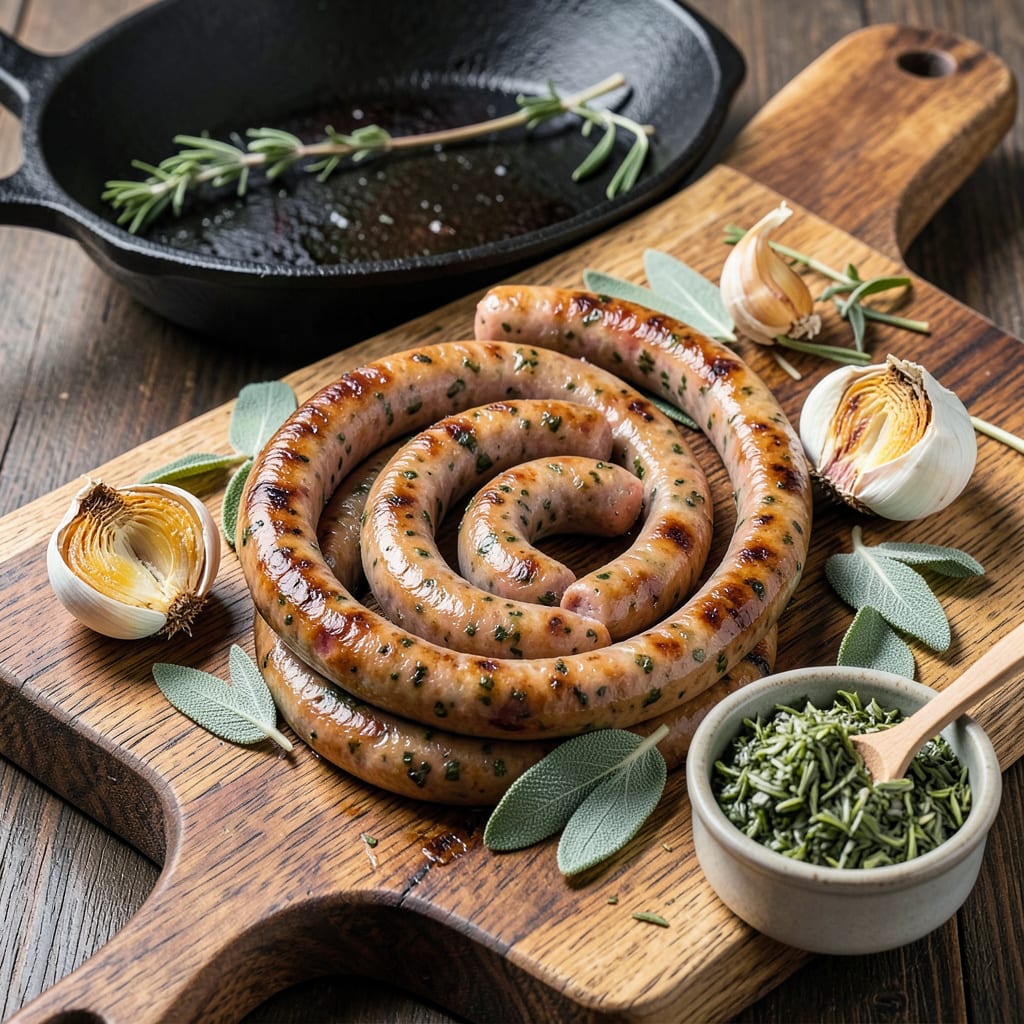
For traditional pork sausage, use 1 to 1.5 teaspoons of dried sage per pound of meat. Fresh sage requires 3 times the amount—about 1 tablespoon per pound. Adjust slightly based on recipe type and personal taste preference.
I’ve learned through years of sausage-making that sage’s potency comes from its essential oils—drying concentrates these flavors, which is why fresh leaves demand a heavier hand. 🔥 The fat content in pork carries sage beautifully, but leaner meats like chicken may need slightly less to avoid bitterness. My pro tip? Toast dried sage lightly before grinding to wake up its aromatic compounds—this small step makes a noticeable difference in depth.
What many home cooks overlook is how sage interacts with other spices. In breakfast sausage, it should harmonize with black pepper and thyme, while Italian-style blends might pair it with fennel and garlic. Always mix a small test batch, cook a tiny patty, and adjust before committing to the full grind—this saves countless batches from being overpowered or underseasoned. ✨
💡 In This Article
- Why Sage Ratios Matter in Sausage Seasoning
- Balancing Sage with Other Sausage Spices
Why Sage Ratios Matter in Sausage Seasoning
The secret to perfect sausage lies in understanding sage’s essential oils—specifically thujone and cineole, which give it that warm, slightly peppery character. Drying sage concentrates these compounds, making dried leaves about 3x more potent than fresh by weight.
When you add sage to ground meat, these oils dissolve into the fat content, creating a uniform flavor distribution throughout the sausage. 🔥
Fat content changes everything. Pork sausage (typically 20-30% fat) can handle 1-1.5 tsp dried sage per pound because the fat carries the flavor. Chicken or turkey sausage (leaner at 10-15% fat) often needs 25% less sage—about 0.75-1 tsp per pound—to avoid bitterness.
I’ve found that for every 5% decrease in fat content, reducing sage by 0.25 tsp per pound keeps the balance right. ✨
Temperature activates these oils differently. When you cook sausage, sage’s volatile compounds begin releasing at about 140°F, with peak aroma at 165°F (perfect for pork). Overcooking beyond 180°F can make sage taste harsh, which is why I always pull pork sausage at 160°F—it carries over to ideal doneness while preserving sage’s best qualities. 🌟
Traditional ratios vary by region too. German bratwurst often uses 1 tsp dried sage per pound with marjoram, while Southern U.S. breakfast sausage might push to 1.5 tsp with extra black pepper. Italian sage-heavy sausages sometimes include 0.5 tsp fennel seeds to complement the herb’s earthiness.
The key is matching sage’s intensity to the meat’s richness and other spices. ⚡
Here’s what most recipes don’t tell you: fresh sage loses 40% of its potency within 24 hours of picking. That’s why you need 1 tbsp fresh per pound—it compensates for the moisture content (about 80% water) that dilutes the oils. For maximum flavor, bruise fresh leaves before chopping to release those essential oils. 💫
Pro tip from my competition days: Bloom dried sage in warm liquid (like 1/4 cup hot water or broth per pound of meat) for 10 minutes before mixing into sausage. This hydrates the dried leaves and distributes flavor more evenly than dry mixing.
The difference in texture and taste consistency is noticeable, especially in bulk batches. 💛
The final test? Always cook a 1-oz test patty first. Sage’s flavor develops fully only after cooking—what tastes mild in raw meat can become overpowering when heated. Adjust in 0.25 tsp increments per pound until you hit that perfect balance where the sage supports rather than dominates the meat’s natural flavor. 💫

Trained in classic French technique but raised on slow-cooked ribs and spicy rubs, she blends culinary skill with smoke and soul.
- Recipe for Boneless Pork Chops in Cast Iron Skillet: Sear and Baste to Juicy Perfection - October 3, 2026
- Recipe for Boneless Cross Rib Roast: Slow-Roasted Beef with Herb Crust - October 3, 2026
- Hamburgers in Sauce Recipe Crock Pot: Slow-Cooked Savory Delight - October 3, 2026