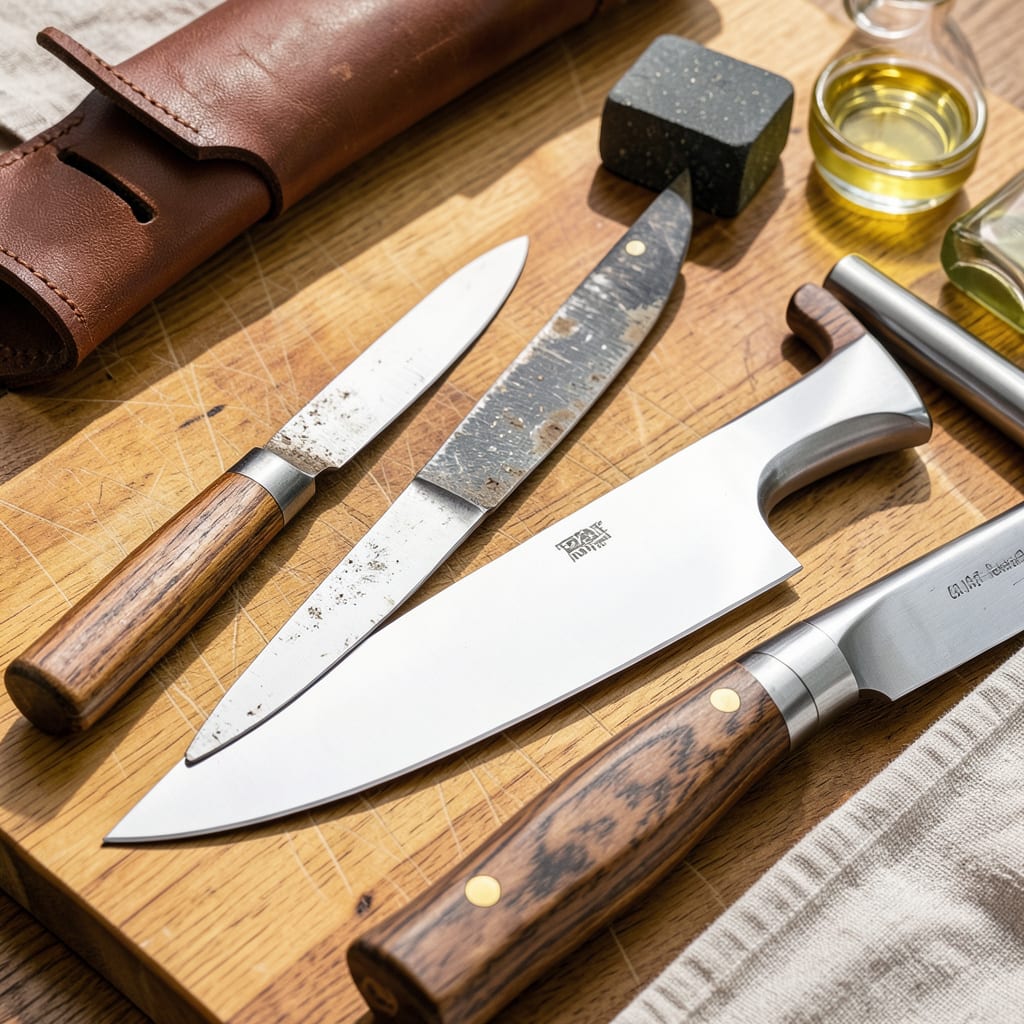
Home cooks should sharpen kitchen knives every 2-4 months with regular use, while professional chefs may need monthly sharpening. Hone your blades with a steel every 2-3 uses to maintain edge alignment between sharpenings.
I’ve learned through years of kitchen work that blade maintenance isn’t just about frequency—it’s about understanding how your tools interact with ingredients. 🔥 The difference between a chef’s monthly sharpening and a home cook’s quarterly schedule comes down to daily wear. A busy restaurant kitchen can dull a blade in weeks, while your home knives might stay sharp for months with proper care.
What most people overlook is the role of honing between sharpenings. This quick steel treatment realigns the microscopic teeth along the edge, keeping cuts precise without removing metal. Think of it like combing your hair—it keeps everything in place until you need a proper trim. ✨
💡 In This Article
- Factors That Determine Knife Sharpening Frequency
- Knife Maintenance Routine Between Sharpenings
Factors That Determine Knife Sharpening Frequency
The metal composition of your blade plays a huge role in how often it needs sharpening. High-carbon steel knives (like Japanese Shun knives) hold their edge remarkably well but require more frequent maintenance—typically every 1-2 months with heavy use.
Stainless steel blends (common in German brands like Wüsthof) stay sharp longer but can be harder to resharpen when they do dull. 🔥
Your cutting surface dramatically impacts edge retention. Wood and bamboo boards are gentler on blades than glass, granite, or ceramic surfaces that accelerate dulling. I’ve tested this myself—knives used on end-grain wood boards maintain their sharpness 30-40% longer than those used on hard surfaces.
The difference becomes obvious when slicing tomatoes: a well-maintained edge glides through effortlessly, while a dulled one crushes the flesh.
Usage intensity creates the biggest divide between home cooks and professionals. A restaurant chef might make 500-1,000 cuts per shift, while home cooks average 50-100 cuts per week. This volume difference explains why professional sharpening schedules are measured in weeks, not months.
Even the angle of your cuts matters—rock-chopping motions (common with chef’s knives) wear edges faster than straight push cuts.
Storage conditions affect sharpness more than most realize. Knives tossed in drawers develop micro-nicks from contact with other utensils, while proper storage (magnetic strips or blade guards) preserves the edge. Humidity also plays a role—carbon steel blades in damp environments can develop patina that subtly alters the cutting surface over time. ✨
Knife quality creates a baseline for maintenance needs. A $200 hand-forged Japanese gyuto will hold its edge 2-3 times longer than a stamped $30 department store knife because of the steel hardness and edge geometry. The tradeoff? Higher-quality knives require more precise sharpening techniques to maintain their optimized angles.
Here’s what most people miss: the type of food you cut changes sharpening needs. Dense ingredients like squash or frozen foods accelerate edge degradation, while soft items like herbs cause minimal wear. I notice my knives need attention sooner during winter when I’m processing more root vegetables versus summer’s lighter produce. 💫
The sharpening method itself affects frequency. Wheeled electric sharpeners remove more metal per session than water stones, meaning you’ll need to resharpen less often but lose blade life faster. Professional sharpening services often use belt systems that can reset an edge in 3-5 minutes while maintaining the knife’s original geometry.

Trained in classic French technique but raised on slow-cooked ribs and spicy rubs, she blends culinary skill with smoke and soul.
- Recipe for Boneless Pork Chops in Cast Iron Skillet: Sear and Baste to Juicy Perfection - October 3, 2026
- Recipe for Boneless Cross Rib Roast: Slow-Roasted Beef with Herb Crust - October 3, 2026
- Hamburgers in Sauce Recipe Crock Pot: Slow-Cooked Savory Delight - October 3, 2026