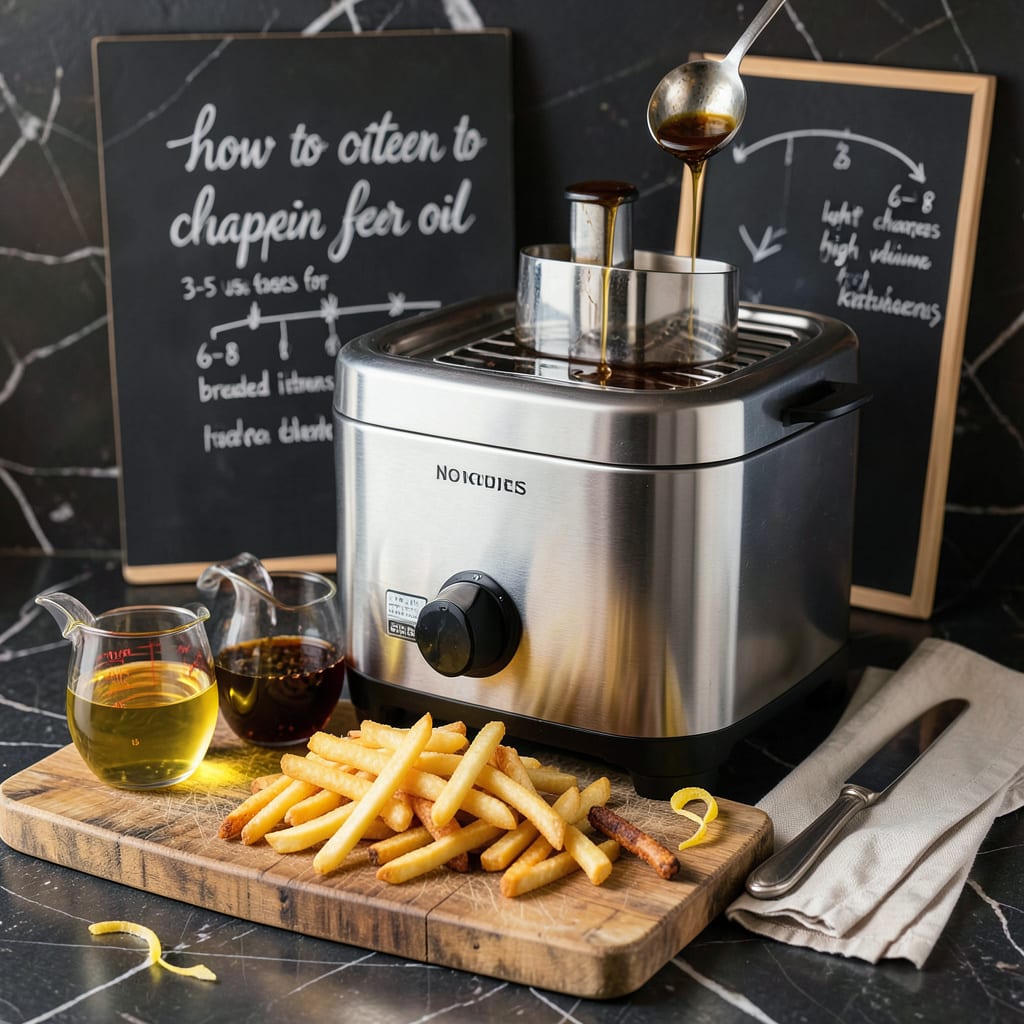
Change deep fryer oil every 6-10 uses for home kitchens or daily for commercial fryers. Replace immediately if it darkens, smokes excessively, or develops a rancid smell, as degraded oil affects flavor and safety.
I’ve learned through years of frying that oil quality directly impacts your food’s crispiness and taste. 🔥 Commercial kitchens replace theirs daily because they’re constantly frying at high volumes, while home cooks can stretch it further with proper maintenance. The real game-changer is monitoring for that telltale burnt smell or when your fries start coming out greasy instead of crisp—those are your oil’s SOS signals.
What many don’t realize is that oil breaks down chemically with each use, creating free radicals that affect both flavor and health. ✨ I always recommend filtering between uses and storing oil in a cool, dark place to slow this process. Even with perfect care though, you’ll eventually hit that point where the oil just can’t perform anymore.
💡 In This Article
- Signs Your Deep Fryer Oil Needs Immediate Replacement
- Pro Tips to Extend Deep Fryer Oil Lifespan
Signs Your Deep Fryer Oil Needs Immediate Replacement
When oil breaks down in a deep fryer, it undergoes chemical changes that transform its structure. Heat accelerates oxidation, creating free fatty acids that lower the smoke point and generate unpleasant flavors. Food particles left behind act as catalysts, speeding up polymerization—a process where molecules bond into larger chains, making the oil thicker and darker.
This isn’t just about appearance; it’s about safety and taste.
Visual clues are your first warning system. Fresh oil is typically golden and clear, but degraded oil turns dark brown or black. You’ll also notice increased foam or bubbles that don’t dissipate quickly. 🔥 The smoke point drops dramatically—what once handled 375°F without issue now smokes at 300°F or lower.
This isn’t just annoying; it means the oil is breaking down into potentially harmful compounds like acrolein, which gives that acrid, burnt smell.
Your nose knows best when it comes to rancidity. Fresh oil has little to no odor, while degraded oil develops a sharp, sour, or paint-like smell. This comes from volatile organic compounds released as fats oxidize.
Taste follows smell—food fried in old oil absorbs these off-flavors, resulting in bitter or “fishy” notes even in non-seafood items. I’ve seen restaurants ruin perfectly good chicken tenders because they ignored this sensory warning system.
Performance changes are equally telling. Oil that once created crispy coatings now produces greasy, soggy results. This happens because the altered molecular structure can’t properly transfer heat. The polymerization creates a sticky residue that clings to food instead of forming that perfect crunch.
Commercial kitchens test oil quality with simple tools like fry test strips that measure total polar materials—anything above 24-27% means it’s time for a change.
Here’s what most home cooks miss: the “number of uses” guideline assumes proper maintenance. If you’re not filtering between batches or letting food particles accumulate, your oil might degrade after just 3-4 uses instead of 6-10. The type of food matters too—breaded items leave more debris than plain fries, accelerating breakdown.
I always recommend keeping a fryer log to track usage patterns and adjust your replacement schedule accordingly.
Temperature abuse is another silent killer. Oil heated beyond its smoke point degrades exponentially faster. A fryer running at 375°F will break down oil twice as fast as one at 350°F. ✨ The solution? Use a quality thermometer and avoid temperature spikes.
Even small fluctuations add up over time, turning what should be 10 uses of oil into 5 or fewer.
The final test is the “cool down check.” Let a small amount of oil cool in a clear container. If it’s cloudy, viscous, or has visible sediment, it’s past its prime. This simple trick reveals what heat might be hiding during active frying.
Remember, oil is the heart of your fryer—treat it well, and it’ll return the favor with perfectly crisp, delicious results every time. 💫

Trained in classic French technique but raised on slow-cooked ribs and spicy rubs, she blends culinary skill with smoke and soul.
- Recipe for Boneless Pork Chops in Cast Iron Skillet: Sear and Baste to Juicy Perfection - October 3, 2026
- Recipe for Boneless Cross Rib Roast: Slow-Roasted Beef with Herb Crust - October 3, 2026
- Hamburgers in Sauce Recipe Crock Pot: Slow-Cooked Savory Delight - October 3, 2026