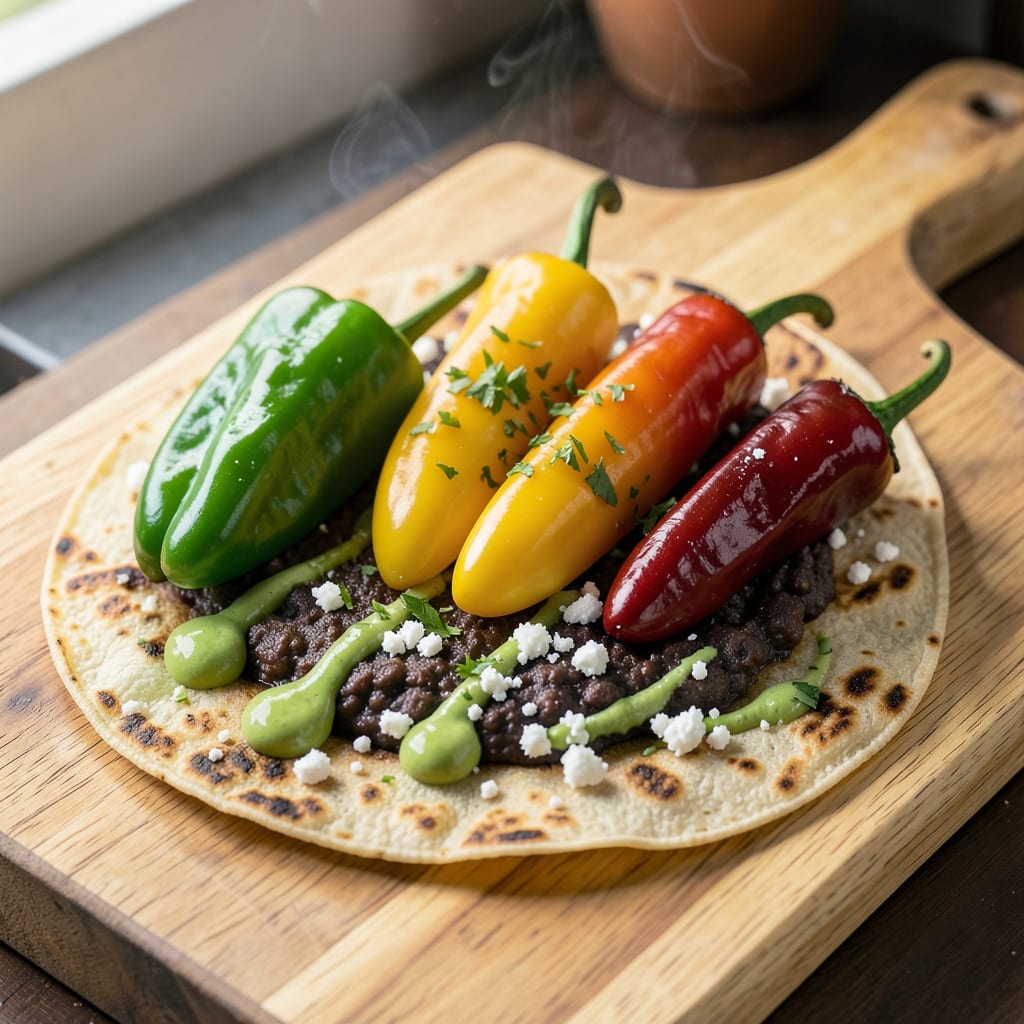
Anaheim peppers are mild, registering 500 to 2,500 Scoville Heat Units—far less spicy than jalapeños. Their flavor is slightly sweet with a gentle warmth, making them versatile for various dishes without overwhelming heat.
I’ve worked with Anaheims for years in both professional kitchens and backyard cookouts, and what stands out is their adaptability. 🔥 Unlike their fiery cousins, these peppers deliver a subtle kick that enhances dishes rather than dominates them—think of them as the perfect bridge between bell peppers and jalapeños. Their thin skins char beautifully when roasted, releasing a smoky sweetness that pairs exceptionally well with citrus and garlic. The heat level makes them ideal for family meals where you want flavor without the burn.
💡 In This Article
- Anaheim Pepper Heat Levels and Scoville Scale Comparison
- Cooking with Anaheim Peppers: Flavor Pairings and Heat Control
Anaheim Pepper Heat Levels and Scoville Scale Comparison
The Scoville scale measures capsaicin concentration—the compound responsible for pepper heat. Anaheims typically test between 500-2,500 SHU, which is about 1/10th the heat of a jalapeño (2,500-8,000 SHU). This mildness comes from their genetic makeup as a Capsicum annuum cultivar bred specifically for lower capsaicin production.
The peppers’ thin walls and high water content (about 90%) further dilute the capsaicin’s impact on your palate.
What’s fascinating is how growing conditions affect their heat. Anaheims grown in hotter climates (like New Mexico) can reach the upper end of their Scoville range, while those from cooler regions often stay closer to 500 SHU.
🌱 I’ve noticed peppers from my local farmers market in late summer pack more warmth than early-season ones—the extra sunlight triggers slightly higher capsaicin production. Soil composition matters too: nitrogen-rich soil tends to produce milder peppers, while phosphorus-heavy soil can increase heat levels.
The capsaicin in Anaheims is concentrated in the white pith and seeds, not uniformly distributed like in habaneros. This means you can control the heat precisely: removing seeds and membranes reduces spiciness by about 70%, while leaving them intact gives you that gentle warmth.
When I’m prepping Anaheims for stuffing, I always taste a tiny piece of the membrane first—it’s the best way to gauge that batch’s actual heat level before committing to a dish.
Compare this to other common peppers and you’ll see why Anaheims are so versatile. They’re 10 times hotter than bell peppers (0 SHU) but 5 times milder than serranos (10,000-23,000 SHU). This places them in a unique sweet spot—enough warmth to be interesting, but mild enough that even heat-sensitive eaters can enjoy them.
I’ve served Anaheim-based dishes to kids and spice-lovers alike with equal success, which is something I can’t say about most chili peppers.
The science behind their mildness is particularly interesting. Anaheims contain higher levels of capsinoids—compounds that provide warmth without intense burning—rather than pure capsaicin. This creates what I call “friendly heat”: you get the pleasant tingling sensation on your tongue without the painful receptor activation that comes with hotter peppers.
It’s why they work so well in dishes where you want depth of flavor without overwhelming spiciness.
For context, consider that the hottest Anaheim might reach 2,500 SHU, while the mildest jalapeño starts at that same level. This means even the “spiciest” Anaheim is equivalent to the mildest jalapeño—giving you a consistent, predictable heat level that’s rare in the pepper world.
🔥 When I’m developing recipes, this reliability is invaluable for achieving consistent results batch after batch.
One final note about their heat profile: Anaheims have a quick heat onset but rapid dissipation. The warmth hits your palate almost immediately but fades within 30-60 seconds, unlike habaneros where the burn lingers.
This makes them perfect for dishes where you want a moment of warmth without prolonged heat—think salsas, marinades, or even fresh in salads where you want just a hint of peppery kick.

Trained in classic French technique but raised on slow-cooked ribs and spicy rubs, she blends culinary skill with smoke and soul.
- Sanjeev Kapoor Egg Biryani Recipe: Fragrant Spiced Rice With Boiled Eggs - October 3, 2026
- Recipe for French Pork Spread Gorton: Savory Gallic Flavors in a Spreadable Delight - October 3, 2026
- Recipe for Pan Fried: Golden Crust with Savory Depth - October 3, 2026