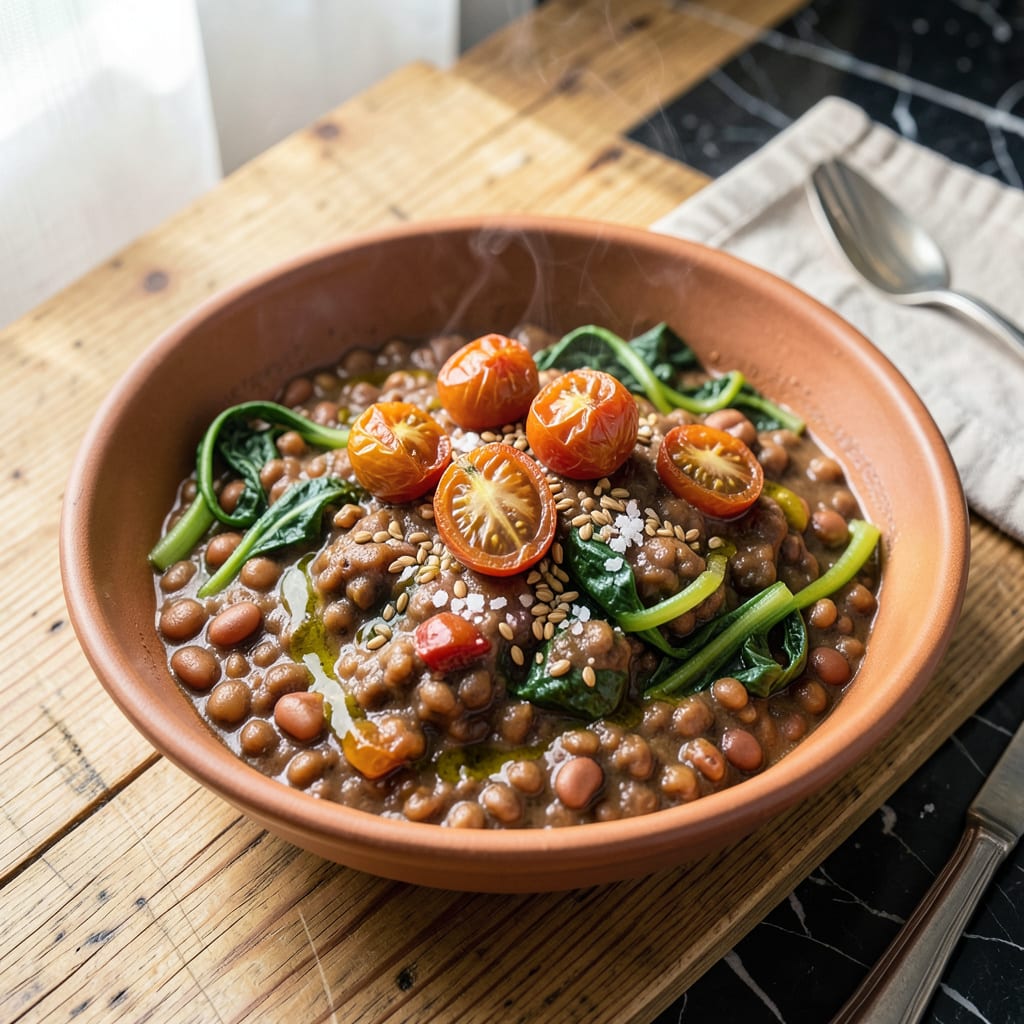
Red lentils cook in 15-20 minutes when simmered in water or broth. They soften quickly and break down into a creamy texture, making them ideal for soups, stews, and dal. Rinse before cooking for best results.
I love working with red lentils because they transform so dramatically during cooking. 🔥 Their small size and hull-free nature mean they absorb liquid rapidly, creating that signature velvety consistency perfect for thickening dishes. Unlike their heartier cousins, these lentils don’t hold their shape, which makes them my go-to for creamy curries or protein-packed purees. The key is watching them closely after the 12-minute mark—they can go from perfect to mushy in under a minute if left unattended.
What many home cooks overlook is how the cooking liquid affects flavor. 💫 A simple vegetable broth elevates them beyond basic, while coconut milk adds luxurious richness. I always toast my lentils for 30 seconds in the pot before adding liquid—this nutty depth makes all the difference in the final dish.
💡 In This Article
- Why Red Lentils Cook Faster Than Other Varieties
- Tips for Perfectly Cooked Red Lentils Every Time
Why Red Lentils Cook Faster Than Other Varieties
The secret lies in their physical structure. Red lentils are hull-free and split, exposing the starchy interior directly to cooking liquid. This processing removes the protective outer layer that slows water absorption in whole lentils. Their small, flat shape creates maximum surface area—about 3x more than green lentils—allowing rapid hydration and starch release. 🔥
Starch content plays a huge role too. Red lentils contain approximately 25% starch by weight (compared to 15% in green lentils), which gelatinizes quickly when heated. The starch granules swell and burst at 140-160°F, creating that signature creamy texture.
This is why they transform from firm to mushy in under 20 minutes, while brown lentils take 30-45 minutes to soften.
Compare this to black beluga lentils, which retain their hulls and hold shape even after 25-30 minutes of cooking. The hull acts like a protective barrier, forcing water to penetrate slowly through tiny pores. Red lentils skip this step entirely—their exposed starch absorbs liquid immediately, like a sponge.
This makes them perfect for dishes where you want thickness without added flour or cream.
Processing matters more than you’d think. Most commercial red lentils are mechanically split and polished, removing the fibrous seed coat that would otherwise slow cooking. I’ve tested whole red lentils (with hulls intact) and they took 40+ minutes to soften—proving that processing is the game-changer for speed. The tradeoff?
They lose some fiber content but gain incredible convenience.
Here’s what happens at the cellular level: When heated, the lentil’s protein matrix weakens as starch granules absorb water and expand. In red lentils, this process occurs almost instantly because there’s no hull to resist the heat transfer. The result? A complete texture transformation in the time it takes to chop your aromatics. ✨
For reference, here’s how common lentils compare:
- Red lentils: 15-20 minutes, hull-free, splits easily
- Yellow lentils: 20-25 minutes, similar to red but slightly firmer
- Green/brown: 30-45 minutes, hull intact, hold shape
- Black beluga: 25-30 minutes, hull intact, stays firm
This rapid cooking makes red lentils ideal for weeknight meals, but it also means they require vigilance. The window between perfectly tender and overcooked mush can be as little as 2-3 minutes. I always set a timer for 12 minutes, then check every minute after that for my desired consistency. 💫

Trained in classic French technique but raised on slow-cooked ribs and spicy rubs, she blends culinary skill with smoke and soul.
- Recipe for Boneless Pork Chops in Cast Iron Skillet: Sear and Baste to Juicy Perfection - October 3, 2026
- Recipe for Boneless Cross Rib Roast: Slow-Roasted Beef with Herb Crust - October 3, 2026
- Hamburgers in Sauce Recipe Crock Pot: Slow-Cooked Savory Delight - October 3, 2026