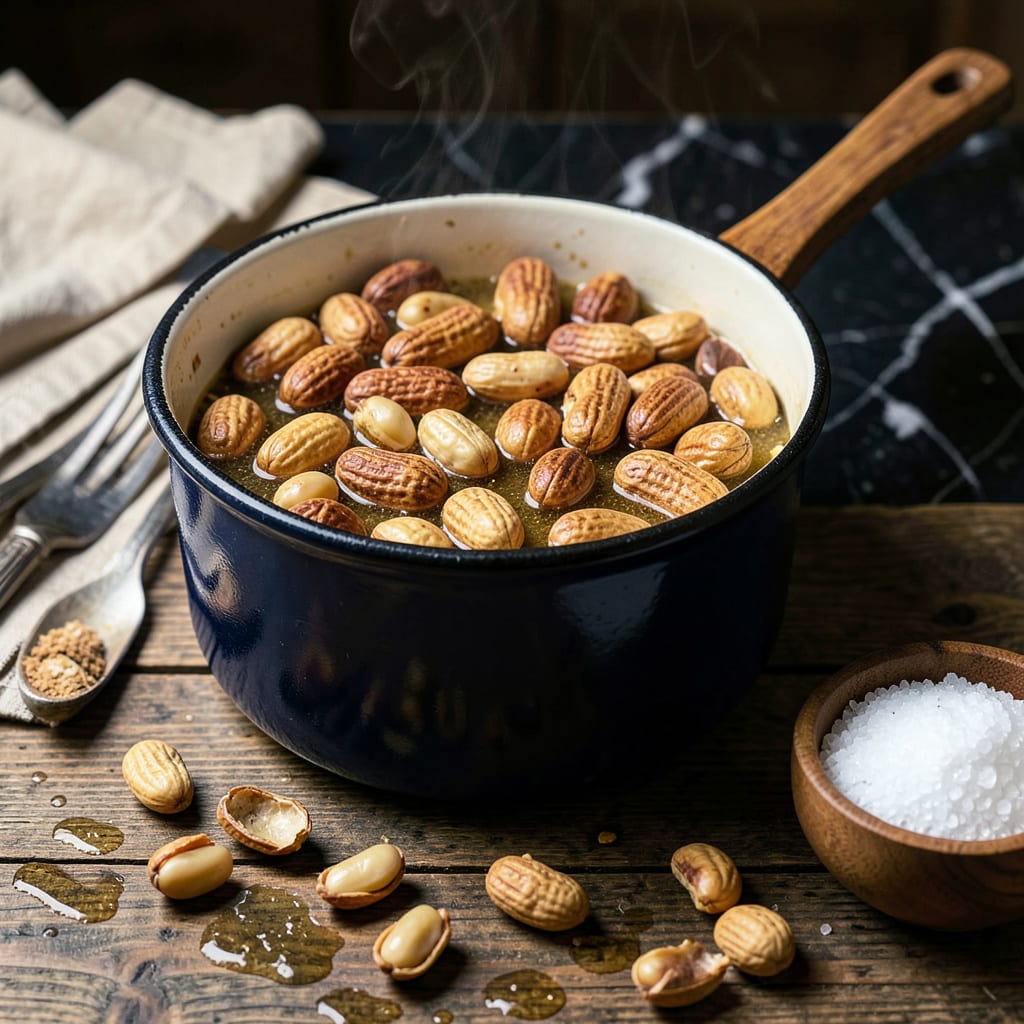
Let me tell you about the first time I tasted properly boiled peanuts—it was at a roadside stand outside Savannah, and I’ve been hooked ever since. There’s something about that soft, salty bite that makes these the ultimate Southern snack. I’ve spent years perfecting my method to get that just-right texture where the peanut absorbs all the briny flavor but still keeps some toothsome resistance.
Here’s the thing—most people either undercook or over-salt their boiled peanuts. The secret is in the ratio: 1 pound of raw peanuts to 2 gallons of water, plus about 1 cup of salt to start. You’ll boil them for 3 hours, but the real magic happens in the last hour when they transform from crunchy to perfectly tender. I like to add a bay leaf and some garlic cloves for extra depth.
What you end up with is a warm, salty snack that’s perfect with cold beer or sweet tea. The shells become soft enough to eat (if you’re brave) or easy to crack open with your fingers. I make big batches and keep them in the fridge for up to a week—though they never last that long in my house.
Fair warning: once you make these, you’ll never go back to store-bought. The difference is like comparing fresh-roasted peanuts to the ones that have been sitting in a can for months. This is the real deal—simple ingredients, slow cooking, and that unmistakable Southern flavor.
📚 In This Guide
- What You’ll Need
- Instructions
- Tips and Common Mistakes
What Youll Need
- ● Raw peanuts in shell – 2 lbs (choose fresh, unroasted peanuts for best texture 🌰)
- ● Water – 1 gallon (enough to fully submerge peanuts)
- ● Salt – 1 cup (adjust to taste; kosher or sea salt works best)
- ● Large stockpot or Dutch oven (6+ quart capacity, with lid)
- ● Stovetop or heat source (medium-high heat recommended)
- ● Colander or strainer (for rinsing peanuts pre/post-boiling)
- ● Cajun/Old Bay seasoning – 1-2 tbsp (for extra kick 🌶️)
- ● Garlic cloves – 3-4 (peeled, for aromatic flavor)
- ● Timer (to track 2-3 hour boil time ⏰)
- ● Tongs or slotted spoon (for easy peanut removal)
Instructions
Here’s the simple process I use to make perfectly salty boiled peanuts every time.
Rinse and Prepare the Raw Peanuts
Start by thoroughly rinsing your raw peanuts in their shells under cool running water. I like to use a colander for this step, giving them a good shake to remove any dirt or debris. You’ll want to rinse until the water runs clear—this usually takes about 2-3 minutes of rinsing.
After rinsing, I always do a quick sort through the peanuts. Discard any that have cracked shells or look discolored. This ensures you’re only boiling the freshest peanuts, which gives you the best texture in the final product. Trust me, this small step makes a big difference in your finished snack.
Salt the Water Generously
Fill a large stockpot with enough water to cover the peanuts by about 2 inches. For every gallon of water, add 1 cup of salt. I know that seems like a lot, but remember—most of this salt stays in the water, not the peanuts. The water should taste as salty as seawater when you’re done.
Bring the salted water to a full rolling boil over high heat. While you’re waiting, I like to add a few bay leaves or a sprinkle of Cajun seasoning to the water for extra flavor. This is completely optional but adds a nice depth to your boiled peanuts. Just be sure to remove any large seasonings before serving.
Boil the Peanuts Low and Slow
Once the water reaches a full boil, carefully add your prepared peanuts. The water temperature will drop significantly, so let it come back to a boil. Then reduce the heat to maintain a gentle simmer. You want to see small bubbles breaking the surface, not a vigorous boil.
Cover the pot and let the peanuts simmer for 2.5 to 3 hours. I check them occasionally to make sure they’re staying submerged. The peanuts are done when they’re soft enough to squeeze between your fingers but still have a slight firmness. You’ll notice the shells become slightly translucent when they’re ready.
Test for Doneness and Adjust Seasoning
After about 2 hours of simmering, start testing the peanuts for doneness. Remove one with a slotted spoon and let it cool for a minute. The peanut inside should be soft but not mushy. If it’s still too firm, keep simmering and test every 15 minutes until perfect.
Once they’re done, taste a peanut to check the salt level. If you want them saltier, add another ½ cup of salt to the water and simmer for 15 more minutes. If they’re too salty, you can rinse them briefly under cool water after draining. I usually let them sit in the hot water for 10 minutes after turning off the heat to absorb just a bit more flavor.
Drain and Serve Warm or Chilled
When the peanuts reach your desired texture and saltiness, carefully drain them in a colander. Give them a gentle shake to remove excess water. At this point, you can serve them warm, which is how I prefer them—they have the best texture when they’re still warm from cooking.
If you’re not serving them immediately, spread the peanuts on a baking sheet to cool completely. Once cooled, transfer them to an airtight container. They’ll keep in the refrigerator for up to 5 days. I actually think they taste even better the next day after the flavors have a chance to meld together.
Tips and Common Mistakes
After making boiled peanuts for years, I’ve learned a few key things that make all the difference between good and great results.
The Water Test: In Step 2, when you’re salting the water, taste it before adding the peanuts. It should be as salty as ocean water – that’s how you know you’ve got the right ratio of 1 cup salt per gallon. If it tastes weak, add more salt. This ensures your peanuts absorb just the right amount of flavor during those 2.5 to 3 hours of simmering.
Simmer Control: When you reduce the heat in Step 3, you want to see small bubbles gently breaking the surface, not a rolling boil. Too vigorous of a boil can make the peanuts tough rather than tender. I check mine every 30 minutes or so to make sure they’re staying submerged and the heat is maintaining that perfect gentle simmer.
Texture Check: After 2 hours of simmering, start testing your peanuts. The shells should feel slightly soft when you squeeze them, and the peanut inside should yield to gentle pressure but not be mushy. If they’re still firm, give them another 15 minutes and test again. The shells will also become slightly translucent when they’re perfectly done.
Resting Time: After turning off the heat, let the peanuts sit in the hot water for those 10 minutes mentioned in Step 4. This extra time lets them absorb just a bit more flavor and salt. I’ve found this makes the difference between good and outstanding boiled peanuts.
Pro Tips for Boil Peanuts With Shell
- After making boiled peanuts for years, I’ve learned a few key things that make all the difference between good and gr…
- The Water Test: In Step 2, when you’re salting the water, taste it before adding the peanuts. It should be as salty a…
- Simmer Control: When you reduce the heat in Step 3, you want to see small bubbles gently breaking the surface, not a …
Frequently Asked Questions
How long does it take to boil peanuts in the shell?
Boiling raw peanuts typically takes 2.5–4 hours for perfect tenderness. Green (fresh) peanuts cook faster (~2 hours), while dried ones need longer soaking (overnight) and boiling. Test doneness by squeezing a peanut—it should yield slightly like a cooked potato!
Can I boil peanuts without soaking them first?
You can, but soaking (4–12 hours) cuts cooking time and ensures even salt absorption. Skip soaking only if using fresh green peanuts—they’re softer! For dried peanuts, soaking prevents a gritty texture. Pro tip: Add 1/2 cup salt per gallon of soaking water for extra flavor.
Why are my boiled peanuts still hard after 3 hours?
Hard peanuts usually mean they were too dry or old. Try these fixes: 1) Soak them overnight next time, 2) Add 1 tsp baking soda to the boil to soften shells, or 3) Extend cooking by 1–2 hours. If they’re still tough, the peanuts may be past their prime.
What’s the best salt-to-water ratio for boiling peanuts?
Use 1/2–3/4 cup salt per gallon of water for classic Southern-style flavor. Adjust to taste—start with less if you’re salt-sensitive! For extra zing, add Cajun seasoning, garlic powder, or smoked paprika. Bonus: Save the salty broth for cooking rice or beans!
Can I boil peanuts in a slow cooker or Instant Pot?
Slow cooker: 6–8 hours on Low (or 4–5 on High). Instant Pot: 45–60 minutes on High Pressure (natural release). Both methods save stovetop space but may yield slightly less salty results—adjust seasoning accordingly!
Boiling peanuts in their shells is a simple, rewarding process that delivers a savory, Southern-style treat with minimal effort. 🥜 Whether you prefer them salty, spicy, or mild, the key is patience—letting them simmer for 2-3 hours ensures that perfect tender crunch every time.
Now that you’ve mastered the basics, why not experiment? Try adding Cajun seasoning, garlic, or even a splash of beer for a unique twist. Ready to dig in? Grab a bowl, crack open those shells, and enjoy your homemade snack! 🎉

Trained in classic French technique but raised on slow-cooked ribs and spicy rubs, she blends culinary skill with smoke and soul.
- Recipe for Boneless Pork Chops in Cast Iron Skillet: Sear and Baste to Juicy Perfection - October 3, 2026
- Recipe for Boneless Cross Rib Roast: Slow-Roasted Beef with Herb Crust - October 3, 2026
- Hamburgers in Sauce Recipe Crock Pot: Slow-Cooked Savory Delight - October 3, 2026