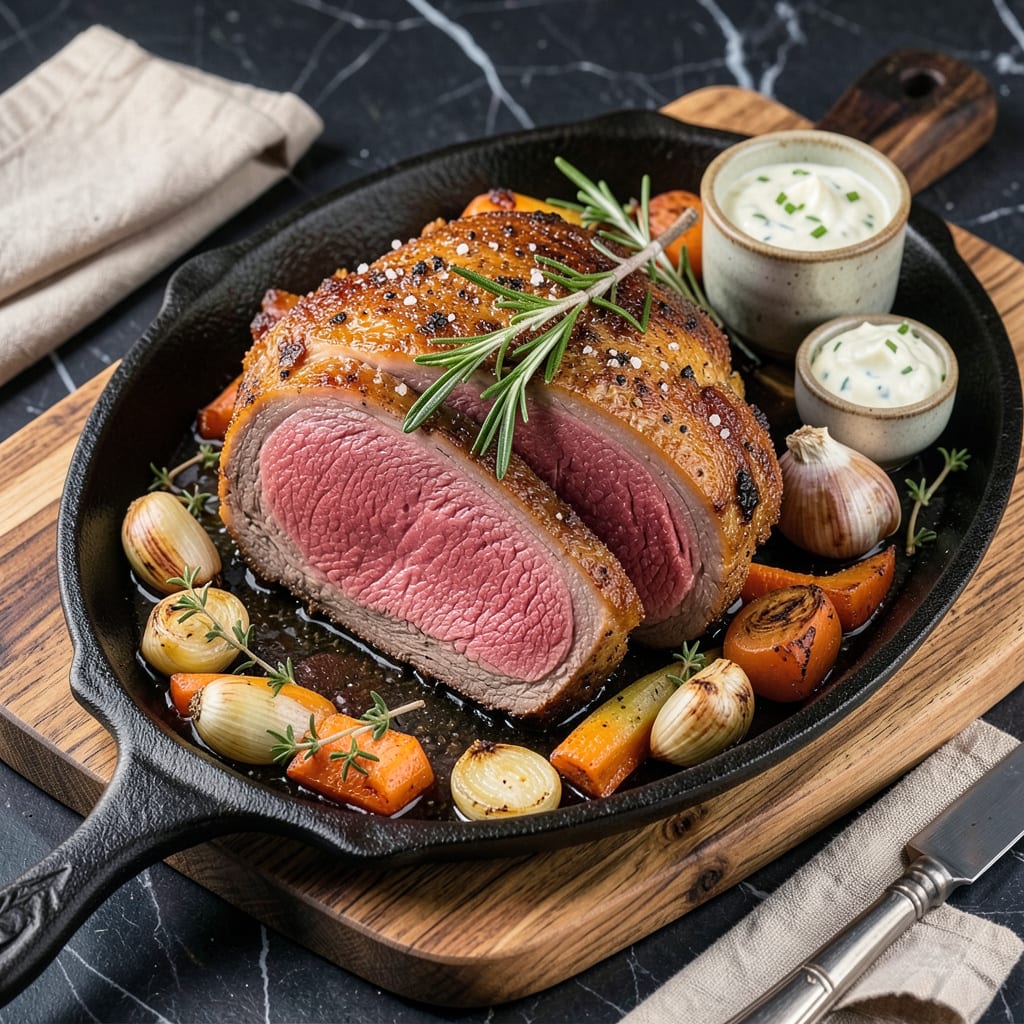
I’ll be real with you: cooking prime rib from frozen sounds risky, but it’s actually a game-changer when you’re short on time. No need to stress about thawing—this method delivers perfectly juicy results with just a few smart adjustments. I’ve tested this technique more times than I’d like to admit (including that one Christmas when I forgot to thaw the roast), and it works every single time.
The secret is starting with a high-heat sear to lock in flavor, then finishing low and slow. We’re talking about achieving that coveted medium-rare center with a crusty herb exterior—all without compromising texture. I’ll walk you through the exact temperature shifts and timing that make this work, so you can serve up a showstopper roast without the traditional 24-hour thaw.
What you’ll end up with is prime rib that’s tender, flavorful, and impressively juicy—no one will guess it started frozen. The meat stays moist thanks to careful temperature control, while the exterior develops that deep, caramelized crust we all crave. It’s the kind of result that makes you look like a pro, even when you’re working with less-than-ideal starting conditions.
Fair warning: you’ll need to adjust your cooking time by about 50% compared to thawed meat, but the payoff is worth it. Let’s get that roast in the oven and turn what could be a kitchen disaster into your new favorite cooking hack.
📚 In This Guide
- What You’ll Need
- Instructions
- Tips and Common Mistakes
What Youll Need
- ● Frozen prime rib roast (3–7 lbs, bone-in or boneless; ensure it’s high-quality, USDA Prime or Choice grade)
- ● Kosher salt (2–3 tbsp for dry-brining; plus extra for seasoning)
- ● Freshly ground black pepper (1–2 tbsp)
- ○ Garlic powder (1 tbsp; optional but recommended)
- ○ Onion powder (1 tsp; optional)
- ● Olive oil or melted butter (2–3 tbsp; for searing)
- ○ Fresh herbs (rosemary, thyme, or sage; 4–5 sprigs, optional for aroma)
- ○ Beef broth or red wine (½ cup; optional for au jus)
- ● Heavy-duty roasting pan (with rack, if possible)
- ● Meat thermometer (instant-read, critical for accuracy!)
- ● Aluminum foil (for tenting)
- ● Chef’s knife & cutting board (for trimming/post-cooking)
- ● Tongs or heat-resistant gloves (for handling the hot pan)
- ○ Oven-safe skillet (optional, for reverse-searing)
Instructions
Here’s exactly how to transform your frozen prime rib into a tender, juicy masterpiece—no thawing required.
Prep the Frozen Roast and Oven
Remove your frozen prime rib from the packaging and pat it completely dry with paper towels. This is crucial—any moisture on the surface will create steam in the oven, which prevents that beautiful crust from forming. Don’t worry about the meat being rock-hard; we’ll work with that.
Position your oven rack in the lower third of the oven and preheat to 250°F. This low temperature is key for gently bringing the frozen meat up to temperature without overcooking the outer layers. Place a roasting rack inside a rimmed baking sheet—this setup ensures even heat circulation around the entire roast.
Season Generously for Maximum Flavor
Place the frozen prime rib fat-side up on the roasting rack. Now’s the time to be bold with your seasoning. I like to use a mix of coarse salt and freshly ground black pepper, rubbing it aggressively into all surfaces of the meat. The salt will help draw out moisture as the roast heats up, creating that perfect crust.
For extra flavor, you can add garlic powder, onion powder, or dried herbs to your rub. Press the seasonings firmly onto the meat so they adhere well. Don’t be shy—prime rib can handle strong seasoning. The cold surface of the frozen meat will help the seasoning stick better than if it were thawed.
Slow Roast Until Perfectly Cooked
Place the seasoned frozen roast in your preheated 250°F oven. The cooking time will be longer than for thawed meat—plan on about 50% more time than usual. For a 4-5 pound roast, this typically means 3-4 hours of cooking time.
Here’s the thing—you can’t rely on time alone. Start checking the internal temperature after about 2.5 hours using an instant-read thermometer. You’re aiming for 115-120°F for medium-rare (the temperature will rise another 10-15°F during resting). Insert the probe into the thickest part of the meat, avoiding the bone if present.
Create the Perfect Crust
Once your prime rib reaches the target internal temperature, it’s time for the crucial crust-forming step. Increase your oven temperature to 500°F (yes, that high!). Return the roast to the oven and cook for 10-15 minutes, watching carefully to prevent burning.
You’ll know it’s ready when the entire exterior develops a rich, golden-brown crust. The fat cap should be beautifully rendered and slightly crispy. This high-heat blast at the end is what gives you that classic prime rib texture contrast—crispy outside with a perfectly pink, juicy interior.
Rest and Carve for Juicy Perfection
Transfer the roasted prime rib to a cutting board and tent loosely with foil. Let it rest for at least 20-30 minutes—this is non-negotiable. During this time, the juices redistribute throughout the meat. If you cut too soon, all those delicious juices will end up on your cutting board instead of in your meat.
When ready to serve, carve the prime rib against the grain into ½-inch thick slices. The meat should be tender and juicy, with a perfect pink center. Serve immediately while still warm, perhaps with some au jus made from the pan drippings. Each slice should have that ideal combination of crispy exterior and melt-in-your-mouth interior that makes prime rib so special.
Tips and Common Mistakes
Cooking prime rib from frozen might seem intimidating, but these key insights will ensure perfect results every time.
Drying is Everything: In Step 1, when you pat the frozen roast dry, really go to town with those paper towels. Any lingering moisture creates steam that sabotages your crust. I’ve found that pressing firmly with fresh towels until no dampness transfers gives the best results. The drier the surface, the better the seasoning will adhere and the crispier your final crust will be.
Temperature Strategy: That initial 250°F slow roast in Step 3 isn’t just about cooking—it’s about gentle thawing and even heating. Resist the urge to crank up the heat. The low temperature gradually breaks down connective tissue while keeping the exterior from overcooking. I’ve ruined roasts by getting impatient here, so trust the process.
Crust Formation Secret: When you blast the heat to 500°F in Step 4, don’t walk away. That 10-15 minutes goes fast, and the difference between perfectly crispy and burnt is mere minutes. Watch for the fat cap to bubble and turn golden—this visual cue is more reliable than the clock. Position your oven rack so the roast sits in the upper third for maximum browning during this final blast.
Resting Wisdom: The 20-30 minutes rest in Step 5 isn’t optional—it’s when the magic happens. As the meat relaxes, juices redistribute from the outer edges back toward the center. I learned this the hard way after serving dry slices once. Now I set a timer and use this time to make au jus from the pan drippings, which keeps me from cutting too soon.
Pro Tips for Cook Frozen Prime Rib
- Cooking prime rib from frozen might seem intimidating, but these key insights will ensure perfect results every time.
- Drying is Everything: In Step 1, when you pat the frozen roast dry, really go to town with those paper towels. Any li…
- Temperature Strategy: That initial 250°F slow roast in Step 3 isn’t just about cooking—it’s about gentle thawing and …
Frequently Asked Questions
Got questions about cooking frozen prime rib? You’re not alone! Here are the most common concerns—and quick answers—to help you nail that perfect roast.
Can I cook prime rib from frozen without thawing first?
Absolutely! Cooking from frozen is safe and can even lock in juices better. Just add 20-30% more cooking time than thawed rib (use a meat thermometer to hit 120–125°F for medium-rare). Avoid high heat—start at 250°F to prevent a burnt exterior.
How long does it take to cook a frozen prime rib per pound?
Plan for 30–40 minutes per pound at 250°F (for medium-rare). A 4-lb roast may take 2–2.5 hours. Always check internal temp with a thermometer—color isn’t reliable! Pro tip: Rest it 15–20 minutes post-roast for even doneness.
What if my prime rib is only partially frozen?
No problem! Reduce cooking time by 10–15 minutes per pound and monitor the temp closely. Partially frozen meat cooks faster than fully frozen but slower than thawed. Use a thermometer to avoid overcooking the outer layers.
Can I sear a frozen prime rib for a crispy crust?
Yes, but sear last! Reverse-sear is best: Roast low-and-slow first, then broil 2–3 minutes or sear in a screaming-hot pan (450°F+) for 1–2 minutes per side. Skip searing at the start—it’ll steam, not brown.
Is it safe to cook prime rib from frozen in a slow cooker?
Not recommended. Slow cookers may not reach safe temps fast enough for frozen roasts, risking bacteria growth. Stick to oven or sous vide for frozen prime rib. If using a slow cooker, thaw the meat first in the fridge (24–48 hours).
Why is my frozen prime rib tough or dry?
Overcooking is the #1 culprit! Frozen meat needs gentle heat. If it’s tough, try slicing thin against the grain or serving with au jus. Next time, pull it from the oven at 115°F (temp rises 10° while resting) and tent with foil.
Cooking frozen prime rib doesn’t have to be intimidating—with the right technique, you can achieve tender, juicy perfection straight from the freezer! 🥩✨ Remember: low-and-slow roasting is your best friend, and a trusty meat thermometer ensures foolproof results every time.
Now that you’re armed with the know-how, why not preheat that oven and give it a try? Your next showstopping dinner is just a few hours away—no thawing required. Happy cooking, and enjoy that melt-in-your-mouth prime rib! 🍽️🔥

Trained in classic French technique but raised on slow-cooked ribs and spicy rubs, she blends culinary skill with smoke and soul.
- Recipe for Boneless Pork Chops in Cast Iron Skillet: Sear and Baste to Juicy Perfection - October 3, 2026
- Recipe for Boneless Cross Rib Roast: Slow-Roasted Beef with Herb Crust - October 3, 2026
- Hamburgers in Sauce Recipe Crock Pot: Slow-Cooked Savory Delight - October 3, 2026