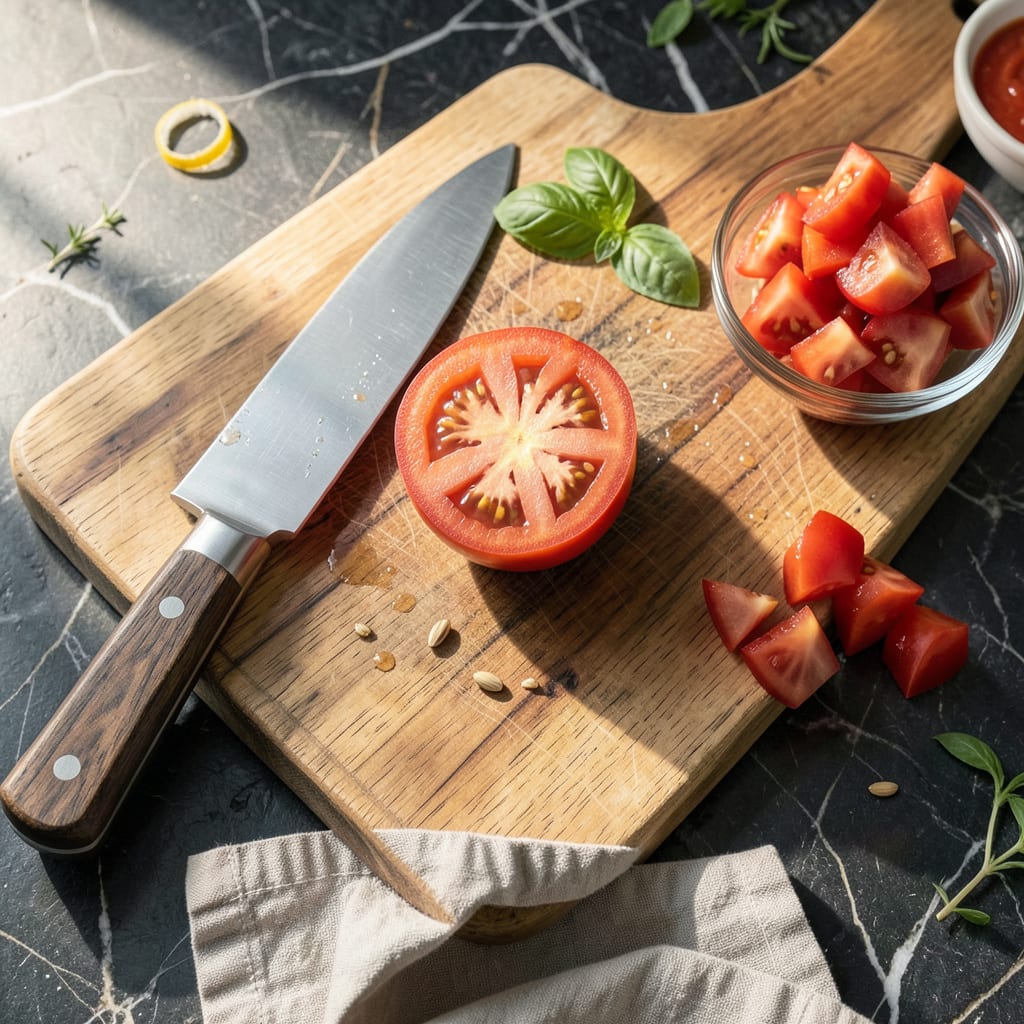
Here’s the thing—dicing tomatoes for salad isn’t just about chopping them up. It’s about creating those perfect uniform pieces that make every bite balanced. I’ve burned through more tomatoes than I’d like to admit perfecting this technique, and the difference it makes in a simple salad is huge. No more watery, uneven chunks ruining your dish.
You’ll want to start with the right tomatoes—firm but ripe Roma or vine-ripened varieties work best. They hold their shape and don’t turn to mush when diced. I learned this the hard way after ruining a beautiful heirloom tomato that was too delicate for salad prep. A sharp chef’s knife is your best friend here, and I’ll show you exactly how to use it.
What you’re aiming for is consistent 1/2-inch cubes that look as good as they taste. This size is ideal for mixing with cucumbers, red onions, and fresh herbs without overpowering other ingredients. The technique I’m sharing ensures clean cuts that keep the tomato’s juices contained until you’re ready to dress the salad.
By the time you’re done, you’ll have restaurant-quality diced tomatoes ready for your favorite salad. I like pairing mine with a simple lemon-oregano dressing and crumbled feta for a Greek-inspired bowl. The uniform pieces mean every forkful has the perfect tomato-to-other-ingredient ratio. Let’s get those knives sharp and tomatoes prepped!
📚 In This Guide
- What You’ll Need
- Instructions
- Tips and Common Mistakes
What Youll Need
- ● Fresh tomatoes – 2–4 medium (Roma or vine-ripened work best for salads)
- ● Cutting board – A stable, non-slip board (wood or plastic, at least 12″x18″)
- ● Chef’s knife – 8″ sharp blade (a serrated knife works too for softer tomatoes)
- ○ Paring knife (optional) – For coring or trimming blemishes
- ● Large bowl – To collect diced tomatoes (prevents juice spills!)
- ● Paper towels – 2–3 sheets to pat dry tomatoes (reduces slipperiness)
- ○ Measuring spoon (optional) – ½ tsp for removing seeds (if desired)
- ● Kitchen towel – To wipe hands or clean up quick messes
- ○ Salad spinner (optional) – If pre-washing tomatoes
Step-by-Step Instructions for Dicing Tomatoes for Salad
You’re about to master the simple technique that transforms ordinary tomatoes into perfect salad-ready pieces!
Select and Wash Your Tomatoes
Choose firm, ripe tomatoes that feel heavy for their size—this indicates maximum juiciness. I prefer Roma tomatoes for dicing because they have fewer seeds and hold their shape better, but any variety works if it’s fresh and firm. Avoid tomatoes with soft spots or wrinkled skin.
Rinse the tomatoes under cool running water to remove any dirt or residue. Gently pat them completely dry with a clean kitchen towel or paper towels. This drying step is crucial because wet tomatoes are slippery and dangerous to cut, plus excess moisture will dilute your salad dressing later.
Prepare Your Cutting Surface and Knife
Place a damp kitchen towel under your cutting board to prevent it from slipping while you work. This simple trick gives you better control and makes dicing safer. Use a sharp chef’s knife—dull knives crush tomatoes instead of cutting them cleanly.
I like to have a small bowl nearby for the tomato scraps and seeds. This keeps your workspace tidy and makes cleanup easier. If you’re right-handed, position the bowl to the left of your cutting board; if left-handed, place it on the right for efficient scraping.
Remove the Core and Create a Flat Base
Hold the tomato stem-side up and cut a small cone-shaped piece around the core where the stem was attached. This removes the tough, bitter core and gives you a flat surface to work with. Discard the core or add it to your compost.
Turn the tomato so the cut side is down on your cutting board. This flat base stabilizes the tomato, preventing it from rolling while you cut. Now you’re ready to create those perfect, uniform dice that will make your salad look as good as it tastes!
Cut into Perfect Uniform Dice
Make your first cuts lengthwise, slicing the tomato into ¼-inch thick planks. I find this thickness ideal for salads—thick enough to hold up to dressing but thin enough for pleasant eating. Use smooth, confident strokes with your knife, letting the blade do the work.
Stack two or three tomato planks (depending on size) and cut them lengthwise again into ¼-inch thick sticks. Then turn your cutting board 90 degrees and cut across the sticks to create perfect little cubes. For large tomatoes, you might need to make three sets of cuts to achieve uniform dice.
Remove Excess Seeds and Juices (Optional)
If you’re using particularly juicy tomatoes or want extra crispness in your salad, gently squeeze the diced tomatoes in a fine-mesh strainer to remove some seeds and excess liquid. This step prevents your salad from becoming watery while keeping all that delicious tomato flavor.
For most salads, I skip this step because I love that fresh tomato juice mingling with the dressing. But for composed salads where you want each ingredient to stay distinct, or if you’re prepping ahead, removing some liquid helps maintain texture. Use your diced tomatoes immediately for the freshest flavor, or store in an airtight container in the refrigerator for up to 2 days.
Tips and Common Mistakes for Perfect Tomato Dicing
These game-changing insights will transform your tomato prep from messy to masterful—every single time!
Knife Selection Secret: A sharp chef’s knife is non-negotiable for clean cuts. I learned this the hard way after crushing too many tomatoes with dull blades. The 8-inch chef’s knife gives you perfect control for those precise ¼-inch cuts mentioned in Step 4. Test sharpness by slicing through a tomato skin—if it resists, hone your blade first!
Tomato Variety Insight: While Roma tomatoes are my go-to (as mentioned in Step 1), heirloom varieties can work beautifully too! Just choose ones that feel firm and heavy for their size. The secret is selecting tomatoes with thick flesh walls—press gently on the sides to check. Thin-walled tomatoes will turn mushy when diced, no matter how sharp your knife.
Cutting Board Stability: That damp towel trick in Step 2 is a game-changer, but here’s what nobody tells you—use a board with rubber feet too! The combination prevents any movement, even when you’re pressing down for those final dice cuts. I position my board perpendicular to the counter edge for maximum stability during the 90-degree turn in Step 4.
Uniformity Pro Tip: For those perfect ¼-inch cubes in Step 4, here’s my foolproof method: First cut all tomatoes into planks, then stack and cut all planks into sticks, and finally dice all sticks at once. This assembly-line approach ensures every piece is identical. Don’t rush—consistent size means every bite of your salad has the same great texture!
Pro Tips for Dice Tomatoes For Salad
- These game-changing insights will transform your tomato prep from messy to masterful—every single time!
- Knife Selection Secret: A sharp chef’s knife is non-negotiable for clean cuts. I learned this the hard way after crus…
- Tomato Variety Insight: While Roma tomatoes are my go-to (as mentioned in Step 1), heirloom varieties can work beauti…
Frequently Asked Questions
Do I need to peel tomatoes before dicing them for salad?
Nope! The skin is totally edible and adds texture. Only peel if your recipe demands it (like for sauces) or if the skin is tough (common in heirloom varieties). For salads, just wash them well—peeling removes nutrients and wastes time!
What’s the fastest way to dice tomatoes without a mess?
Use a serrated knife (it grips slippery skins better) and cut on a non-slip board. Pro move: Slice off the stem end first to create a flat base—this keeps tomatoes steady. For speed, dice 2-3 at once if they’re similar in size!
Can I dice tomatoes ahead of time for meal prep?
Yes, but store them separately from salad greens to avoid sogginess. Keep diced tomatoes in an airtight container in the fridge for up to 2 days. Add a pinch of salt and drain excess liquid before tossing to keep your salad crisp!
What’s the best tomato variety for dicing in salads?
Firm, meaty types like Roma, Campari, or beefsteak hold shape best. Avoid overly juicy varieties (like heirlooms) unless you’re okay with extra liquid. Cherry tomatoes? Halve or quarter them—no dicing needed!
Why do my diced tomatoes turn mushy in the salad?
Three common culprits: 1) Overripe tomatoes, 2) adding salt too early (it draws out moisture), or 3) mixing them with dressings ahead of time. Fix it: Dice just before serving, pat dry with a paper towel, or toss with a light vinegar-based dressing to preserve texture.
Now you’ve got the skills to dice tomatoes like a pro—crisp, uniform, and ready to elevate any salad! 🥗✨ Remember, a sharp knife, steady cuts, and a little patience are all it takes to turn simple ingredients into something extraordinary. Next time you’re prepping, try experimenting with heirloom varieties or mixing diced tomatoes with fresh herbs for extra flavor.
Ready to put your new technique to work? Whip up a classic Caprese salad or toss those perfect cubes into salsa—your dishes (and taste buds) will thank you!

Trained in classic French technique but raised on slow-cooked ribs and spicy rubs, she blends culinary skill with smoke and soul.
- Recipe for Boneless Pork Chops in Cast Iron Skillet: Sear and Baste to Juicy Perfection - October 3, 2026
- Recipe for Boneless Cross Rib Roast: Slow-Roasted Beef with Herb Crust - October 3, 2026
- Hamburgers in Sauce Recipe Crock Pot: Slow-Cooked Savory Delight - October 3, 2026