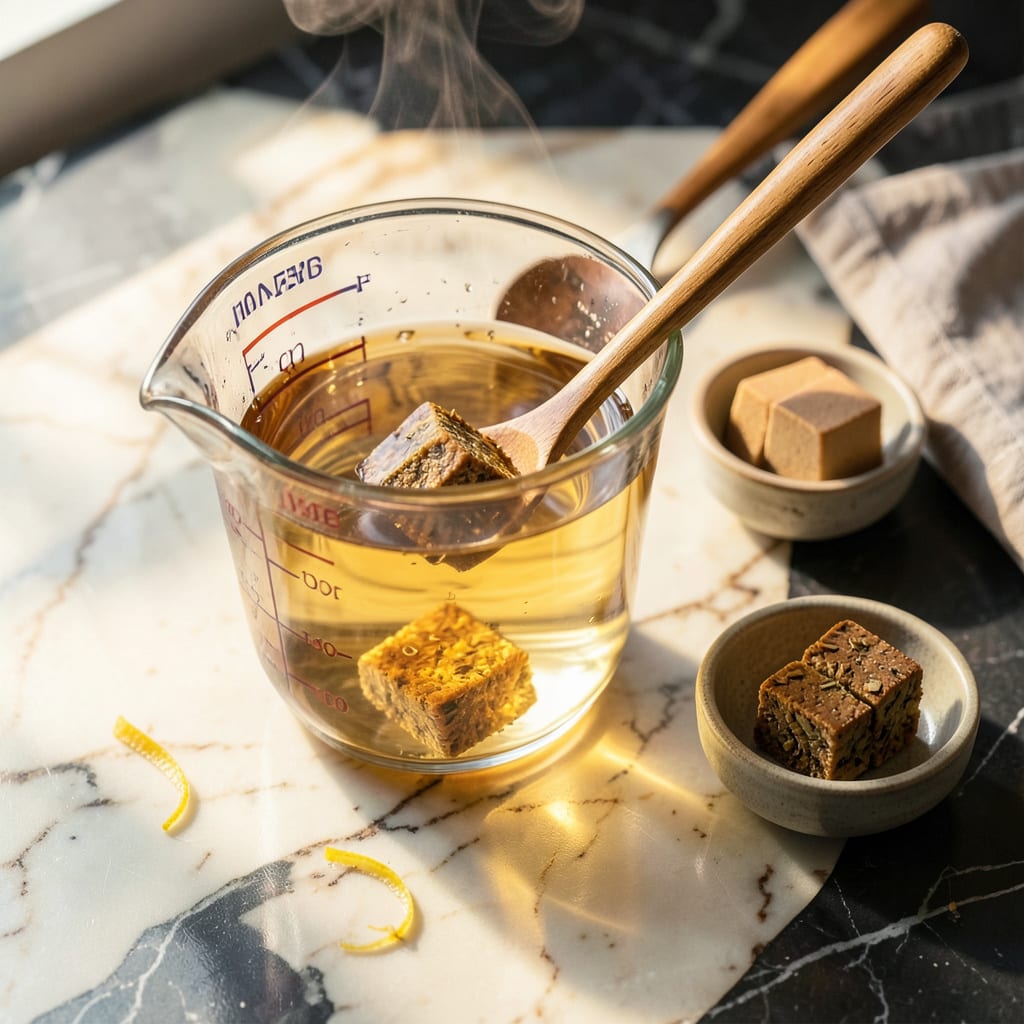
Chicken bouillon cubes are a kitchen powerhouse, delivering concentrated flavor to countless dishes—but only when dissolved properly. After years of watching home cooks struggle with clumpy broth or uneven dissolution, I’ve perfected a foolproof method that guarantees smooth, rich results every time. The difference between properly dissolved bouillon and rushed attempts is the foundation of great cooking.
This technique works for any application, from delicate consommé to hearty gravy. The key lies in water temperature and agitation—too cold and the cubes won’t break down, too hot and you risk bitterness. I’ll show you how to achieve perfect dissolution whether you’re working with cubes or powder, on the stovetop or in the microwave. No more grainy broth or wasted ingredients.
Properly dissolved bouillon transforms soups, risottos, and sauces by providing consistent seasoning throughout. You’ll notice the difference immediately in dishes where broth is the primary liquid. The method also allows for better salt control, preventing the over-seasoning that happens when undissolved bits settle at the bottom of your pot.
Beyond the basics, I’ll cover professional tricks like making bouillon ice cubes for quick flavor boosts and adjusting intensity for different dishes. These small details separate good home cooking from restaurant-quality results. Let’s eliminate the guesswork from this fundamental kitchen technique.
📚 In This Guide
- What You’ll Need
- Instructions
- Tips and Common Mistakes
What Youll Need
- ● Chicken bouillon cubes – 1–2 cubes (check package for serving size; e.g., Knorr or Wyler’s brands work well).
- ● Hot water – 1 cup (8 oz) per cube (boiling or near-boiling for fastest dissolution 🔥).
- ● Heat-safe mixing bowl or mug – Microwave-safe or stovetop-friendly (glass or ceramic preferred).
- ● Spoon or whisk – For stirring (a fork works in a pinch!).
- ○ Measuring cup – For precise water amounts (optional but helpful).
- ● Fat source – 1 tsp butter, olive oil, or schmaltz (enhances richness).
- ● Aromatics – 1 crushed garlic clove or ½ tsp dried herbs (thyme or parsley pair well).
- ● Strainer – If you prefer a smooth broth (removes undissolved bits).
Instructions
This straightforward method ensures complete dissolution and maximum flavor extraction from bouillon cubes.
Select the Appropriate Liquid and Temperature
Begin by choosing your liquid base—water, broth, or stock—based on your recipe requirements. For standard applications, I recommend filtered water to avoid any off-flavors from tap water impurities. Measure the exact volume needed for your recipe, accounting for the bouillon cube’s concentration ratio (typically 1 cube per 8 ounces of liquid).
The liquid temperature is critical for proper dissolution. Cold or room-temperature liquids won’t effectively break down the compressed ingredients in bouillon cubes. Heat your liquid to 160-180°F—you’ll see small bubbles forming at the bottom of the pot and steam rising from the surface, but not a rolling boil. This temperature range optimizes dissolution without degrading the volatile aromatic compounds in the bouillon.
Incorporate the Bouillon Cube Using Proper Technique
Add the bouillon cube to your preheated liquid immediately after removing it from the heat source. This prevents temperature shock that could cause the cube to seize up. Use a whisk or wooden spoon to create a vortex in the liquid before dropping in the cube—this initial agitation helps prevent the cube from sticking to the bottom where it might scorch.
Allow the cube to soften for 30-45 seconds before actively stirring. You’ll notice the outer layer beginning to dissolve and small particles dispersing into the liquid. At this point, switch to a whisk and employ a figure-eight motion to create shear forces that break apart any remaining solid pieces. Continue whisking until the liquid appears uniformly colored and no granular texture remains when rubbed between your fingers.
Verify Complete Dissolution and Adjust Concentration
To confirm proper dissolution, dip a metal spoon into the liquid and examine the back surface. It should appear smooth with no visible granules or cloudy residue. For additional verification, taste a small amount—the flavor should be consistent throughout with no gritty texture or concentrated pockets of salt. If you detect any undissolved particles, return the mixture to low heat and whisk vigorously for an additional 1-2 minutes.
Assess the flavor concentration at this stage. Bouillon cubes vary in salt content between brands, so you may need to adjust. If the solution tastes overly salty, add 1-2 tablespoons of additional hot liquid to dilute. For insufficient flavor, incorporate an additional ½ cube, repeating the dissolution process. Remember that flavors will intensify slightly as the liquid cools, so aim for a concentration that’s slightly less intense than your final target flavor profile.
Strain and Store for Optimal Results
For applications requiring perfectly smooth liquids, strain the dissolved bouillon through a fine-mesh sieve to remove any potential undissolved particles or impurities. This step is particularly important for clear broths, consommé, or sauces where texture uniformity is critical. Press gently on any solids with the back of a spoon to extract maximum flavor before discarding the residue.
Use the dissolved bouillon immediately for best results, as the flavor profile is most vibrant when fresh. If storing, transfer to an airtight container and refrigerate for up to 3 days or freeze for 3 months. When reheating frozen bouillon, use gentle heat and whisk periodically to maintain uniform consistency, as separation may occur during freezing. For prolonged storage, consider reducing the liquid by 10-15% before freezing to account for moisture loss during thawing.
Tips and Common Mistakes
Mastering the dissolution of bouillon cubes requires attention to temperature control and proper technique. These professional insights will ensure optimal flavor extraction and smooth consistency every time.
Temperature Precision: The 160-180°F range specified in Step 1 is critical for proper dissolution without degrading aromatic compounds. Use an instant-read thermometer to verify temperature—visual cues like small bubbles and steam are helpful, but precise measurement eliminates guesswork. Maintaining this range prevents both under-dissolution from insufficient heat and flavor degradation from excessive temperatures.
Technique Refinement: In Step 2, the 30-45 second waiting period before stirring isn’t arbitrary—it allows the cube’s outer layer to soften and begin dissolving naturally. When you do begin stirring, the figure-eight whisking motion creates optimal shear forces to break down any remaining solid particles. This method is far more effective than simple circular stirring for achieving complete dissolution.
Concentration Control: When adjusting flavor in Step 3, remember that the 1-2 tablespoons of additional liquid for dilution should be added gradually while tasting. The ½ cube adjustment for insufficient flavor should be fully dissolved using the same technique as the initial cube. Both adjustments require rechecking the solution’s smoothness on a spoon’s back surface to maintain proper texture.
Storage Optimization: For the 3-day refrigeration or 3-month freezing mentioned in Step 4, use glass containers to prevent flavor absorption that can occur with plastic. When freezing, the 10-15% reduction in liquid volume before storage accounts for moisture loss during thawing, preserving the original concentration when reheated. Always label containers with the date to track freshness accurately.
Pro Tips for Dissolve Chicken Bouillon Cubes
- Mastering the dissolution of bouillon cubes requires attention to temperature control and proper technique. These pro…
- Temperature Precision: The 160-180°F range specified in Step 1 is critical for proper dissolution without degrading a…
- Technique Refinement: In Step 2, the 30-45 second waiting period before stirring isn’t arbitrary—it allows the cube’s…
Frequently Asked Questions
How long does it take to dissolve a chicken bouillon cube in hot water?
Typically, a bouillon cube dissolves in 1–2 minutes in hot (not boiling) water. Stirring speeds it up! If using cold water, expect 5–10 minutes with occasional stirring. For instant use, crush the cube into powder first—it melts almost instantly.
Can I dissolve bouillon cubes directly in a recipe (like soup or rice)?strong>
Yes! Add the cube to the cooking liquid (broth, water, or sauce) early in the process. For soups, drop it in with the base liquid; for rice or grains, stir it into the cooking water before adding the dry ingredients. Avoid adding it late—it may leave gritty bits.
What’s the ratio of bouillon cubes to water for broth?
The standard ratio is 1 cube per 1 cup (8 oz) of water for a balanced flavor. For weaker broth, use 1 cube per 2 cups. For extra-rich flavor (like ramen or gravy), try 1.5 cubes per cup. Adjust to taste—some brands are saltier!
My bouillon cube won’t dissolve—what’s wrong?
Common issues: water isn’t hot enough (aim for 160–180°F), the cube is too large (crush it!), or you’re not stirring. If using cold liquids, let it sit longer or microwave in 15-second bursts. Old cubes may also resist—check the expiry date!
Are there healthier alternatives to bouillon cubes?
Yes! Try low-sodium bouillon, homemade bone broth, or powdered broth concentrates (like Better Than Bouillon). For a quick swap, mix 1 tsp salt + ½ tsp garlic powder + ¼ tsp onion powder per cup of water. Always check labels for additives!
Dissolving chicken bouillon cubes perfectly is all about patience and the right technique—whether you’re simmering, whisking, or microwaving. 🌟 Now that you’ve mastered the basics, experiment with different liquids (like broth or wine) or adjust the concentration to suit your dish’s flavor needs.
Ready to put your skills to the test? Try using your freshly dissolved bouillon in a homemade soup, sauce, or marinade—your taste buds will thank you! For more kitchen hacks, check out our guide on boosting flavor with pantry staples next.

Trained in classic French technique but raised on slow-cooked ribs and spicy rubs, she blends culinary skill with smoke and soul.
- Recipe for Boneless Pork Chops in Cast Iron Skillet: Sear and Baste to Juicy Perfection - October 3, 2026
- Recipe for Boneless Cross Rib Roast: Slow-Roasted Beef with Herb Crust - October 3, 2026
- Hamburgers in Sauce Recipe Crock Pot: Slow-Cooked Savory Delight - October 3, 2026