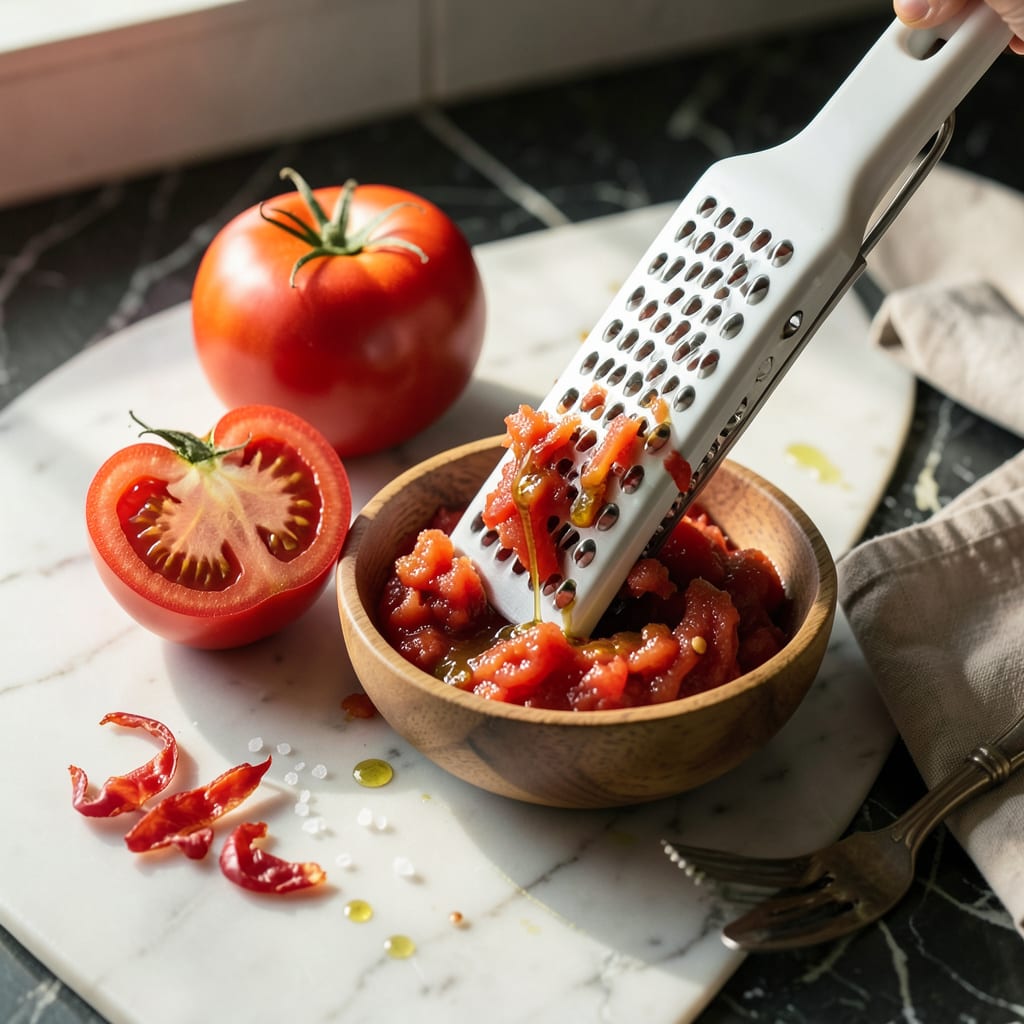
Here’s the thing—grating tomatoes might sound weird at first, but it’s the fastest way to get perfectly smooth sauce bases without peeling or seeding. I stumbled on this trick during a rushed dinner prep when I needed tomato sauce quick, and now it’s my go-to for everything from salsa to marinara. No fancy tools required, just a box grater and ripe tomatoes.
The magic happens when you use the right tomatoes. Romas work best because they’re meaty with fewer seeds, but any firm tomato will do in a pinch. You’ll end up with perfect tomato pulp for sauces while the skins stay behind—no waste, no mess. I save those skins for broth or compost, so nothing goes to waste.
This method cuts prep time in half compared to traditional peeling and seeding. The grated pulp cooks down faster too, giving you richer flavor in less time. I use it for everything from quick pasta sauces to braising liquids—it’s a game-changer for busy cooks who want restaurant-quality results without the fuss.
Fair warning: once you try grating tomatoes, you’ll never go back to the old way. It’s that much faster and cleaner. Here’s exactly how to do it right—tools, techniques, and all my hard-won tips to make it foolproof.
📚 In This Guide
- What You’ll Need
- Instructions
- Tips and Common Mistakes
What Youll Need
- ● Fresh tomatoes – 4–6 medium ripe tomatoes (Roma or plum varieties work best for less water content)
- ● Box grater – A medium-coarse side (or a dedicated tomato grater if you have one)
- ● Sharp knife – For halving tomatoes (a chef’s or serrated knife works great)
- ● Cutting board – Non-slip preferred to avoid messy accidents!
- ● Large bowl – To catch the grated pulp (wide-mouth for easy grating)
- ○ Fine-mesh strainer or sieve (optional) – For removing seeds if you prefer a smoother texture
- ● Spoon or spatula – To scrape off the last bits of tomato from the grater
- ○ Kitchen gloves (optional) – If you’re sensitive to tomato acidity or want to keep hands clean
- ● Paper towels – For quick cleanup of juicy splatters
Instructions
This method transforms fresh tomatoes into sauce-ready pulp in seconds—no peeling, no mess, just pure tomato flavor.
Select and Prepare Your Tomatoes
Choose ripe, firm tomatoes with smooth skin—Roma or San Marzano varieties work best because they’re meatier with fewer seeds. Give them a quick rinse under cool water and pat completely dry with a clean kitchen towel. You’ll want to remove the stem end by cutting off just the very top where it attached to the vine.
Here’s the thing—I don’t bother coring the tomatoes completely. Just that little stem removal is enough. The grater will handle the rest, and you won’t waste any of that delicious flesh. For this method, you don’t need to peel or seed the tomatoes either—that’s the beauty of it!
Set Up Your Grating Station
Place a large, wide bowl on your counter—this will catch all the grated tomato and juices. I like to use one with high sides to prevent any splatter. Set a box grater (with the medium holes) securely inside the bowl at a slight angle so the grated tomato slides right into the bowl as you work.
I’ve found that using the medium holes gives you the perfect texture—not too watery, not too chunky. If you only have a fine grater, it’ll still work, but you might need to strain out some excess liquid later. The goal is to end up with thick, pulpy tomato flesh that’s ready for your sauce.
Step 3: Grate the Tomatoes Efficiently
Hold a tomato by its stem end and rub it against the grater in long, even strokes. Apply gentle but firm pressure—you’ll feel the flesh grating away while the skin stays intact in your hand. Rotate the tomato as you go to grate all sides evenly.
You’ll notice the tomato gradually getting smaller in your hand while the bowl fills with vibrant red pulp and juice. When you’re left with just the skin, discard it and move to the next tomato. This process goes surprisingly fast—you can grate 4-5 tomatoes in under 2 minutes once you get the rhythm!
Step 4: Collect and Use Your Tomato Pulp
Give the grated tomato mixture a quick stir to combine the pulp and juices. You’ll see it has a perfect saucy consistency right from the start—no need to cook it down unless you want an even thicker sauce. For most recipes, you can use this exactly as is.
If you’re making a quick sauce, transfer the grated tomatoes to a saucepan and cook over medium heat for 10-15 minutes until it reaches your desired thickness. The natural pectin in the tomatoes will help it thicken beautifully as it simmers. Taste and season with salt—you’ll be amazed how sweet and fresh it tastes compared to canned tomatoes!
Maximize Flavor and Texture
For the most flavorful results, I like to add a pinch of salt to the grated tomatoes and let them sit for 10 minutes before cooking. This draws out even more juice initially, but then the tomatoes reabsorb it, concentrating their flavor. You’ll end up with a richer, more complex tomato base.
Real talk: this method gives you the freshest tomato flavor possible because you’re not cooking the tomatoes to death. The quick grating preserves their bright, sunny taste while giving you the perfect texture for sauces. Use it immediately for the best results, or store in an airtight container in the fridge for up to 3 days—though it’s so good you’ll probably use it right away!
Tips and Common Mistakes
This method is all about speed and flavor—here’s how to make it even better.
Tomato Selection Secret: Roma and San Marzano tomatoes really are the gold standard here because of their meaty texture and lower water content. I’ve tested this with other varieties, and while they work, you’ll end up with a waterier pulp that needs more straining. Look for tomatoes that feel heavy for their size and have smooth, unblemished skin—that’s your guarantee of perfect texture in the final product.
Grater Technique Breakthrough: The medium holes on your box grater are ideal, but here’s what nobody tells you—angle matters! Tilt the grater so it’s almost flat against the bowl (about 15 degrees) to prevent pulp from sticking to the back. Apply steady pressure and use the full length of the grater in each stroke. You’ll be amazed how much faster this goes when you’re not stopping to scrape pulp off the grater every few seconds.
Flavor Concentration Tip: That 10-minute resting time with salt in Step 5 isn’t just for show—it’s where the magic happens! The salt draws out excess moisture initially, then the tomatoes reabsorb it, creating a more concentrated flavor. I’ve found this simple step makes the difference between good tomato base and an incredibly rich, complex one that tastes like it simmered for hours.
Heat Control for Sauce: When cooking your grated tomatoes for that 10-15 minutes, medium heat is perfect for gentle reduction without scorching. Watch for the moment when bubbles form but don’t pop violently—that’s your sweet spot. Stir occasionally and you’ll see the color deepen and the texture thicken beautifully. This is where that natural pectin works its magic!
Pro Tips for Grate Tomatoes
- This method is all about speed and flavor—here’s how to make it even better.
- Tomato Selection Secret: Roma and San Marzano tomatoes really are the gold standard here because of their meaty textu…
- Grater Technique Breakthrough: The medium holes on your box grater are ideal, but here’s what nobody tells you—angle …
Frequently Asked Questions
Got questions about grating tomatoes? You’re not alone! Here are the most common queries—answered in a snap.
Do I need to peel tomatoes before grating?
Nope! The skin gets left behind when you grate the flesh side. Just cut the tomato in half, press the cut side against the grater, and scrape away. The skin acts as a built-in “handle” while you work. Easy peasy!
Can I grate tomatoes ahead of time for meal prep?
Yes, but use them within 24 hours for best flavor. Store grated tomatoes in an airtight container in the fridge. For longer storage, freeze in ice cube trays (up to 3 months) and thaw as needed.
What’s the best grater for tomatoes? Is a box grater okay?
A box grater’s medium holes (or a microplane) work best—they catch seeds while letting pulp through. Avoid fine graters (they’ll clog) or coarse ones (you’ll lose too much texture). Pro tip: Place the grater over a bowl to catch every drop!
My grated tomatoes are too watery. How do I fix this?
Drain excess liquid by letting them sit in a fine-mesh strainer for 10 minutes, or pat dry with paper towels. For thicker sauces, simmer the grated tomatoes in a pan for 5–10 minutes to evaporate moisture.
Is there a no-grater alternative for the same result?
Absolutely! Pulse tomato halves in a food processor (3–5 times), then strain through a sieve to remove seeds/skin. Or, hand-crush cooked tomatoes with a potato masher for a rustic texture. No fancy tools? A fork works in a pinch!
Now you’ve got the secret to effortlessly grating tomatoes like a pro! 🎉 Whether you’re whipping up a silky marinara, a fresh salsa, or a flavor-packed soup base, this method saves time and cuts down on mess. No more peeling or seeding—just rich, smooth tomato goodness in minutes.
Ready to put your new skill to work? Try grating tomatoes for your next pasta night or experiment with a homemade bruschetta topping. Happy cooking—and enjoy the delicious results! 🍅✨

Trained in classic French technique but raised on slow-cooked ribs and spicy rubs, she blends culinary skill with smoke and soul.
- Recipe for Boneless Pork Chops in Cast Iron Skillet: Sear and Baste to Juicy Perfection - October 3, 2026
- Recipe for Boneless Cross Rib Roast: Slow-Roasted Beef with Herb Crust - October 3, 2026
- Hamburgers in Sauce Recipe Crock Pot: Slow-Cooked Savory Delight - October 3, 2026