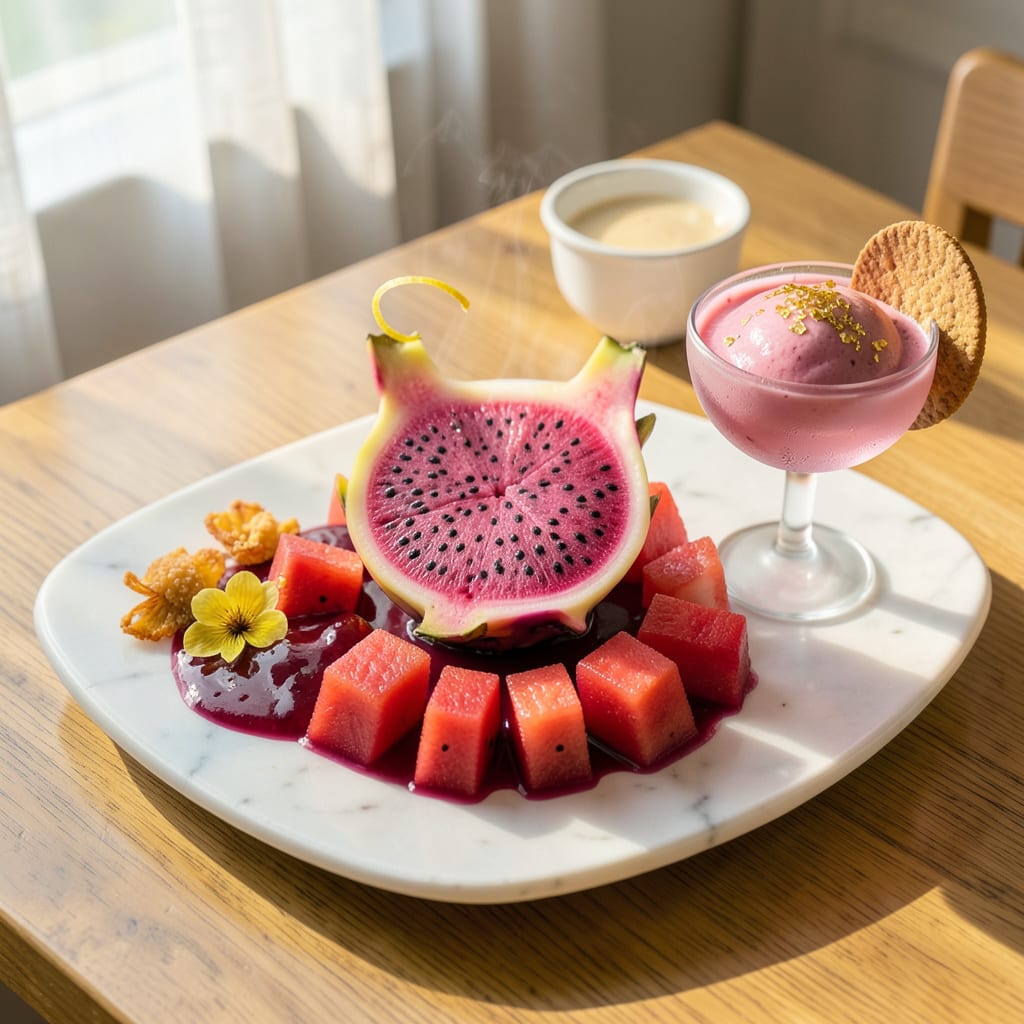
Dragon fruit might look intimidating with its bright pink skin and spiky exterior, but I promise it’s one of the easiest tropical fruits to work with. I first discovered this vibrant fruit during a summer road trip down the coast, where a roadside stand owner showed me how to pick the perfect one. The key is choosing fruit that gives slightly when pressed—like a ripe avocado—but isn’t mushy.
What makes dragon fruit special is its mild sweetness and stunning visual appeal. The white or magenta flesh dotted with tiny black seeds looks like something from a fantasy world. I love using it in desserts because it adds natural color without overpowering flavors. Plus, it’s surprisingly versatile—equally at home in smoothie bowls, fruit salads, or even lightly grilled for a warm dessert.
The preparation couldn’t be simpler: just slice it open and scoop out the flesh. No fancy tools needed. I’ve found the best way to enjoy it is chilled, which makes the texture even more refreshing. The seeds add a subtle crunch that contrasts nicely with the creamy flesh, making every bite interesting.
Whether you’re using it as a garnish, blending it into sorbet, or serving it fresh with a squeeze of lime, dragon fruit brings instant tropical flair to your plate. The mild flavor means it pairs well with everything from coconut to berries. Here’s how to make the most of this exotic-looking (but actually simple) fruit.
📚 In This Guide
- What You’ll Need
- Instructions
- Tips and Common Mistakes
What Youll Need
- ● 1 ripe dragon fruit (red or yellow variety, ~12–16 oz)
- ● 1 sharp knife (chef’s or paring knife, 6–8 inches)
- ● 1 cutting board (medium to large, non-slip preferred)
- ● 1 spoon (teaspoon or tablespoon, for scooping)
- ● 1 bowl (medium-sized, for holding flesh)
- ● Lime or honey (to enhance sweetness)
- ● Mint leaves (for garnish)
- ● Blender (if making smoothies or puree)
- ● Measuring cups (if following a recipe)
Instructions
Here’s the easiest way to transform dragon fruit into something special—just follow these simple steps.
Select and Prepare the Dragon Fruit
Start by choosing ripe dragon fruit with bright, evenly colored skin that gives slightly when pressed. The flesh should feel firm but not rock-hard. I like to work with chilled fruit straight from the fridge—it’s easier to handle and the contrast of cool fruit with warm preparations is delightful.
Cut the fruit in half lengthwise using a sharp chef’s knife. You’ll see the beautiful speckled flesh inside. Scoop it out with a large spoon, running the spoon between the flesh and skin to separate them cleanly. For most recipes, you’ll want to cut the flesh into 1-inch cubes—this size works perfectly for both visual appeal and even cooking.
If you notice any brown spots or overly soft areas, simply trim them away with your knife. The flesh should be consistently vibrant with no discoloration. This preparation step ensures you’re working with the best quality fruit for your dish.
Choose Your Cooking Method
For a simple grilled preparation, heat a non-stick skillet over medium-high heat until hot but not smoking. Add your dragon fruit cubes in a single layer without crowding. You’ll hear a gentle sizzle when they hit the pan—that’s exactly what you want.
Cook the cubes undisturbed for 2-3 minutes per side until you see light caramelization and the edges become slightly translucent. The fruit should soften slightly but maintain its shape. For a broiled option, arrange cubes on a parchment-lined baking sheet and broil for 3-4 minutes, watching closely to prevent burning.
If you prefer a no-cook approach, simply toss the cubes with a squeeze of lime juice and let them macerate for 15-20 minutes. This softens the texture slightly and brightens the natural sweetness. The fruit will release some juices, creating a light syrup that’s perfect for drizzling.
Finish and Serve Your Creation
For grilled or broiled dragon fruit, transfer the warm cubes to a serving dish immediately. I love to sprinkle them with a pinch of flaky sea salt—the contrast with the fruit’s sweetness is magical. The cubes should be warm throughout with slightly crisped edges from the caramelization.
If you’ve macerated the fruit, give it a gentle stir before serving to distribute those beautiful natural juices. The texture should be tender but not mushy, with the vibrant color deepened slightly from the lime juice. Both preparations benefit from a final garnish of fresh mint leaves or toasted coconut flakes for added visual appeal.
Serve your dragon fruit while it’s still warm from cooking or nicely chilled from macerating. The flavor should be concentrated and slightly intensified from the preparation, with the natural sweetness balanced by any added elements. This versatile fruit works beautifully as a standalone treat or as part of more complex dishes.
Tips and Common Mistakes
Working with dragon fruit is simpler than you might think—here are the key details that make all the difference.
The Heat Factor: When grilling dragon fruit cubes in Step 2, that medium-high heat is crucial for achieving caramelization without burning. The pan should be hot enough to create a gentle sizzle when the fruit hits it, but not so hot that the cubes turn mushy before they develop those beautiful golden edges. I find that letting the pan preheat for a full 3-4 minutes before adding the fruit gives the best results.
Timing Secret: The 2-3 minutes per side cooking time in Step 2 might seem short, but it’s perfect for maintaining the fruit’s structure while developing flavor. Watch for the edges to become slightly translucent—that’s your visual cue they’re done. For broiling, stick to the 3-4 minutes range and position the rack in the upper third of your oven for even browning without scorching.
Maceration Magic: If you choose the no-cook method in Step 2, don’t rush the 15-20 minute maceration time. This isn’t just about softening—it’s when the lime juice really works its magic, drawing out natural juices and intensifying the fruit’s sweetness. I’ve found that gently stirring once halfway through helps distribute the flavors evenly.
Finishing Touch: That pinch of flaky sea salt in Step 3 isn’t just for show—it creates a flavor explosion by contrasting with the fruit’s natural sweetness. The warm cubes absorb it best when sprinkled immediately after cooking, while they’re still glistening from the heat. For macerated fruit, add the salt just before serving to preserve the texture.
Pro Tips for Cook Dragon Fruit
- Working with dragon fruit is simpler than you might think—here are the key details that make all the difference.
- The Heat Factor: When grilling dragon fruit cubes in Step 2, that medium-high heat is crucial for achieving carameliz…
- Timing Secret: The 2-3 minutes per side cooking time in Step 2 might seem short, but it’s perfect for maintaining the…
Frequently Asked Questions
Got questions about cooking dragon fruit? You’re not alone! Here are the most common queries—answered in a snap.
Can you eat dragon fruit raw, or does it need to be cooked?
Absolutely! Dragon fruit is delicious raw—just scoop or slice it. Cooking (grilling, baking, or sautéing) enhances its sweetness and works great in desserts, smoothies, or savory dishes. Try both to see which you prefer!
How do I know when dragon fruit is ripe and ready to cook?
Look for bright, evenly colored skin (pink or yellow) with slight give when squeezed—like a ripe avocado. Avoid brown spots or mushy texture. Overripe? Use it in smoothies or sauces!
What’s the easiest way to remove dragon fruit seeds before cooking?
No need! The tiny black seeds are edible and add a kiwi-like crunch. If you prefer seedless purée, strain the flesh through a fine-mesh sieve after blending.
Can I substitute dragon fruit in recipes that call for other fruits?
Yes! Use it 1:1 in place of kiwi, mango, or strawberries in salsas, desserts, or cocktails. Note: Its mild sweetness may need a splash of honey or lime to balance flavors.
Why did my cooked dragon fruit turn brown or mushy?
Overheating breaks down its delicate texture. Stick to low/medium heat and short cook times (e.g., 2–3 minutes for sautéing). Add lemon juice to slow browning in salads or garnishes.
Now that you’ve unlocked the easy, delicious ways to cook dragon fruit, it’s time to get creative! 🌟 Whether you blend it into smoothies, grill it for a smoky twist, or bake it into desserts, this tropical gem adds vibrant flavor and nutrition to any dish. Start with a simple recipe—like the 3-step dragon fruit bowl—and experiment from there.
Ready to impress? Pick up a ripe dragon fruit on your next grocery run and turn it into your new favorite treat. Your taste buds (and Instagram feed) will thank you! 📸

Trained in classic French technique but raised on slow-cooked ribs and spicy rubs, she blends culinary skill with smoke and soul.
- Recipe for Boneless Pork Chops in Cast Iron Skillet: Sear and Baste to Juicy Perfection - October 3, 2026
- Recipe for Boneless Cross Rib Roast: Slow-Roasted Beef with Herb Crust - October 3, 2026
- Hamburgers in Sauce Recipe Crock Pot: Slow-Cooked Savory Delight - October 3, 2026