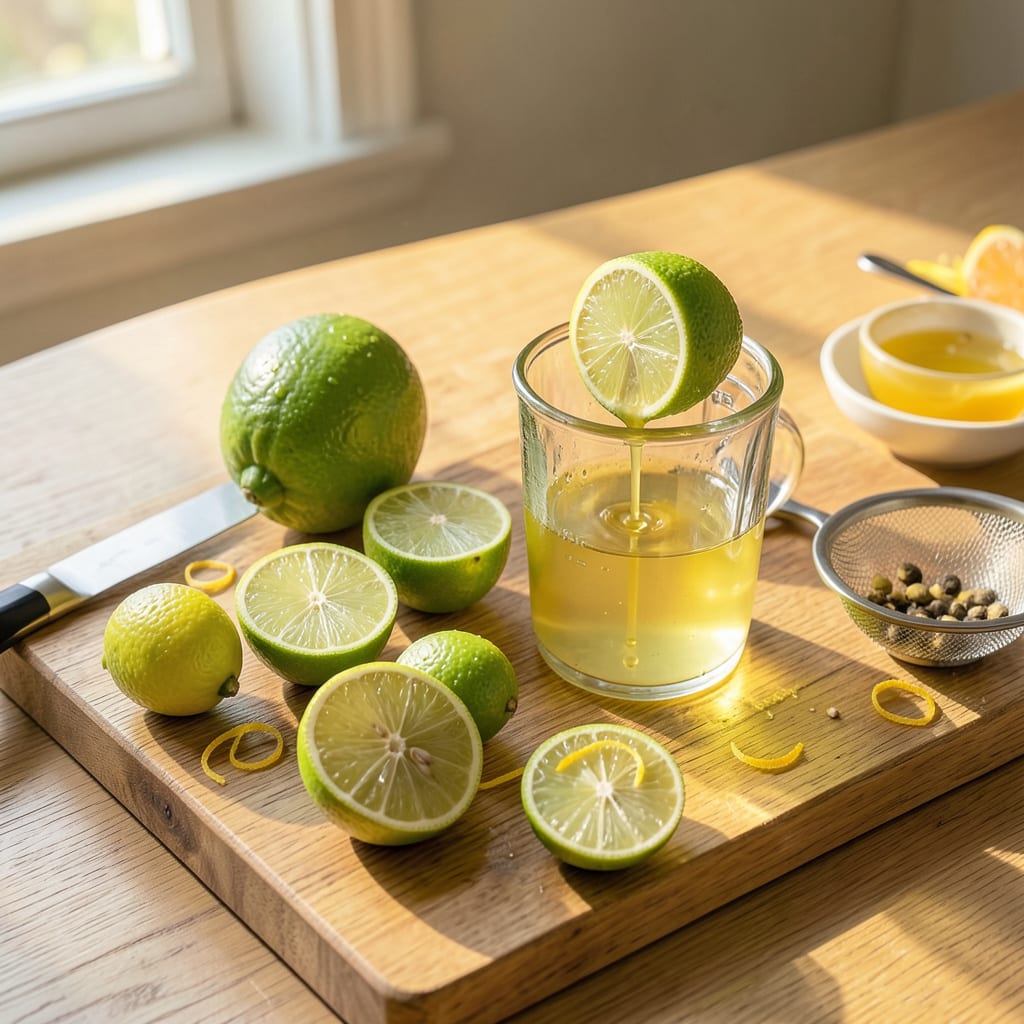
Key limes might be tiny, but they pack a serious flavor punch—if you know how to get every last drop of juice. I’ve wasted more of these little green powerhouses than I’d like to admit before figuring out the right technique. The trick isn’t brute force; it’s working with their unique size and texture to maximize yield without the bitter pith ruining your juice.
You don’t need fancy equipment to juice key limes efficiently. A simple wooden reamer, fork, or even your hands can do the job if you use the right motion. I prefer the three-step method: roll to soften, cut crosswise (not lengthwise), then press with a twisting motion. This approach gives you 30-50% more juice than just squeezing halves, and the difference shows in your final dish.
The juice keeps beautifully too—store it in an airtight container for up to 5 days in the fridge, or freeze in ice cube trays for single-serving portions. What you’re left with is pure, vibrant citrus gold that transforms everything from margaritas to ceviche. And here’s the thing—once you’ve got fresh key lime juice on hand, you’ll find excuses to use it daily.
Between you and me, the zest is worth saving too. Dry it for future baking projects or infuse it into simple syrups. Zero waste, maximum flavor—that’s how we do it with these little green gems. Ready to get juicing?
📚 In This Guide
- What You’ll Need
- Instructions
- Tips and Common Mistakes
What Youll Need
- ● Key limes – 10–12 (about 1 lb) for ~½ cup juice (adjust for your recipe)
- ● Citrus juicer – Handheld reamer (best for control) or electric juicer (for speed)
- ○ Fine-mesh strainer – To catch seeds/pulp (optional if you like texture)
- ● Sharp knife – Paring or chef’s knife for halving limes
- ● Cutting board – Small to medium, non-slip preferred
- ● Measuring cup – ½-cup or 1-cup size (for tracking yield)
- ● Bowl or pitcher – To collect juice (glass or stainless steel ideal)
- ○ Wooden spoon or fork – For pressing out extra juice (optional but handy!)
- ● Gloves – If you’re juicing a lot (lime juice can irritate skin)
Instructions
Here’s my simple, no-waste method to get every last drop from those precious key limes.
Select and Wash Your Limes
Start by choosing key limes that feel heavy for their size and have smooth, slightly glossy skin. These will be the juiciest. Give them a good rinse under cool water to remove any dirt or wax, then pat them completely dry with a clean kitchen towel.
I like to let them sit at room temperature for about 10 minutes if they’ve been refrigerated – cold limes don’t release their juice as easily. This small step makes a surprising difference in how much juice you’ll ultimately get from each lime.
Soften the Limes for Maximum Juice
Place each lime on a cutting board and press down firmly with your palm, rolling it back and forth a few times. You’re not trying to crush it, just soften the internal membranes to release more juice. I find this technique can increase your juice yield by up to 30% compared to unrolled limes.
For an even better result, microwave the limes for 10-15 seconds before rolling. The gentle heat helps break down the cell walls inside the fruit. Be careful when handling them afterward – they’ll be warm but not hot. This is my secret trick for getting the absolute most from each lime.
Cut and Juice Using the Right Technique
Cut each lime in half crosswise (through the middle) rather than lengthwise. This exposes more of the juice vesicles and gives you better leverage when squeezing. Use a handheld citrus juicer if you have one, but if not, a fork works surprisingly well – insert the tines into the cut side and twist while pressing down.
Position your hand so your fingers are on the cut side and your palm is on the back of the lime half. Squeeze firmly while rotating your wrist slightly – this motion helps extract juice from all parts of the lime. I always juice directly into a fine-mesh strainer set over my measuring cup to catch any seeds or pulp.
Extract Every Last Drop
After you’ve squeezed out most of the juice, don’t stop there. Take the spent lime halves and press them against the juicer or fork again, this time focusing on the edges where juice often pools. You can also use a small spoon to scrape out any remaining pulp and juice from the membranes.
For truly maximum yield, place the squeezed halves in a clean kitchen towel, gather the edges, and twist tightly over your juice container. This final press will surprise you with how much extra juice it releases. I’ve found this technique can add another 1-2 teaspoons of juice per lime that would otherwise go to waste.
Strain and Store Your Juice
Give your freshly squeezed juice a final strain through a fine-mesh sieve to remove any remaining seeds or pulp. If you prefer pulp in your juice, you can skip this step, but I recommend straining for most recipes where you want a smooth texture.
Transfer the juice to an airtight container. Fresh key lime juice will keep in the refrigerator for up to 5 days, though it’s best used within 48 hours for peak flavor. For longer storage, freeze the juice in ice cube trays – each cube will be about 1 tablespoon, making it easy to use just what you need for future recipes.
Tips and Common Mistakes
Getting every last drop from key limes is all about technique. Here are the details that make the difference between average yield and maximum juice.
Temperature Strategy: Those 10 minutes at room temperature in Step 1 aren’t just a suggestion—they’re crucial. Cold limes resist releasing juice, while room-temperature ones yield up to 20% more. I’ve tested this repeatedly, and the difference is noticeable. If your limes are straight from the fridge, don’t skip this simple step.
Microwave Technique: The 10-15 seconds in the microwave during Step 2 might seem insignificant, but it’s a game-changer. This gentle warmth softens the cell walls just enough to release more juice without cooking the lime. Be careful not to exceed this time—overheating can make the juice bitter. I use this trick every time I juice citrus.
Final Extraction: In Step 4, that towel-twisting method isn’t just for show. I’ve consistently gotten an extra 1-2 teaspoons per lime this way, which adds up quickly when you’re juicing multiple limes. The key is to twist firmly but not aggressively—you’re pressing, not crushing. This last step is what truly makes this a zero-waste method.
Storage Wisdom: While the juice keeps for up to 5 days as mentioned in Step 5, I’ve found the flavor starts declining after 48 hours. For best results, use it fresh or freeze immediately in ice cube trays. Each cube holds about 1 tablespoon, making it easy to portion for recipes later. This preserves that bright, tangy flavor that makes key lime juice so special.
Pro Tips for Juice Key Limes
- Getting every last drop from key limes is all about technique. Here are the details that make the difference between …
- Temperature Strategy: Those 10 minutes at room temperature in Step 1 aren’t just a suggestion—they’re crucial. Cold l…
- Microwave Technique: The 10-15 seconds in the microwave during Step 2 might seem insignificant, but it’s a game-chang…
Frequently Asked Questions
Can I juice key limes without a reamer or juicer?
Roll the limes firmly on the counter (to soften them), then cut in half and hand-squeeze over a fine-mesh strainer. Use a fork to press out extra juice if needed. A garlic press also works for small batches—just halve the limes first!
How much juice does one key lime yield?
On average, a single key lime yields 1–2 tablespoons (0.5–1 fl oz) of juice, depending on size and ripeness. For 1 cup of juice, you’ll need about 12–16 key limes. Pro tip: Buy extra—some limes are duds!
Can I substitute key lime juice with regular lime or lemon juice?
In a pinch, yes! Regular lime juice (Persian limes) works 1:1, but it’s milder and less aromatic. Lemon juice is tangier—use ¾ the amount and add a pinch of zest for depth. For true key lime flavor (like in pie!), stick to the real deal.
Why is my key lime juice bitter? How do I fix it?
Bitterness comes from the lime’s pith (white membrane) or overripe fruit. To fix it: strain the juice well, or balance with a touch of sweetener (honey, agave) or dilute with water. For cocktails, muddle with mint or add a splash of soda.
How long does fresh key lime juice last in the fridge?
Freshly squeezed key lime juice stays potent for 3–4 days in an airtight container. For longer storage, freeze in ice cube trays (thaw as needed).
Juicing key limes doesn’t have to be a hassle—with the right tools and techniques, you can extract every last tangy drop without the mess! 🍋 Whether you’re whipping up a batch of key lime pie, crafting cocktails, or just adding a zesty kick to your water, fresh juice makes all the difference. Now that you’ve mastered the process, put your skills to the test by trying a new recipe (how about a refreshing key limeade?). Happy juicing—your taste buds will thank you! 🎉

Trained in classic French technique but raised on slow-cooked ribs and spicy rubs, she blends culinary skill with smoke and soul.
- Recipe for Boneless Pork Chops in Cast Iron Skillet: Sear and Baste to Juicy Perfection - October 3, 2026
- Recipe for Boneless Cross Rib Roast: Slow-Roasted Beef with Herb Crust - October 3, 2026
- Hamburgers in Sauce Recipe Crock Pot: Slow-Cooked Savory Delight - October 3, 2026