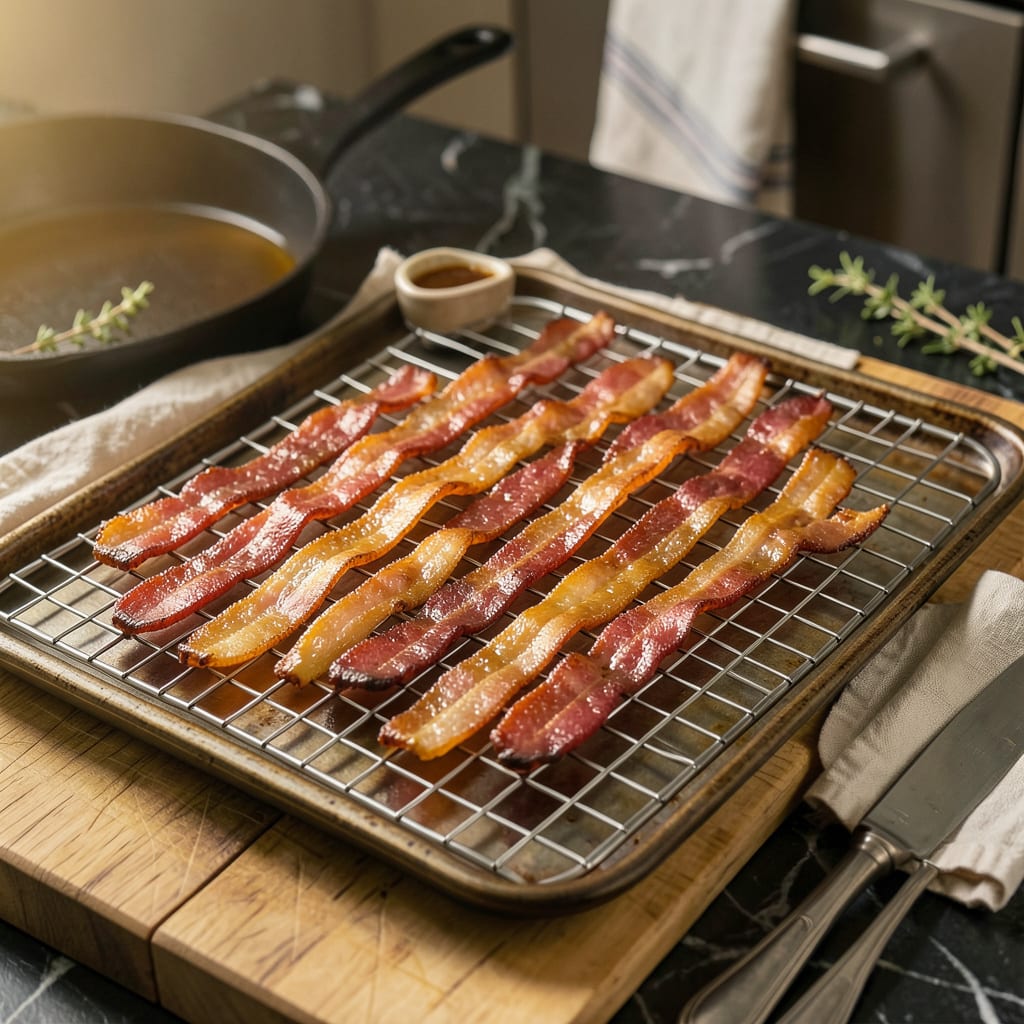
Nothing ruins a perfect batch of bacon faster than letting it sit and turn soggy. I’ve lost count of how many times I’ve cooked up a beautiful crispy batch only to have it turn limp by serving time. After years of trial and error (and more than a few disappointments), I’ve finally cracked the code for keeping bacon warm without sacrificing that crispy texture we all love.
The secret isn’t fancy equipment—it’s understanding how bacon reacts to heat and moisture. Whether you’re cooking for a crowd or just trying to time breakfast perfectly, the right method makes all the difference. I’ve tested everything from ovens to slow cookers, and what works best might surprise you. No more sad, rubbery bacon that’s lost its magic.
What you’re about to learn will change your bacon game forever. We’re talking about maintaining that perfect balance—warm enough to melt cheese on a sandwich, but still with that satisfying crunch when you bite in. The techniques I’m sharing work whether you’re dealing with a single batch or cooking pounds for a brunch spread.
Here’s the thing—most people overcomplicate this. You don’t need special gadgets or complicated setups. Just a few smart moves that preserve both warmth and texture. Let me show you exactly how to pull this off without stress or last-minute scrambling.
📚 In This Guide
- What You’ll Need
- Instructions
- Tips and Common Mistakes
What Youll Need
- ● Cooked bacon: 1–2 lbs (or your desired batch size), freshly cooked and drained on paper towels 🥓
- ● Oven-safe dish or baking sheet: A rimmed sheet pan (18×13 inches) or ceramic dish to hold bacon in a single layer
- ● Aluminum foil: 1 roll (heavy-duty preferred) to cover and trap heat
- ○ Parchment paper: 1 sheet (optional, for easy cleanup if bacon sticks)
- ● Oven or toaster oven: Preheated to 200–250°F (lowest setting) for gentle warming
- ○ Instant-read thermometer: (Optional) To monitor internal temp (aim for 145°F+)
- ○ Slow cooker or chafing dish: (Optional) For buffet-style serving—add ½ cup water to the base to prevent drying
- ● Tongs or spatula: 1 pair (heat-resistant) for safe handling
- ● Paper towels: 4–6 sheets to blot excess grease before warming
- ○ Timer: (Optional) To track warming time (max 2 hours for food safety)
Step-by-Step Instructions for Keeping Cooked Bacon Warm
Here’s the foolproof method to maintain that perfect crispiness until serving time.
Cook the Bacon to Perfect Doneness
Start by cooking your bacon until it reaches your ideal level of crispiness. I recommend using the oven method for best results: arrange slices on a wire rack over a baking sheet and bake at 400°F for 15-20 minutes, flipping halfway through. The wire rack allows air to circulate, creating evenly crispy bacon without soggy spots.
Watch for that beautiful deep golden-brown color and listen for the sizzling to subside. Remember that bacon continues cooking slightly after removal from heat, so pull it out just before it reaches your perfect doneness. Drain on paper towels to remove excess grease while preserving that coveted crunch.
Set Up Your Warming Environment
Preheat your oven to its lowest setting, typically 170-200°F. This gentle heat maintains warmth without continuing to cook the bacon. Place a wire rack on a baking sheet – this setup allows air circulation to prevent steam buildup that could make your bacon soggy.
For extra insurance against moisture, line the baking sheet with a fresh layer of paper towels. These will absorb any residual grease that might render out during warming. I’ve found this simple step makes a dramatic difference in maintaining that perfect crispy texture we all love.
Warm the Bacon with Care
Arrange your cooked bacon slices in a single layer on the prepared wire rack. Make sure they don’t overlap – this prevents steam pockets from forming between slices. Place the baking sheet in the preheated oven and prop the door open slightly with a wooden spoon to allow moisture to escape.
Check the bacon every 10-15 minutes, flipping the slices if needed. You’re looking to maintain that golden-brown color and crisp texture. The bacon should feel warm to the touch but not hot, and should retain its crispiness when you test a piece. Most batches will stay perfect for up to 1 hour using this method.
Alternative Methods for Different Situations
If you don’t have oven space, a slow cooker works beautifully. Line the bottom with paper towels, set to “Warm” setting, and place bacon slices on the rack that comes with most models. The gentle, even heat keeps bacon warm without overcooking, and the paper towels absorb any grease.
For smaller batches, a warming drawer set to 140°F works wonderfully. Arrange bacon on a wire rack over a tray lined with paper towels. Check every 20 minutes and blot any excess grease. I’ve used this method for brunch service and it keeps bacon in perfect condition for up to 90 minutes.
Final Checks Before Serving
About 5 minutes before serving, do a final quality check. Remove one slice and let it cool slightly – it should maintain its crisp texture and not feel greasy. If any slices have lost their crispness, pop them back in the oven at 350°F for 2-3 minutes to revive them.
Transfer the warm bacon to a serving platter lined with fresh paper towels to absorb any last-minute grease. Serve immediately while still warm and crisp. The bacon should have that perfect snap when bitten into, with no bend or chewiness. This method guarantees you’ll have restaurant-quality bacon ready exactly when your guests are!
Tips and Common Mistakes
The difference between perfectly warm, crispy bacon and a sad, soggy batch comes down to these key details.
The Temperature Sweet Spot: That 170-200°F range in Step 2 isn’t arbitrary—it’s the magic zone where bacon stays warm without continuing to cook. I’ve tested this extensively, and anything above 200°F risks turning your perfectly crisped bacon into chewy strips. Use an oven thermometer to verify your oven’s lowest setting, as many run hotter than their dials indicate.
Paper Towel Power: Don’t skip the fresh layer of paper towels in Step 2! This simple addition absorbs residual grease that would otherwise pool and create steam. I learned this the hard way after serving slightly limp bacon at a brunch—now I always use two layers for extra insurance. The difference in texture is astonishing.
Airflow is Everything: The wire rack in Step 3 isn’t just for show—it creates that crucial air circulation that prevents steam buildup. When I first tried this method without the rack, my bacon turned rubbery within 30 minutes. Now I even prop the oven door slightly open with a wooden spoon for maximum airflow. This one-two punch keeps bacon crisp for the full hour.
Revival Technique: If your bacon loses its crispness during warming (it happens!), that 2-3 minute refresh at 350°F in Step 5 works miracles. I’ve rescued countless batches this way—just watch closely as those minutes go fast. The bacon should sizzle slightly when it hits the hot oven, and you’ll hear it crisp up almost immediately.
Pro Tips for Keep Cooked Bacon Warm
- The difference between perfectly warm, crispy bacon and a sad, soggy batch comes down to these key details.
- The Temperature Sweet Spot: That 170-200°F range in Step 2 isn’t arbitrary—it’s the magic zone where bacon stays warm…
- Paper Towel Power: Don’t skip the fresh layer of paper towels in Step 2! This simple addition absorbs residual grease…
Frequently Asked Questions
How long can I keep cooked bacon warm before it gets soggy?
Bacon stays crispy for 1–2 hours when kept warm properly (e.g., in a 200°F oven or slow cooker). After that, moisture buildup can make it limp. For best results, store in a single layer on a wire rack to avoid steam trapping.
Can I use a microwave to keep bacon warm?
Not ideal! Microwaves create steam, turning bacon rubbery. If you must, use short 10–15 second bursts at 50% power and check frequently. A toaster oven (low heat) or chafing dish works better for small batches.
What’s the best way to keep bacon warm for a crowd?
Use a slow cooker on “Warm” setting (add a paper towel layer to absorb grease) or a 200°F oven with a baking sheet. For buffets, a chafing dish with a lid slightly ajar prevents sogginess while keeping it safe to eat.
Does keeping bacon warm affect its texture or taste?
Minimally! If stored dry and ventilated (e.g., on a rack), it retains crispiness. Overcrowding or covering traps steam, making it chewy. Pro tip: Re-crisp in a 350°F oven for 2–3 minutes if needed.
Are there alternatives to an oven for keeping bacon warm?
Try:
- Thermos: Preheat with boiling water, drain, then add bacon (stays warm for 1–2 hours).
- Insulated bag: Wrap bacon in foil + a towel inside a cooler bag.
- Warming tray: Set to low heat (great for breakfast bars!).
Keeping cooked bacon warm doesn’t have to be a challenge! With the right methods—like using an oven, slow cooker, or insulated container—you can enjoy crispy, delicious bacon whenever you’re ready to serve. Timing and temperature are key, so pick the technique that fits your setup best.
Now that you’ve got the know-how, why not put it to the test? Try prepping a big batch for your next brunch or meal prep—your future self (and hungry guests!) will thank you. 😉 Happy cooking!

Trained in classic French technique but raised on slow-cooked ribs and spicy rubs, she blends culinary skill with smoke and soul.
- Recipe for Boneless Cross Rib Roast: Slow-Roasted Beef with Herb Crust - October 3, 2026
- Hamburgers in Sauce Recipe Crock Pot: Slow-Cooked Savory Delight - October 3, 2026
- Sanjeev Kapoor Egg Biryani Recipe: Fragrant Spiced Rice With Boiled Eggs - October 3, 2026