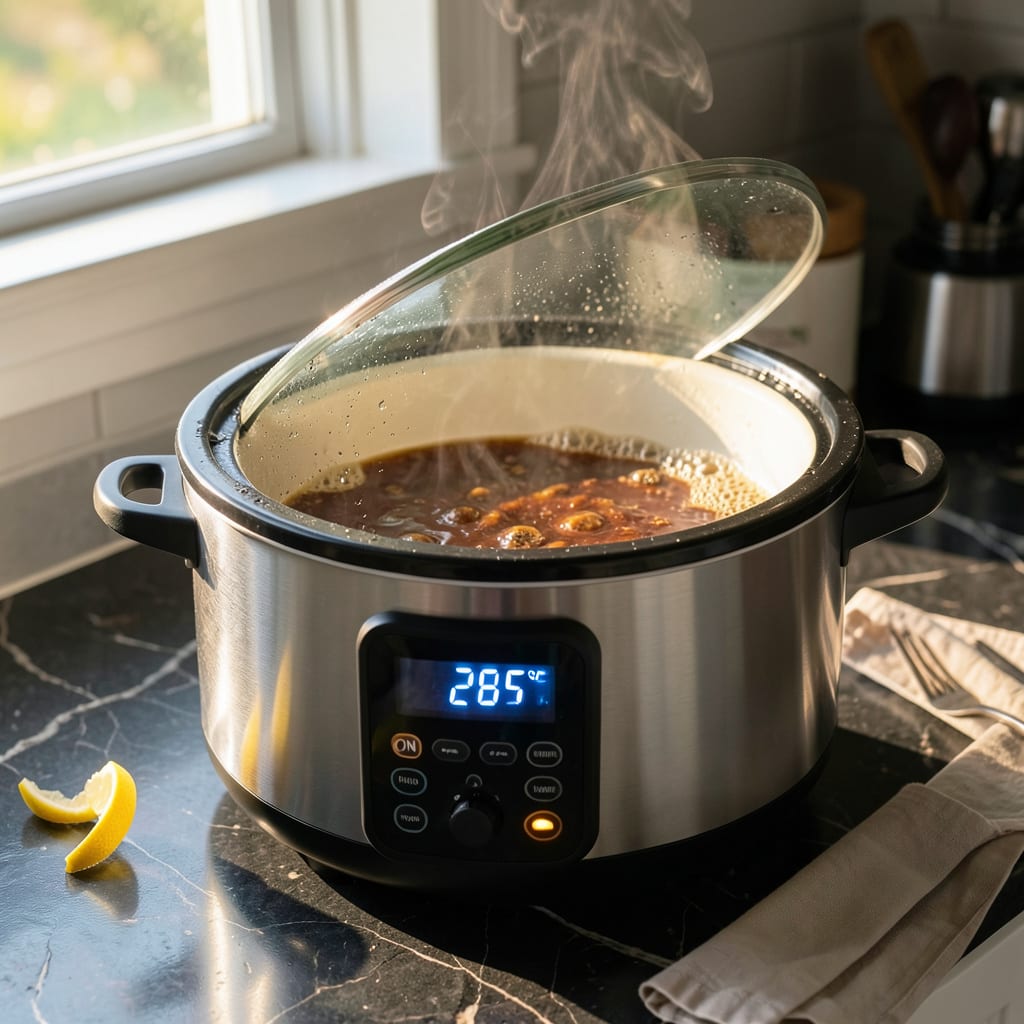
Check for a warm exterior, look for an illuminated indicator light, or listen for a low humming sound. Most models also have a digital display showing the current setting.
Modern slow cookers are designed with subtle yet reliable power indicators that often go unnoticed. The warmth on the base comes from the heating element gradually activating—this isn’t instant like a stovetop, so give it 10-15 minutes to become noticeable. 🔥 I always check the control panel first, as many newer models have a backlit display that stays dim until powered on, which can be tricky in bright kitchens.
What’s particularly useful is understanding the sound patterns—most crock pots emit a faint, consistent hum when operating, similar to a refrigerator’s quiet buzz. This audio cue is especially helpful with older models that lack digital displays. Pro tip: Place your ear near the base (without touching) to catch this subtle confirmation. ✨
💡 In This Article
- How Crock Pot Heating Mechanisms Indicate Power Status
- Troubleshooting a Crock Pot That Won’t Turn On
How Crock Pot Heating Mechanisms Indicate Power Status
The heating element in your crock pot works like a coiled resistor that gradually warms up when electricity flows through it. This element sits at the base, surrounded by insulation, which is why you’ll feel warmth radiating outward within 10-20 minutes of turning it on.
The slow heat transfer explains why older models might take longer to show visible signs—they rely on passive heat distribution rather than active circulation systems found in newer appliances. 🔥
What you’re actually sensing is the thermal conduction process. The ceramic or metal base absorbs heat from the element and transfers it to the stoneware insert, which then radiates warmth to your food.
Most quality crock pots reach 200-250°F on Low setting and 300°F on High, but the exterior will only feel warm to the touch—not hot—due to the insulation layers. This gradual heat buildup is why you might not notice immediate warmth, especially with larger 6-quart+ models that require more energy to heat.
The condensation on the lid tells another important story. As the appliance heats, moisture from your ingredients evaporates and collects on the cooler lid surface. This visible steam cycle typically begins within 30-45 minutes of operation, serving as a secondary confirmation that the heating process is active.
I always check for these tiny water droplets—they’re more reliable than the exterior warmth alone, especially in cold kitchens where the base might feel cooler than it actually is. ✨
Modern programmable models add another layer of confirmation through their digital interfaces. These systems use thermostats that cycle the heating element on and off to maintain precise temperatures, which creates that subtle humming sound you might hear.
The frequency of this cycling (usually every 5-10 minutes) varies by setting—more frequent on High, less on Low—giving you an audible pattern to recognize once you know what to listen for. 💫
Here’s what most people overlook: the stoneware insert itself becomes a heat indicator. After 1-2 hours of operation, it should feel noticeably warm when touched (with caution). This differs from the base warmth because the insert’s heat comes from direct contact with your food, making it a more accurate gauge of actual cooking progress.
I’ve found this particularly useful with older models that lack digital displays or indicator lights. 🌟
Remember that ambient temperature affects how quickly these signs appear. In a 70°F kitchen, you’ll notice warmth faster than in a 60°F environment. The same goes for what you’re cooking—liquids like broths will show steam and condensation sooner than dense meats.
This is why I always recommend giving your crock pot at least 30 minutes before expecting clear power indicators, especially when starting with cold ingredients straight from the fridge. ⚡

Trained in classic French technique but raised on slow-cooked ribs and spicy rubs, she blends culinary skill with smoke and soul.
- Recipe for Boneless Pork Chops in Cast Iron Skillet: Sear and Baste to Juicy Perfection - October 3, 2026
- Recipe for Boneless Cross Rib Roast: Slow-Roasted Beef with Herb Crust - October 3, 2026
- Hamburgers in Sauce Recipe Crock Pot: Slow-Cooked Savory Delight - October 3, 2026