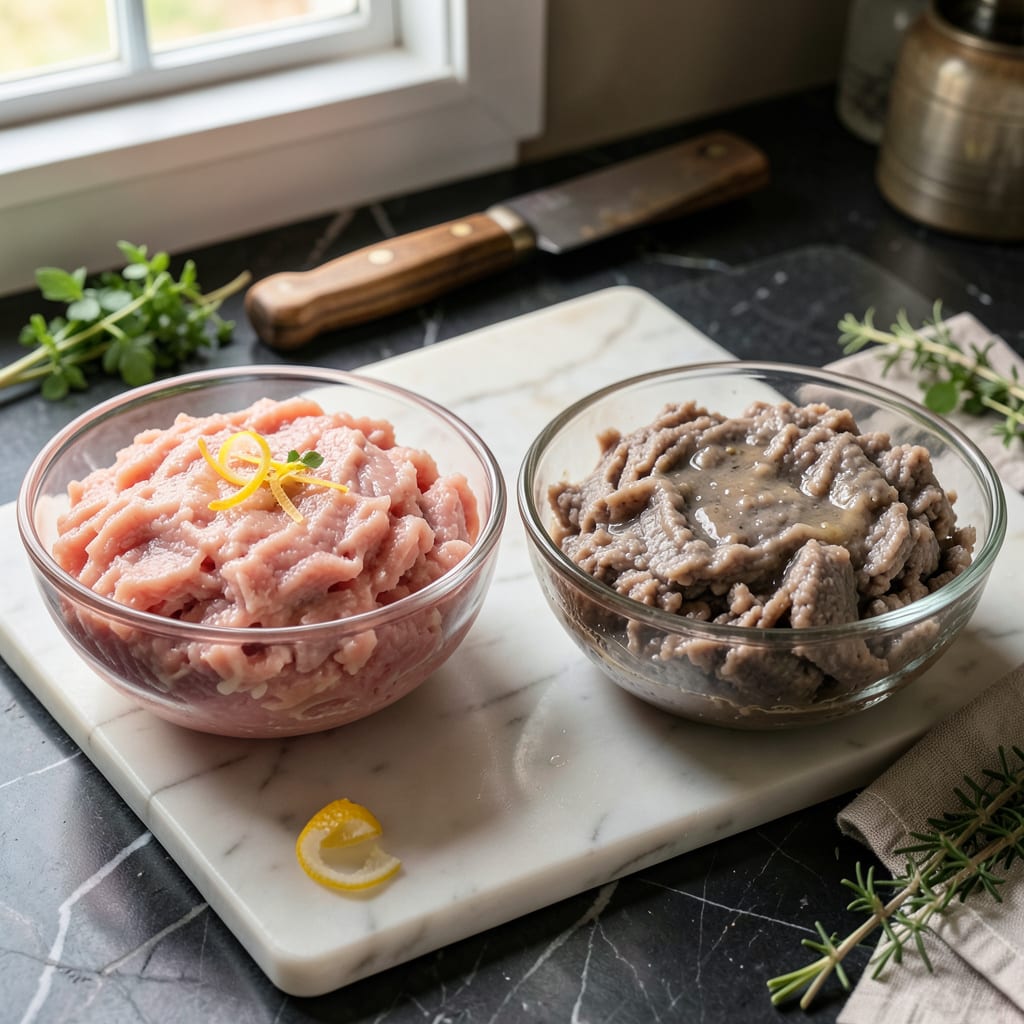
Ground turkey is bad when it develops a sour or ammonia-like smell, turns grayish-brown, feels slimy, or shows mold. Discard if past its use-by date or left unrefrigerated for over 2 hours.
Trust your senses when evaluating ground turkey—they’re your first line of defense against foodborne illness. 🔥 That off-putting ammonia scent actually comes from bacterial growth breaking down proteins, while the slimy texture indicates spoilage bacteria multiplying on the surface. I’ve seen too many home cooks overlook subtle color shifts from pink to dull gray, which happens when oxygen interacts with the meat’s myoglobin. Remember, even if it looks okay, any unusual odor means it’s time to toss it—no taste test is worth the risk.
💡 In This Article
- Sensory Signs of Spoiled Ground Turkey
- Safe Storage and Handling of Ground Turkey
Sensory Signs of Spoiled Ground Turkey
When ground turkey starts to spoil, the first thing you’ll notice is the smell—trust me, your nose knows. That sharp, sour odor comes from bacteria like Pseudomonas and Lactobacillus breaking down proteins into volatile compounds. These microbes thrive at temperatures above 40°F, multiplying every 20 minutes in the “danger zone” between 40-140°F.
A fresh package should have little to no scent, while spoiled meat smells like sour milk or ammonia. 🔥
The color transformation tells a story too. Fresh ground turkey has a light pink hue from oxymyoglobin (oxygen-bound muscle protein). As it spoils, oxidation turns this to metmyoglobin, creating that unappetizing grayish-brown color. I’ve seen this happen within 3-5 days in refrigeration, though vacuum-sealed packages may last slightly longer.
Compare it to fresh meat—if it looks like it’s been sitting out too long, it probably has. ✨
Texture changes are your final warning sign. Spoiled ground turkey develops a slimy film from bacterial biofilms—literally colonies of microbes forming a protective layer. This happens because bacteria like Brochothrix thermosphacta produce polysaccharides that create that sticky, slick surface. Press your finger lightly against the meat: fresh turkey feels slightly tacky but never slimy.
If it leaves residue on your finger, that’s bacterial waste you’re feeling. 💫
Mold appears as fuzzy spots (usually white, green, or black) when spores land on the meat and grow. Unlike whole cuts, ground turkey’s increased surface area makes it particularly vulnerable.
The USDA notes that mold can penetrate deeper than visible—what you see is just the “fruit” of the fungus, with thread-like hyphae extending into the meat. Even small spots mean the entire package should be discarded. ⚡
Here’s what’s happening at the microbial level: as bacteria consume the meat’s nutrients, they produce metabolic byproducts like lactic acid (sour smell), amines (ammonia odor), and gases that accelerate spoilage. The slime you feel contains up to 100 million bacteria per square centimeter in severe cases.
This isn’t just about taste—it’s about foodborne pathogens like Salmonella or Campylobacter that can cause serious illness. 💛
Pro tip: Always check the package date and storage conditions. Ground turkey kept at 40°F or below lasts 1-2 days past its sell-by date, while frozen turkey maintains quality for 3-4 months.
The “sniff test” works because our noses can detect bacterial byproducts at concentrations as low as 1 part per million—far more sensitive than any kitchen gadget. When in doubt, throw it out! 🌟

Trained in classic French technique but raised on slow-cooked ribs and spicy rubs, she blends culinary skill with smoke and soul.
- Recipe for Boneless Pork Chops in Cast Iron Skillet: Sear and Baste to Juicy Perfection - October 3, 2026
- Recipe for Boneless Cross Rib Roast: Slow-Roasted Beef with Herb Crust - October 3, 2026
- Hamburgers in Sauce Recipe Crock Pot: Slow-Cooked Savory Delight - October 3, 2026