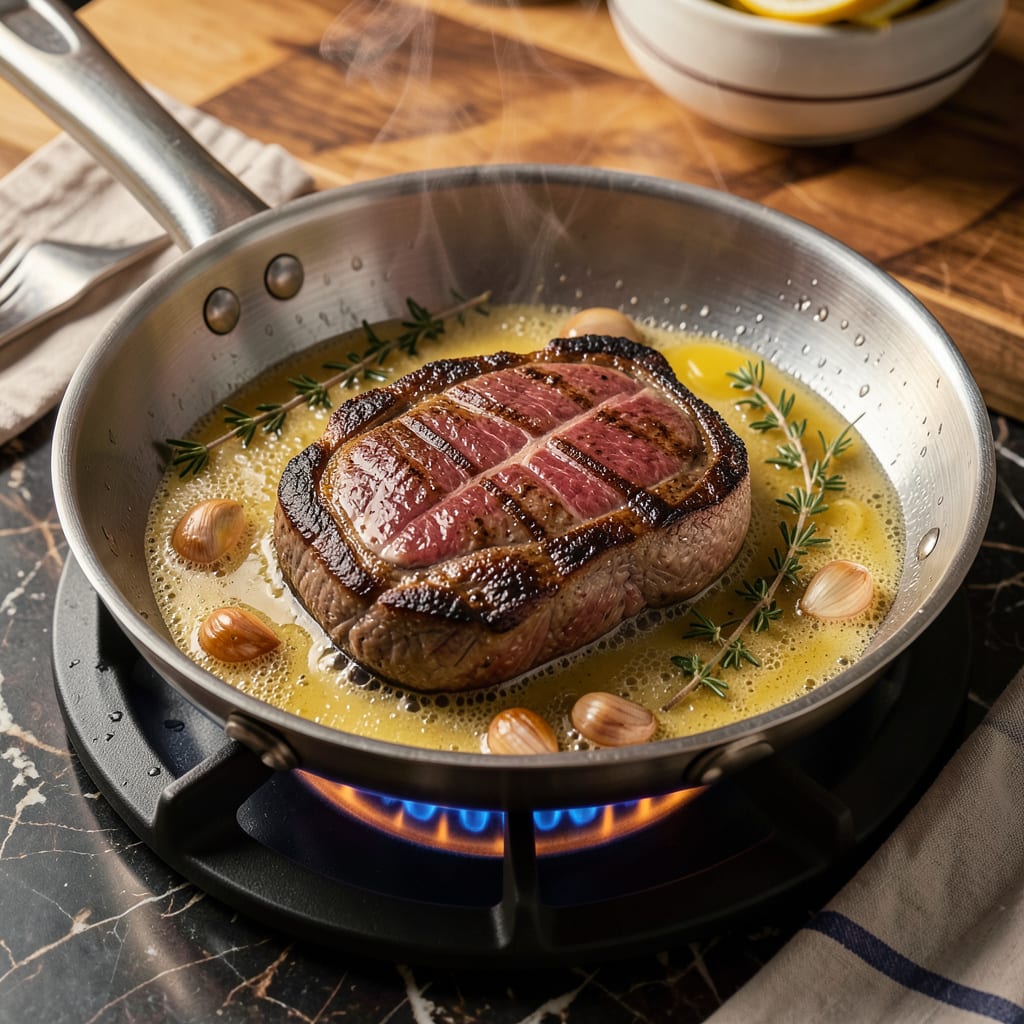
Meat heats in a frying pan through conduction—direct contact with the hot metal transfers heat inward, while Maillard reactions create browning and flavor. Moisture evaporates, raising internal temperature until fully cooked.
This process is what transforms raw meat into something irresistibly flavorful. 🔥 The pan’s surface temperature is crucial—it needs to be hot enough to sear the exterior quickly while allowing heat to gradually penetrate deeper. I’ve found that cast iron pans excel here because they retain heat so well, creating that perfect crust while gently cooking the inside. The sizzle you hear is actually moisture escaping, which helps concentrate flavors and develop that rich, caramelized exterior we all love.
💡 In This Article
- The Science of Heat Transfer in Pan-Frying Meat
- Optimal Frying Pan Techniques for Even Meat Heating
The Science of Heat Transfer in Pan-Frying Meat
When meat hits a hot frying pan, the first thing that happens is conduction—the direct transfer of thermal energy from the pan’s surface to the meat’s exterior. The metal pan, heated to 350-450°F, immediately begins breaking down proteins on the meat’s surface through a process called denaturation.
This is where the magic starts: the intense heat causes muscle fibers to tighten and moisture to push outward, creating that first sizzle you hear. 🔥
The surface temperature is critical because it determines how quickly the Maillard reaction occurs. This chemical process between amino acids and reducing sugars happens best between 300-500°F, producing hundreds of new flavor compounds. Meanwhile, the heat gradually penetrates inward at about 1/4 inch per minute for most cuts.
Thicker steaks create a temperature gradient—while the outside might be 250°F, the center could still be 130°F for medium-rare perfection.
Fat and moisture play surprising roles in this process. The meat’s natural fats begin rendering at 130-140°F, lubricating the surface and helping distribute heat more evenly. As moisture evaporates (you’ll see this as steam rising at 212°F), it actually cools the surface slightly—this is why patting meat dry before cooking gives you better browning.
The escaping steam also carries away some surface heat, which is why professional chefs often use high-smoke-point oils to maintain consistent temperatures. ✨
Here’s what most home cooks miss: the pan’s material dramatically affects heat transfer. Cast iron (with its rough surface) creates more contact points for conduction than smooth stainless steel, leading to faster browning. Copper pans, while excellent conductors, can create hot spots if not properly heated.
The thickness matters too—a 1/2-inch thick pan holds heat more steadily than thin cookware, preventing temperature drops when cold meat is added.
The final stage involves heat equalization, where the center gradually reaches your target temperature. For a 1-inch thick steak, this might take 4-6 minutes per side at medium-high heat. The key is understanding that the exterior cooks through conduction while the interior heats via slower convection as hot juices circulate.
This is why resting meat after cooking lets those juices redistribute—preventing that disappointing first bite of dry meat. 💫
What I love about this process is how it’s both science and art. The same principles apply whether you’re searing a delicate fish fillet at 375°F for 2-3 minutes or developing a crust on a thick ribeye.
The sizzle, the aroma, the gradual color change—these are all sensory clues that the physics of heat transfer is working perfectly in your pan. ⚡

Trained in classic French technique but raised on slow-cooked ribs and spicy rubs, she blends culinary skill with smoke and soul.
- Recipe for Boneless Pork Chops in Cast Iron Skillet: Sear and Baste to Juicy Perfection - October 3, 2026
- Recipe for Boneless Cross Rib Roast: Slow-Roasted Beef with Herb Crust - October 3, 2026
- Hamburgers in Sauce Recipe Crock Pot: Slow-Cooked Savory Delight - October 3, 2026