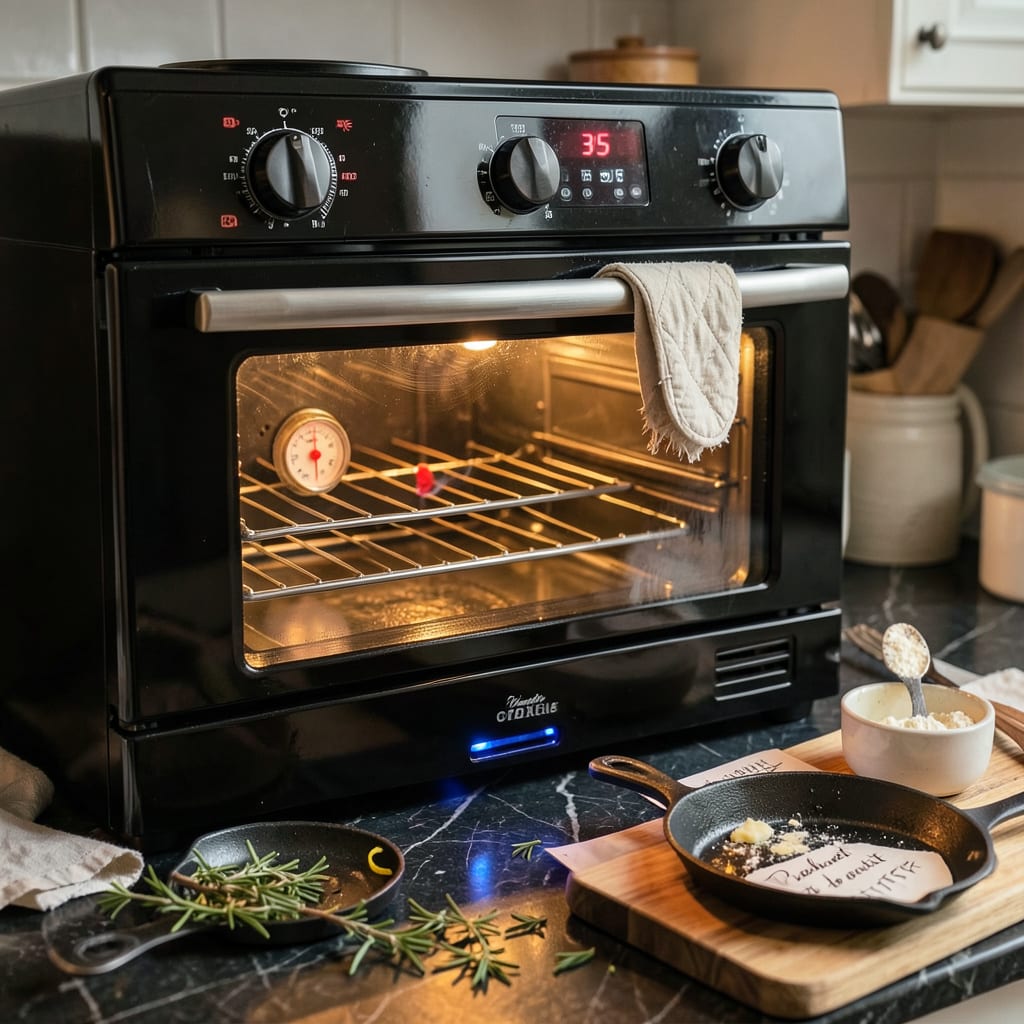
Most ovens signal preheating is complete with a beep, light turning off, or digital display. Without indicators, wait 10-15 minutes after setting the temperature for accurate results.
I’ve learned that preheating isn’t just about waiting—it’s about heat distribution. Modern ovens use sensors to maintain consistent temperatures, but older models rely on manual timing. 🔥 The 10-15 minute window accounts for the time it takes for heating elements to transfer energy evenly throughout the cavity. This is especially critical for delicate recipes like soufflés or pastries, where even slight temperature variations can ruin texture and rise.
What many don’t realize is that gas and electric ovens behave differently. Gas models often preheat faster but may have hot spots, while electric ones take longer but distribute heat more uniformly. I always recommend using an oven thermometer for precision, particularly when baking at high altitudes or with finicky recipes.
💡 In This Article
- How Oven Preheating Works and Why It Matters
- Oven Preheat Times by Type and Temperature Guide
How Oven Preheating Works and Why It Matters
When you set your oven temperature, the heating elements kick into high gear to reach the target. In electric ovens, the coils glow red-hot while gas models ignite their burners at full capacity. Here’s what’s actually happening: the thermostat cycles power to the elements until the internal sensor detects the desired temperature.
This process isn’t instant—it takes time for the entire oven cavity to stabilize, not just the air near the sensor.
The key factor is thermal mass distribution. Your oven walls, racks, and even the baking sheet absorb heat at different rates. A 350°F setting might show on the display, but the sheet pan itself could still be 50°F cooler inside.
This is why professional bakers often preheat for 20-30 minutes when working with finicky recipes like macarons or laminated pastries. The visible heat waves through the oven window are your clue that thermal equilibrium is nearly achieved.
Gas vs. electric behaves differently due to their heat sources. Gas ovens reach temperature faster (often in 5-8 minutes) but create more hot spots near the burners. Electric models take longer (10-15 minutes) but distribute heat more evenly through radiant heating.
I’ve noticed convection ovens cut preheat times by 25-30% thanks to their circulating fans, but they require adjusting recipes by reducing temperature by 25°F or checking doneness 5-10 minutes earlier.
What most people don’t realize is that proper preheating affects food at a molecular level. For example, butter in pie crusts needs that initial heat shock to create flaky layers through rapid steam formation. Yeast-based doughs rely on the immediate 90-120°F environment to trigger their final rise before the proteins set.
When you skip full preheating, you risk dense cakes, soggy pizza crusts, or cookies that spread uncontrollably. 🔥
The thermostat’s role is more complex than it appears. Modern ovens use PID controllers that overshoot the target temperature by 15-20°F then cycle back down to maintain accuracy. Older models with simple bimetallic strips can vary by ±50°F, which is why that 10-15 minute buffer becomes so important for consistency.
I always recommend placing an independent oven thermometer on the middle rack to verify the actual temperature where your food will cook.
Consider how preheating impacts different materials:
- Glass pans: Conduct heat slowly but retain it longer (preheat 5 extra minutes)
- Dark metal pans: Absorb heat quickly (reduce preheat by 2-3 minutes)
- Cast iron: Requires 20+ minutes to fully preheat for even cooking
The sensory clues are often overlooked.
A properly preheated oven will have a distinct “whoosh” of hot air when you open the door, and you’ll feel intense radiant heat on your face from 2 feet away.
The oven light will show glowing elements in electric models or blue flames in gas ovens that have settled into a steady pattern rather than roaring bursts. These subtle signs tell me more than any beeper ever could. ✨

Trained in classic French technique but raised on slow-cooked ribs and spicy rubs, she blends culinary skill with smoke and soul.
- Recipe for Boneless Pork Chops in Cast Iron Skillet: Sear and Baste to Juicy Perfection - October 3, 2026
- Recipe for Boneless Cross Rib Roast: Slow-Roasted Beef with Herb Crust - October 3, 2026
- Hamburgers in Sauce Recipe Crock Pot: Slow-Cooked Savory Delight - October 3, 2026