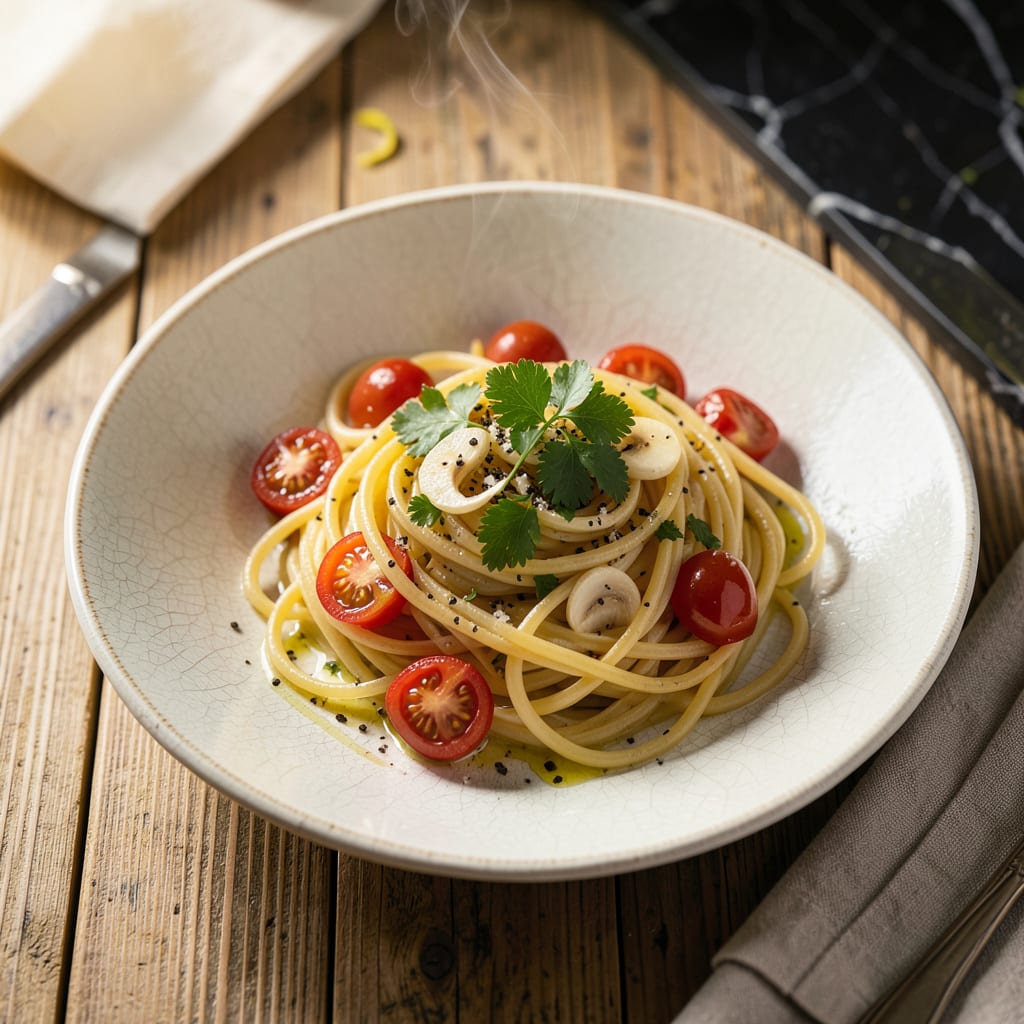
Pasta is ready when it’s tender but still slightly firm to the bite—this is called al dente. Test by fishing out a piece, cutting it open, or throwing it against the wall to see if it sticks briefly.
I’ve found that mastering this texture comes down to understanding what happens inside the pasta as it cooks. 🔥 The starches absorb water and swell, while the proteins form a network that gives that signature bite. What most home cooks miss is that perfect pasta should have a tiny white dot at its core when cut—this disappears if you overcook it. Timing varies by shape too; thicker pastas like rigatoni need more attention than delicate angel hair.
💡 In This Article
- The Science Behind Perfectly Cooked Pasta Texture
- Proven Techniques to Test Pasta Doneness Like a Chef
The Science Behind Perfectly Cooked Pasta Texture
When pasta hits boiling water, two critical transformations occur simultaneously. The starch granules absorb water and swell, a process called gelatinization, while the gluten proteins form an elastic network. This dual action creates that ideal al dente texture—a tender exterior with a slightly resistant core.
The magic happens between 212°F and 215°F, where starches fully absorb water without breaking down completely. 🔥
Salt plays a crucial role beyond just flavor. Adding 1-2 tablespoons per gallon of water increases the boiling point slightly and helps regulate starch absorption. Without proper salting, pasta can become mushy as starch leaches out uncontrollably. I’ve found that well-salted water creates a protective barrier that maintains the pasta’s structural integrity during cooking.
The ideal salinity should taste like the sea—about 3% concentration.
The protein matrix in pasta acts like a scaffold that holds everything together. Overcooking breaks down this structure, causing the pasta to collapse into a starchy mush. Undercooked pasta, meanwhile, has ungelatinized starch at its core that creates an unpleasant chalky texture.
That perfect middle ground—where the center has just a hint of resistance—occurs when the starch is 90-95% gelatinized while the protein network remains intact.
Different pasta shapes require different cooking approaches due to their surface-area-to-volume ratios. Thin strands like spaghetti cook faster (8-10 minutes) because water penetrates quickly, while dense shapes like penne (11-13 minutes) need more time for water to reach the center.
The thickness of the pasta walls makes all the difference in how the starch and protein transform during cooking. ✨
What most home cooks don’t realize is that pasta continues cooking after you drain it. The residual heat can increase the internal temperature by 5-10°F, which is why you should remove it from the water just before it reaches perfect doneness.
This carryover cooking is particularly important for baked pasta dishes where additional heat will be applied in the oven.
The pH of your cooking water also affects texture. Slightly acidic water (from tomato sauce or lemon juice) can make pasta firmer by inhibiting starch gelatinization, while alkaline water (like with baking soda) creates a softer texture.
Italian chefs often use a pinch of baking soda when cooking pasta for dishes that require extra tenderness, like lasagna layers. 💫
Remember that altitude changes boiling points—water boils at 203°F at 7,000 feet instead of 212°F. This means pasta cooks about 20% slower at high elevations, requiring adjustments to both cooking time and water temperature. The same principles of starch and protein transformation apply, but the timing shifts dramatically with altitude changes.

Trained in classic French technique but raised on slow-cooked ribs and spicy rubs, she blends culinary skill with smoke and soul.
- Recipe for Boneless Pork Chops in Cast Iron Skillet: Sear and Baste to Juicy Perfection - October 3, 2026
- Recipe for Boneless Cross Rib Roast: Slow-Roasted Beef with Herb Crust - October 3, 2026
- Hamburgers in Sauce Recipe Crock Pot: Slow-Cooked Savory Delight - October 3, 2026