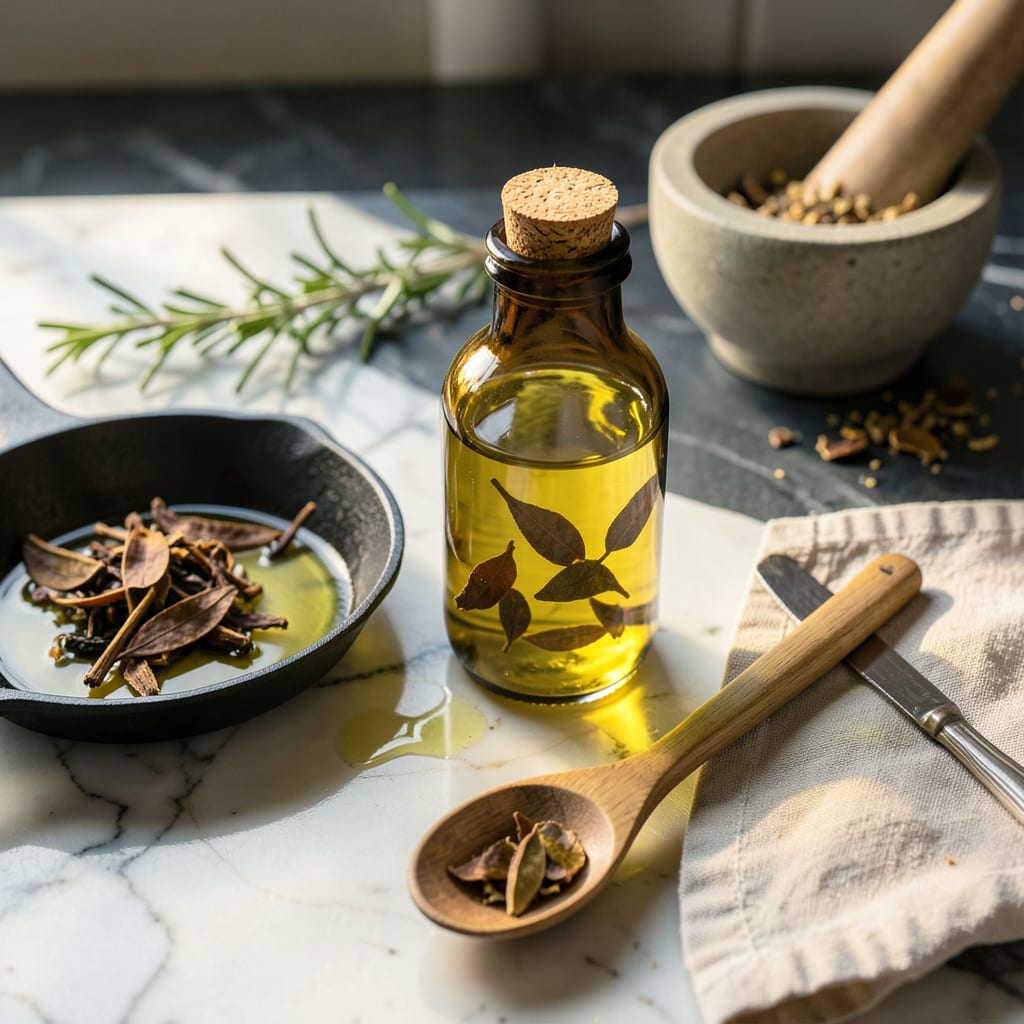
Creating your own bay leaf oil transforms ordinary dishes into restaurant-quality creations with minimal effort. This golden elixir captures the aromatic essence of bay leaves in a versatile liquid form, perfect for elevating everything from soups to marinades. The process requires just two core ingredients and basic kitchen equipment, making it accessible to cooks of all levels.
The foundation of great infused oil lies in proper technique. Whether using fresh or dried bay leaves, the key is gentle heat control to extract flavor without bitterness. I recommend a 1:1 cup ratio of high-quality carrier oil to 8-10 bay leaves, with olive oil as my preferred base for its neutral flavor profile and health benefits. Sterilization of all equipment is non-negotiable for both safety and shelf life.
This infusion method yields a vegan-friendly condiment that maintains its potency for up to 3 months when stored properly. The resulting oil develops complex herbal notes that bloom when heated, making it ideal for finishing dishes or as a cooking medium. A single batch provides enough depth to enhance dozens of meals, proving that simple techniques can create extraordinary results.
Beyond its culinary applications, bay leaf oil serves as a testament to how fundamental techniques can expand your cooking repertoire. The process itself takes less than 30 minutes of active time, with most of the work happening passively during infusion. This is professional-level flavor enhancement that any home cook can master.
📚 In This Guide
- What You’ll Need
- Instructions
- Tips and Common Mistakes
What Youll Need
- ● Dried bay leaves – 1 cup (about 20-25 leaves; fresh leaves work too but may require drying first)
- ● High-quality carrier oil – 2 cups (extra-virgin olive oil, avocado oil, or fractionated coconut oil work best)
- ● Clean glass jar – 16 oz (with airtight lid; sterilized in boiling water for 5 minutes)
- ● Fine-mesh strainer or cheesecloth – for filtering
- ○ Small saucepan (for gentle heating, optional but recommended)
- ● Dark glass bottle – 8-12 oz (for storage; amber or cobalt blue to protect from light)
- ○ Labels & marker (optional but handy for dating your infusion)
- ○ Mortar & pestle (optional, for lightly crushing leaves to release more flavor)
Instructions for Making Bay Leaf Oil
This method ensures maximum flavor extraction while preserving the oil’s quality and shelf life.
Select and Prepare Your Ingredients
Begin by choosing high-quality dried bay leaves—fresh leaves contain too much moisture and can spoil the oil. You’ll need approximately 1 cup of dried bay leaves for every 2 cups of neutral oil (such as grapeseed, avocado, or light olive oil). Avoid extra virgin olive oil as its strong flavor can overpower the delicate bay leaf aroma.
Inspect the bay leaves for any signs of mold or excessive dust. Gently wipe them with a clean, dry cloth if needed. Crumble the leaves slightly by hand to increase surface area for better infusion, but don’t pulverize them—this would make straining difficult later. The oil’s quality depends entirely on these two foundational ingredients.
Heat the Oil for Optimal Infusion
Pour the oil into a heavy-bottomed saucepan and add the prepared bay leaves. Heat over low heat until the oil reaches 180°F—this is the ideal temperature for infusion without frying the leaves. Use a candy or deep-fry thermometer for precision, as visual cues can be misleading with clear oils.
Maintain this temperature for 15-20 minutes, stirring occasionally. You’ll notice the oil gradually taking on a golden hue and the bay leaves becoming more translucent. Small bubbles will form around the leaves, but the oil shouldn’t simmer or smoke. This gentle heating extracts the essential oils and aromatic compounds without burning them.
Steep and Cool for Full Flavor Development
Remove the saucepan from heat and cover it with a tight-fitting lid. Allow the mixture to steep at room temperature for at least 4 hours, or preferably overnight. This resting period lets the flavors meld completely—the oil will deepen in color and develop a more complex aroma profile.
The cooling process is as important as the heating. As the oil cools, it continues to absorb flavors from the bay leaves. I recommend placing the covered pan in a cool, dark place during this steeping period. The longer you steep (up to 24 hours), the more intense the flavor will become, though I find 8 hours achieves the perfect balance.
Strain and Store for Long-Term Use
Line a fine-mesh strainer with cheesecloth and place it over a clean glass bottle or jar. Pour the infused oil through the strainer, allowing it to drip naturally without pressing on the leaves—this prevents any sediment from clouding your final product. The strained oil should be a beautiful golden-amber color with a pronounced bay leaf aroma.
Transfer the oil to a clean, dry glass bottle with an airtight lid. Store in a cool, dark place away from direct sunlight. Properly prepared and stored, your bay leaf oil will maintain peak flavor for up to 3 months. Always check for any signs of cloudiness or off odors before use, as these indicate spoilage.
Test and Adjust for Culinary Applications
Before using in recipes, perform a simple taste test. Dip a small piece of bread into the oil—you should taste a warm, slightly floral aroma with herbal notes, not bitterness. If the flavor seems too mild, you can briefly reheat the strained oil with 2-3 additional bay leaves for 5 minutes at 160°F to intensify it.
This infused oil works beautifully as a finishing oil for soups, a marinade base for proteins, or a flavor enhancer for roasted vegetables. Remember that its flavor is concentrated—start with 1 teaspoon where you might normally use 1 tablespoon of plain oil, then adjust to taste. The oil’s aromatic qualities will diminish over time, so use it within the recommended storage period for best results.
Tips and Common Mistakes
Mastering the nuances of this infusion process ensures a superior aromatic oil with balanced flavor and extended shelf life.
Temperature Precision: Maintaining the exact 180°F temperature during the 15-20 minute infusion (as specified in Step 2) is non-negotiable for optimal flavor extraction. I recommend using a digital thermometer with an alarm function to prevent temperature fluctuations. Even slight overheating can introduce bitter notes, while underheating results in weak flavor development. The visual cues of small bubbles forming around the leaves and the gradual golden color change serve as secondary indicators, but the thermometer remains your most reliable tool.
Steeping Strategy: The 4-hour minimum steeping period in Step 3 isn’t arbitrary—it allows for complete flavor integration. While overnight steeping (up to 24 hours) intensifies the aroma, I’ve found 8 hours strikes the ideal balance between depth and freshness. For best results, transfer the covered pan to the coolest part of your kitchen (away from appliances) and avoid disturbing it during this critical phase. The oil’s color will deepen noticeably during this time, serving as a visual confirmation of proper infusion.
Straining Technique: When executing Step 4, resist the urge to press or squeeze the bay leaves during straining. This seemingly minor action can introduce bitter compounds and cloud your final product. Instead, allow the oil to drip naturally through the cheesecloth-lined strainer. The process may take 10-15 minutes, but the clarity and purity of your oil will justify the patience. For particularly stubborn sediment, a second straining through fresh cheesecloth ensures crystal-clear results.
Flavor Adjustment: Should you need to intensify the flavor as mentioned in Step 5, the 5-minute reheating at 160°F with additional leaves works remarkably well. However, use this technique judiciously—over-infusion can quickly turn the oil bitter. I recommend testing the flavor after just 3 minutes of reheating, then proceeding in 1-minute increments until reaching your desired intensity. The lower temperature prevents degradation of the delicate aromatic compounds you’ve worked so carefully to preserve.
Pro Tips for Make Bay Leaf Oil At Home
- Mastering the nuances of this infusion process ensures a superior aromatic oil with balanced flavor and extended shel…
- Temperature Precision: Maintaining the exact 180°F temperature during the 15-20 minute infusion (as specified in Step…
- Steeping Strategy: The 4-hour minimum steeping period in Step 3 isn’t arbitrary—it allows for complete flavor integra…
Frequently Asked Questions
How long does homemade bay leaf oil last?
When stored in a cool, dark place (like a pantry), your bay leaf oil stays fresh for 2–3 months. For longer shelf life (up to 6 months), refrigerate it in an airtight glass bottle. Always check for off smells or cloudiness before use!
Can I use dried bay leaves instead of fresh?
Dried bay leaves work well—just halve the quantity (e.g., 5–6 dried leaves for 1 cup oil). Their flavor is more concentrated, so steep them for 1–2 weeks (vs. 3–5 days for fresh) for optimal infusion.
Why is my bay leaf oil bitter or too strong?
Over-infusion is the usual culprit! Steep for no longer than 5 days (fresh leaves) or 2 weeks (dried). If it’s already bitter, dilute with fresh oil or use it sparingly in hearty dishes like stews. Balance is key!
What’s the best oil for infusing bay leaves?
Neutral oils like olive, grapeseed, or avocado oil work best—they let the bay leaf’s earthy, floral notes shine. Avoid strong oils (e.g., sesame) unless you want a bold fusion. For gourmet cooking, extra-virgin olive oil is a top pick!
Can I speed up the infusion process?
Yes! For quick results, gently heat the oil and leaves in a saucepan on low heat (150°F/65°C) for 2–3 hours, then strain. Avoid boiling—it can make the oil bitter. Patience pays off, but this hack works in a pinch!
Making bay leaf oil at home is simpler than you think—just a little patience and quality ingredients are all you need! 🌿 This fragrant, golden elixir can elevate everything from soups to marinades, adding depth and warmth to your dishes. Now that you’ve mastered the basics, why not experiment with different herbs or blend it into your favorite recipes?
Ready to get started? Grab your dried bay leaves and oil, and infuse your kitchen with rich, aromatic magic today! ✨

Trained in classic French technique but raised on slow-cooked ribs and spicy rubs, she blends culinary skill with smoke and soul.
- Recipe for Boneless Pork Chops in Cast Iron Skillet: Sear and Baste to Juicy Perfection - October 3, 2026
- Recipe for Boneless Cross Rib Roast: Slow-Roasted Beef with Herb Crust - October 3, 2026
- Hamburgers in Sauce Recipe Crock Pot: Slow-Cooked Savory Delight - October 3, 2026