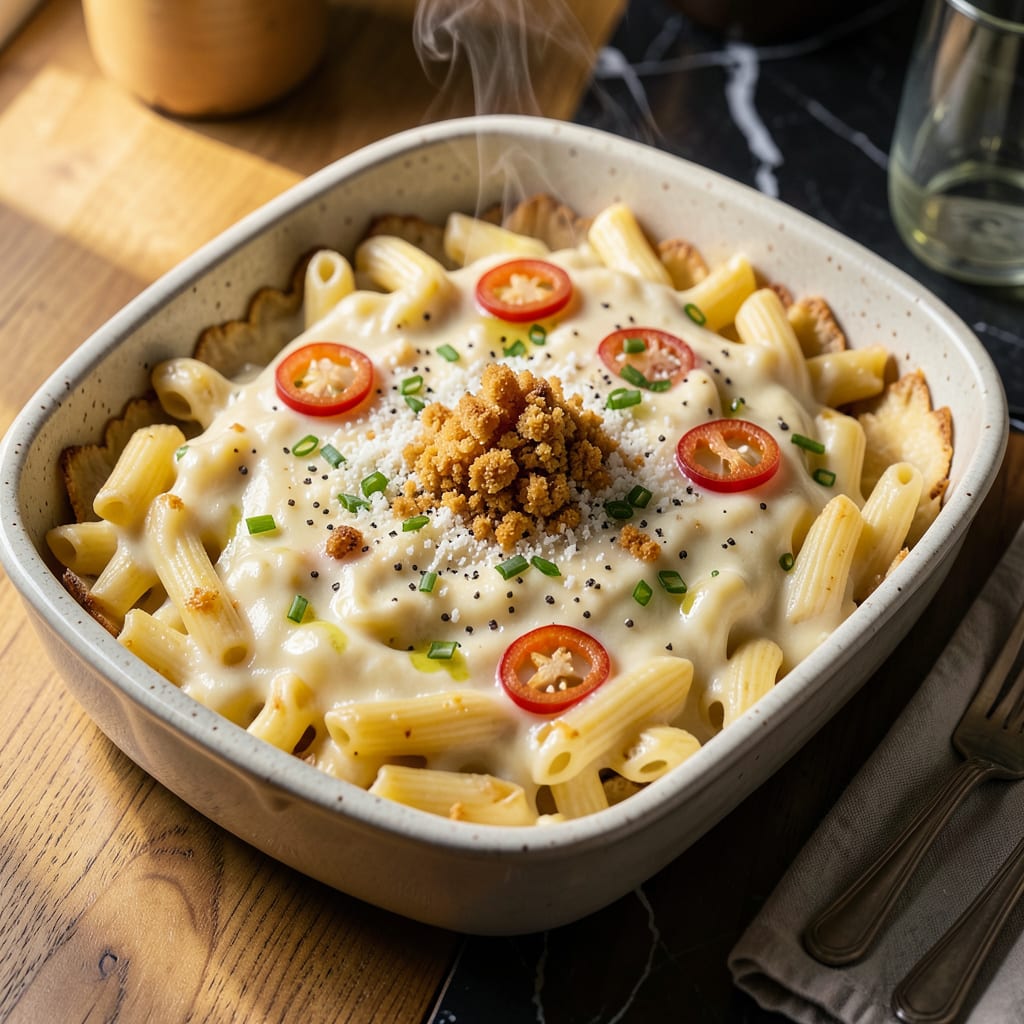
Nothing ruins mac and cheese faster than a grainy, broken sauce—trust me, I’ve been there. After years of testing (and more than a few failed batches), I finally cracked the code for ultra-creamy mac and cheese that stays smooth every time. The secret isn’t just the cheese—it’s how you handle it.
Most recipes fail because they overlook two critical things: temperature control and cheese selection. You can’t just dump shredded cheese into hot milk and expect magic. The proteins in cheese separate when overheated, creating that dreaded grainy texture. I’ll show you the foolproof way to melt cheese properly, plus which varieties give the creamiest results without turning into glue.
We’re talking about a sauce so velvety it coats every noodle perfectly, with no weird gritty bits. The method works whether you’re making stovetop or baked mac and cheese, and I’ll explain exactly why each step matters. No culinary degree required—just a little patience and the right technique.
Fair warning: Once you make it this way, you’ll never go back to boxed or grainy homemade versions. The difference is that dramatic. Here’s how to get it right every single time.
📚 In This Guide
- What You’ll Need
- Instructions
- Tips and Common Mistakes
What Youll Need
- ● Elbow macaroni – 12 oz (340g) (or any short pasta of choice)
- ● Unsalted butter – 4 tbsp (½ stick) (salted works too—just adjust seasoning!)
- ● All-purpose flour – ¼ cup (30g) (for a smooth roux)
- ● Whole milk – 2 cups (480ml) (warmed slightly for best results)
- ○ Heavy cream – ½ cup (120ml) (optional, for extra richness)
- ● Shredded cheddar cheese – 2 cups (8 oz / 225g) (sharp or mild, freshly grated for smoothness!)
- ○ Shredded Gruyère or Monterey Jack – 1 cup (4 oz / 115g) (optional, for depth of flavor)
- ○ Dijon mustard – 1 tsp (optional, balances creaminess)
- ● Salt & black pepper – to taste (start with ½ tsp salt)
- ○ Pinch of nutmeg – (optional, adds warmth)
- ● Medium saucepan (heavy-bottomed to prevent scorching)
- ● Whisk (essential for lump-free roux!)
- ● Wooden spoon (for stirring pasta)
- ● Cheese grater (skip pre-shredded—it’s coated in anti-caking agents!)
- ● Colander (for draining pasta)
- ● Baking dish – 9×13″ (if making baked mac and cheese)
- ○ Aluminum foil (optional, for baking)
Instructions for Ultra-Creamy Mac and Cheese
Let me walk you through the foolproof method that guarantees silky-smooth results every time.
Choose and Prepare Your Cheese Properly
Start by selecting cheeses that melt smoothly—cheddar, Monterey Jack, or Gruyère work beautifully. Avoid pre-shredded cheese as it contains anti-caking agents that prevent smooth melting. I always buy block cheese and grate it fresh using the small holes on a box grater.
You’ll want to grate your cheese right before using it to prevent drying out. For extra creaminess, I like to use a mix of cheeses: 2 parts sharp cheddar for flavor and 1 part Monterey Jack for meltability. This combination gives you that perfect balance of rich flavor and velvety texture.
Create a Perfect Roux Base
Melt butter in a saucepan over medium heat until it’s fully melted but not browned. Add an equal amount of all-purpose flour by weight (about 3 tablespoons for every 3 tablespoons butter) and whisk constantly for 2-3 minutes until the mixture turns a light golden color.
This cooking process removes the raw flour taste and creates the foundation for your sauce. You’ll know it’s ready when the mixture smells slightly nutty and bubbles gently. Be patient here—undercooked flour can make your sauce taste pasty, while overcooked flour can make it too dark.
Temper the Milk for Smooth Integration
Heat your milk in a separate saucepan or microwave until it’s warm but not boiling (about 120°F). Slowly pour the warm milk into your roux while whisking constantly. This gradual addition prevents lumps from forming and helps create that ultra-smooth texture we’re after.
Continue whisking as the mixture thickens—it should coat the back of a spoon but still be pourable. If it gets too thick, add a splash more milk. The sauce should be smooth and velvety at this stage, with no signs of graininess. This is where your creamy foundation is built.
Melt Cheese with Careful Technique
Remove the sauce from heat and let it cool for 1-2 minutes before adding the cheese. This prevents the cheese from seizing up and becoming grainy. Add the grated cheese in small handfuls, stirring constantly until each addition is fully melted before adding more.
I like to stir in a figure-eight motion, which helps distribute the cheese evenly. If the sauce starts to look too thick, add a splash of warm milk to loosen it. The key is low and slow—never rush this step. You’re looking for a sauce that’s glossy, smooth, and flows like heavy cream.
Finish with Perfect Pasta Integration
Cook your pasta until it’s just al dente (about 1 minute less than package instructions), then drain it well. Immediately add the hot pasta to your cheese sauce and stir to coat completely. The starch from the pasta helps thicken the sauce slightly and ensures it clings beautifully to every noodle.
Let the mac and cheese sit for 2-3 minutes off the heat before serving. This allows the sauce to set up slightly and the flavors to meld. If you’ve followed these steps, you’ll have the creamiest, smoothest mac and cheese with no hint of graininess—just pure, cheesy perfection in every bite.
Tips and Common Mistakes
These small but mighty details make the difference between good mac and cheese and the ultra-creamy version you’ve been dreaming about.
The Cheese Factor: In Step 1, grating your own cheese isn’t just a suggestion—it’s essential. Pre-shredded cheese contains cellulose that prevents smooth melting, which is exactly what causes that grainy texture we’re trying to avoid. I learned this the hard way after several disappointing batches. The 2 parts sharp cheddar to 1 part Monterey Jack ratio in the instructions creates that perfect balance of flavor and meltability without any graininess.
Roux Perfection: When making your roux in Step 2, those 2-3 minutes of whisking over medium heat are critical. You’re looking for a light golden color and a slightly nutty aroma—that’s when you know the raw flour taste is cooked out. I’ve found that using a flat whisk helps prevent any lumps from forming in the corners of your pan. If your roux gets too dark, it can make your final sauce taste bitter rather than rich.
Temperature Control: The 120°F temperature for warming your milk in Step 3 isn’t arbitrary. Milk that’s too cold can cause the roux to seize up, while milk that’s too hot can make your sauce break. I use an instant-read thermometer to check—it’s worth the small investment for perfectly smooth results every time. The gradual addition while whisking is what creates that velvety base we’re after.
Final Integration: That 2-3 minute rest after combining pasta and sauce in Step 5 might seem insignificant, but it’s when the magic happens. The pasta absorbs just enough sauce to become perfectly coated, and the flavors meld together. Skipping this step can leave you with sauce that slides right off your noodles instead of clinging beautifully.
Pro Tips for Make Mac And Cheese Not Grainy
- These small but mighty details make the difference between good mac and cheese and the ultra-creamy version you’ve be…
- The Cheese Factor: In Step 1, grating your own cheese isn’t just a suggestion—it’s essential. Pre-shredded cheese con…
- Roux Perfection: When making your roux in Step 2, those 2-3 minutes of whisking over medium heat are critical. You’re…
Frequently Asked Questions
Why does my mac and cheese turn grainy even when I follow the recipe?
Graininess usually happens when cheese proteins overcook or fat separates. High heat, pre-shredded cheese (contains anti-caking agents), or adding cheese too fast are common culprits. Stick to low heat, freshly grated cheese, and a slow whisk while melting for silky results.
Can I fix grainy mac and cheese after it’s made?
Yes! Try these quick fixes: Stir in 1-2 tbsp of warm milk or cream to rebuild emulsification, or blend in 1 tsp of sodium citrate (a cheese-melting magic ingredient). If all else fails, a splash of lemon juice can help reset the proteins—just don’t overdo it!
What’s the best cheese for ultra-creamy mac and cheese?
A mix of sharp cheddar (for flavor) and low-moisture melters like Monterey Jack or Gruyère works best. Avoid pre-shredded cheese—it’s coated in starches that clump. For extra creaminess, add 1 oz of cream cheese or American cheese (it contains emulsifiers!).
How long should I cook the roux to avoid graininess?
Cook the roux (butter + flour) for 2-3 minutes on medium-low heat until it’s light golden and smells nutty. Undercooking leaves a floury taste; overcooking burns it. Whisk constantly and remove from heat before adding milk to prevent scorching.
Can I make mac and cheese ahead without it getting grainy?
Cook it al dente (slightly underdone), then store the sauce and pasta separately. Reheat gently with a splash of milk, stirring constantly. For baked mac, assemble it cold and bake just before serving. Pro tip: Undercook the pasta by 1 minute to avoid mushiness later!
Say goodbye to grainy mac and cheese for good! 🧀✨ The secret lies in low-and-slow melting, the right cheese blend, and a splash of acid (like mustard or lemon) to keep everything smooth. With these simple tweaks, you’ll whip up a restaurant-worthy, velvety sauce every time—no lumps allowed.
Ready to put your new skills to the test? Grab your favorite pasta, pick a recipe, and dive into creamy perfection tonight! For extra inspiration, try experimenting with fun add-ins like crispy bacon or roasted garlic. Happy cooking! 🍽️

Trained in classic French technique but raised on slow-cooked ribs and spicy rubs, she blends culinary skill with smoke and soul.
- Recipe for Boneless Pork Chops in Cast Iron Skillet: Sear and Baste to Juicy Perfection - October 3, 2026
- Recipe for Boneless Cross Rib Roast: Slow-Roasted Beef with Herb Crust - October 3, 2026
- Hamburgers in Sauce Recipe Crock Pot: Slow-Cooked Savory Delight - October 3, 2026