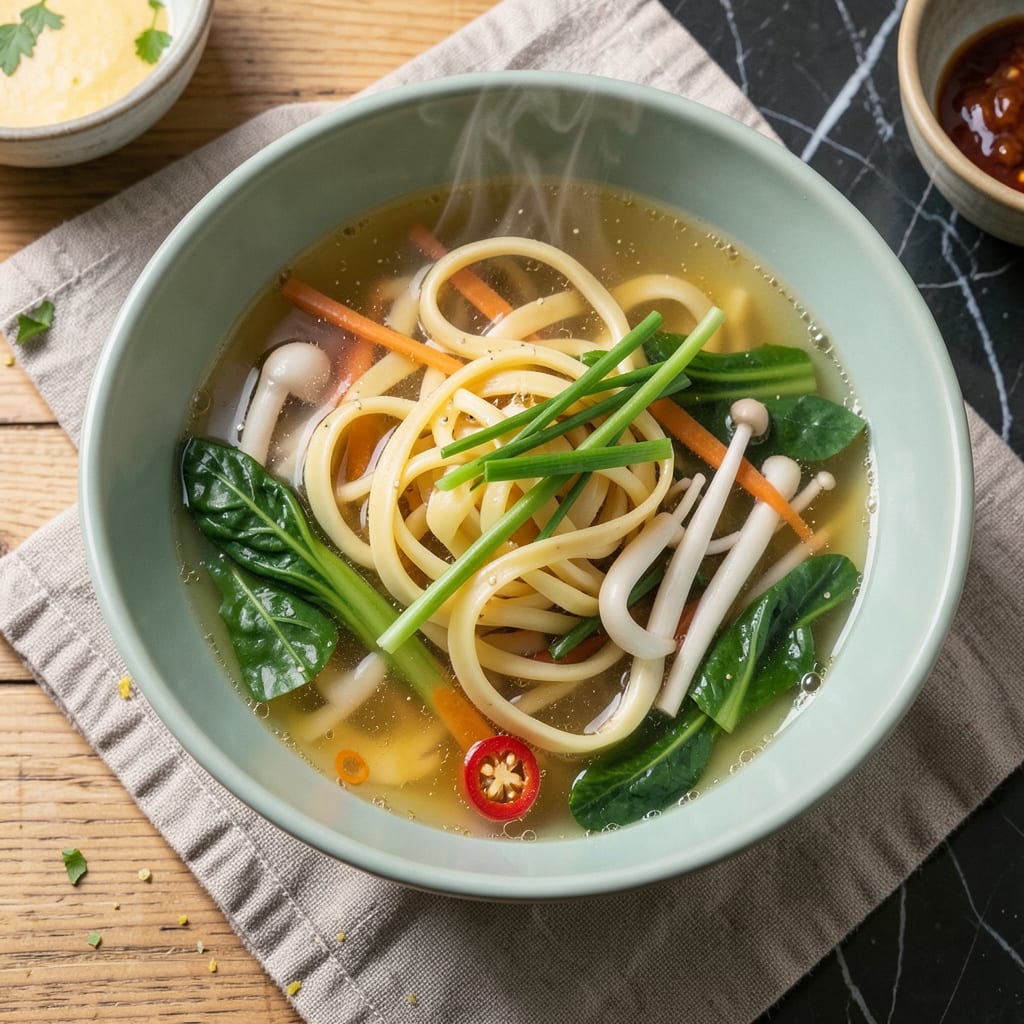
I’ll never forget the first time I saw egg ribbons swirling through hot broth—like golden silk dancing in a bowl. Those delicate strands transform simple soup into something restaurant-worthy, and the technique is easier than you’d think. No fancy tools required, just a whisk, a fork, and about 2 minutes of your time.
Here’s the thing—most people overcomplicate this. You don’t need perfect circles or professional swirling skills. The secret is gentle heat and steady hands. I’ve burned through my share of scrambled egg soup disasters (we’ve all been there), but once you get the rhythm, you’ll be adding these silky ribbons to everything from miso to chicken noodle.
The magic happens when thin egg streams hit simmering broth. They cook instantly, forming tender, wispy strands that float beautifully. I like to finish mine with a drizzle of sesame oil and scallions for extra flair, but even plain, these ribbons elevate any bowl from basic to breathtaking.
Fair warning: this becomes addictive. Once you master the technique, you’ll find excuses to make soup just for the egg ribbons. Let’s get that broth simmering and start swirling—your most elegant bowl of soup is about to happen.
📚 In This Guide
- What You’ll Need
- Instructions
- Tips and Common Mistakes
What Youll Need
- ● Eggs: 2–3 large, fresh and room temperature (cold eggs may not spread as smoothly)
- ● Soup base: 4 cups hot (not boiling) broth—chicken, vegetable, or miso work beautifully
- ● Bowl or measuring cup: A spouted vessel (for easy pouring) or a small ladle
- ○ Fork or chopsticks: For gentle swirling (optional but helpful for even ribbons)
- ○ Small whisk: To lightly beat the eggs (optional—fork works too!)
- ● Slotted spoon: For skimming ribbons if you prefer to serve them separately
- ○ Garnishes (optional): Thinly sliced green onions, sesame seeds, or a drizzle of chili oil for extra flair
Instructions
Creating these delicate egg ribbons is simpler than you might think—just follow these steps for perfect results every time.
Prepare Your Soup Base
Start by bringing your soup to a gentle simmer over medium heat. You want the broth hot enough to cook the eggs immediately, but not at a rolling boil—this would break the ribbons into small pieces instead of creating long, silky strands.
I recommend using a wide, shallow pot or saucepan for this technique. The broader surface area gives you more room to swirl the eggs and create those beautiful ribbons. If your soup contains vegetables or meat, make sure they’re already cooked through before adding the eggs.
Whisk the Eggs Until Smooth
In a small bowl, crack 2 large eggs and whisk them vigorously until completely smooth. I like to add a pinch of salt and white pepper to the eggs at this stage—it enhances their flavor without altering the soup’s appearance.
The key here is to whisk until there are no visible streaks of egg white or yolk remaining. A perfectly homogeneous mixture will create the most uniform ribbons. For extra richness, you can add 1 additional egg yolk to the mixture, but this is optional.
Create the Egg Ribbons
Hold a fork or chopsticks in one hand and the bowl of whisked eggs in the other. Slowly drizzle the eggs in a thin, steady stream into the simmering soup while simultaneously stirring the soup in a circular motion with your fork. The movement of the broth will carry the egg streams into beautiful swirls.
Don’t rush this step—pour the eggs gradually over about 30 seconds. You’ll see the ribbons form almost instantly as the eggs hit the hot broth. The ribbons should look delicate and slightly translucent when first formed, then become more opaque as they cook through.
Let the Ribbons Cook Gently
Once all the eggs are in the soup, let it simmer undisturbed for 1-2 minutes. This allows the ribbons to set completely and develop their signature silky texture. You’ll know they’re done when they float to the surface and appear fully opaque with a slight sheen.
Avoid stirring during this final cooking stage, as this could break your beautiful ribbons. The eggs cook surprisingly quickly in the hot broth, so keep an eye on them. Overcooking will make the ribbons tough rather than tender and delicate.
Serve Immediately
Egg ribbons are best enjoyed right away while they’re still at their peak texture. Ladle the soup into warmed bowls, making sure each serving gets plenty of those gorgeous golden strands. The ribbons should glisten slightly and have a tender, almost custard-like consistency.
For presentation, I like to garnish with some thinly sliced green onions or a drizzle of sesame oil if it complements the soup’s flavor profile. The contrast of the bright green against the golden ribbons makes for an especially elegant presentation that belies how simple this technique actually is.
Tips and Common Mistakes
Mastering egg ribbons is all about patience and precision—here’s what I’ve learned from perfecting this technique.
The Heat Factor: In Step 1, maintaining that gentle simmer at medium heat is crucial. If your broth boils too vigorously, the egg ribbons will break into small pieces instead of forming elegant strands. I find that using a wide, shallow pot helps distribute heat evenly and gives you better control over the simmer. Watch for small bubbles breaking the surface—this is your ideal temperature.
Technique That Changed Everything: Step 3 is where the magic happens, and timing matters. When drizzling the eggs over 30 seconds, use your non-dominant hand to stir the soup while your dominant hand pours. This coordination creates the most beautiful swirls. I learned the hard way that rushing this step results in clumpy eggs rather than delicate ribbons.
What to Watch For: During the 1-2 minutes in Step 4 when the ribbons cook, resist the urge to stir. The eggs set quickly, and any movement can break your carefully formed strands. Look for the ribbons to float to the surface and become fully opaque—this visual cue tells you they’re perfectly cooked. Overcooking by even 30 seconds can make them tough.
Serving Strategy: Step 5 mentions serving immediately for good reason. Egg ribbons lose their silky texture as they sit in hot broth. If you need to hold the soup briefly, remove it from heat and cover to slow the cooking process. When ladling into bowls, use a gentle swirling motion to distribute the ribbons evenly in each serving.
Pro Tips for Make Egg Ribbons In Soup
- Mastering egg ribbons is all about patience and precision—here’s what I’ve learned from perfecting this technique.
- The Heat Factor: In Step 1, maintaining that gentle simmer at medium heat is crucial. If your broth boils too vigorou…
- Technique That Changed Everything: Step 3 is where the magic happens, and timing matters. When drizzling the eggs ove…
Frequently Asked Questions
Can I use any type of soup for egg ribbons?
Egg ribbons work best in clear broths like chicken, vegetable, or miso soup. Avoid thick, creamy soups (like chowder) since the strands won’t be visible. For extra flavor, try it in pho or ramen—the delicate ribbons soak up the broth beautifully!
How do I prevent the eggs from clumping into scrambled bits?
Slow and steady wins the race! Swirl the broth gently in one direction before drizzling the eggs in a thin, continuous stream. Use a fork or chopsticks to lightly stir the eggs immediately after pouring—they’ll form ribbons, not lumps!
Can I make egg ribbons ahead of time?
Not recommended! Egg ribbons cook in 30 seconds and turn rubbery if left in hot broth too long. For meal prep, keep the beaten eggs separate and add them to the soup just before serving. Freshness is key for that silky texture!
What’s a good substitute if I don’t have eggs?
For a vegan twist, try silken tofu (thinly sliced) or chickpea flour batter (whisked with water). They won’t mimic eggs perfectly but add protein and texture. For allergies, aquafaba (whipped chickpea brine) can create wispy strands—experiment!
Why do my egg ribbons sink to the bottom?
If your broth isn’t hot enough (simmering, not boiling), the eggs will sink and stick. Increase heat slightly and pour eggs closer to the surface. A splash of cornstarch in the egg mix (½ tsp per egg) can also help them float!
Now you’ve got the secret to turning simple eggs into delicate, silky ribbons that elevate any soup! 🎀 With just a whisk, a steady hand, and a little practice, you can add restaurant-worthy flair to your homemade bowls—whether it’s a cozy chicken noodle or a bold pho. The best part? It takes under 5 minutes but makes a lasting impression.
Ready to show off your new skill? Try it tonight in your favorite soup recipe, or experiment with different broths and garnishes. Once you’ve mastered the basics, why not explore other egg techniques like poached eggs in ramen or soft-boiled toppings? Happy swirling! 🥄

Trained in classic French technique but raised on slow-cooked ribs and spicy rubs, she blends culinary skill with smoke and soul.
- Recipe for Boneless Pork Chops in Cast Iron Skillet: Sear and Baste to Juicy Perfection - October 3, 2026
- Recipe for Boneless Cross Rib Roast: Slow-Roasted Beef with Herb Crust - October 3, 2026
- Hamburgers in Sauce Recipe Crock Pot: Slow-Cooked Savory Delight - October 3, 2026