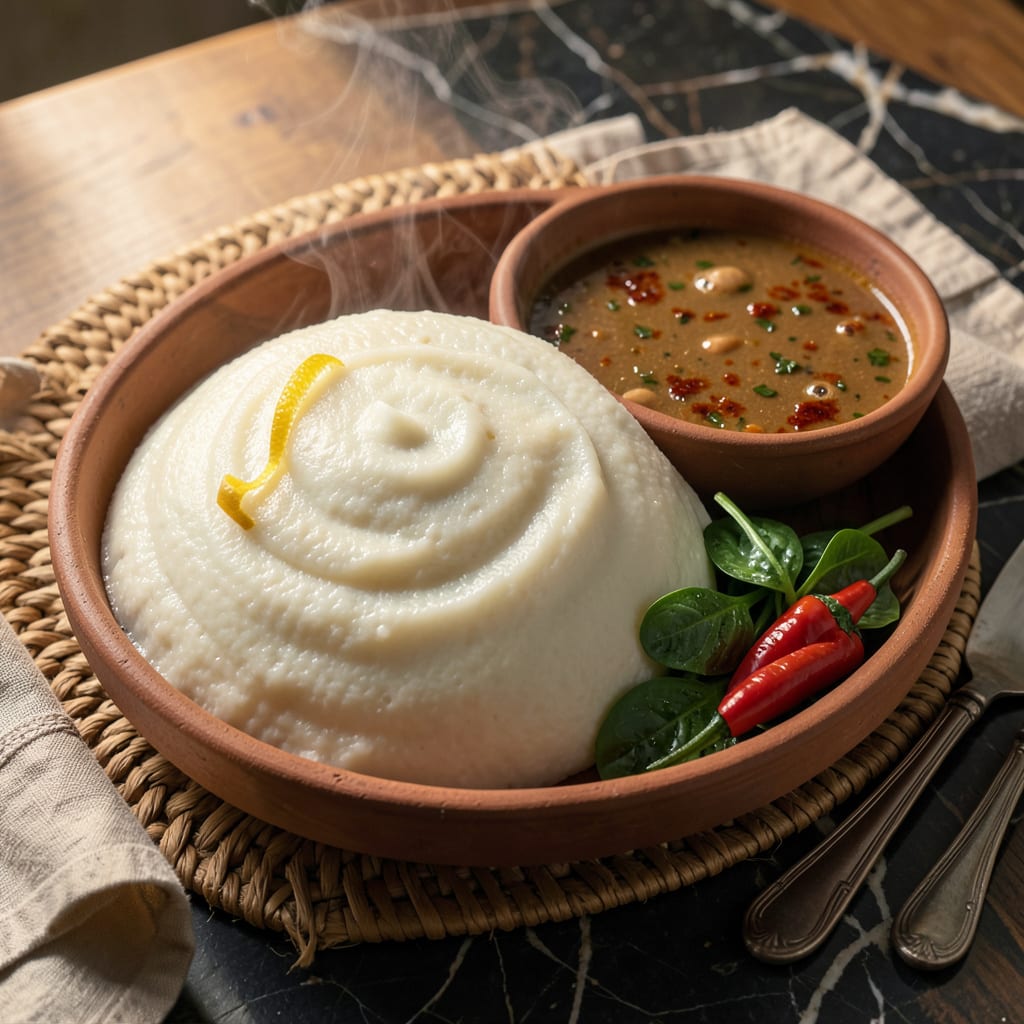
Fufu is made by boiling starchy roots like cassava, yams, or plantains until soft, then pounding them into a smooth, stretchy dough. Traditionally prepared with a mortar and pestle, it’s served as a side with soups or stews.
This West African staple transforms humble ingredients into a versatile, satisfying accompaniment. The pounding process isn’t just about texture—it develops the dough’s signature elasticity, allowing it to absorb rich broths beautifully. 🔥 I’ve found that cassava yields the smoothest consistency, while plantains add subtle sweetness that pairs wonderfully with spicy stews. The key lies in achieving the perfect balance between firmness and pliability, which requires both patience and practice.
What makes fufu special is its role as more than just a side dish—it’s a cultural experience. The communal preparation process often involves rhythmic pounding that brings families together. Modern adaptations using food processors can save time, but purists argue the traditional method creates superior texture and flavor absorption. ✨
💡 In This Article
- Traditional Fufu Preparation Techniques and Tools
- Best Starch Choices and Serving Pairings for Fufu
Traditional Fufu Preparation Techniques and Tools
The magic of fufu happens during the pounding process, where boiled starches transform into a cohesive, elastic dough. Using a wooden mortar and pestle (called an odu in Yoruba), the cooked roots are rhythmically pounded while being turned and folded.
This action breaks down the starch granules and releases amylose molecules, creating that signature stretchy texture. The process typically takes 15-20 minutes of continuous pounding for optimal consistency. 🔥
Temperature plays a crucial role in achieving the perfect fufu. The roots should be boiled until fork-tender (about 20-30 minutes depending on size) but not mushy. In Ghana, they often use a two-step process: first pounding the cassava or yams into a smooth paste, then kneading it with water to develop elasticity.
Nigerian methods sometimes incorporate slight fermentation by letting the boiled roots sit for 1-2 hours before pounding, which enhances the dough’s ability to absorb flavors. ✨
The ideal fufu texture should be smooth yet firm enough to hold its shape when pinched. I’ve found that adding small amounts of water (1-2 tablespoons at a time) during pounding helps achieve this balance.
Traditional wooden mortars are preferred because their porous surface absorbs excess moisture, while modern metal versions can make the dough too sticky. The final test? A well-made fufu ball should stretch without tearing when dipped into soup. 💫
Regional variations add fascinating twists to the process. In Cameroon, they often mix cocoyam with cassava for a denser texture, while Beninese cooks might add a pinch of salt during pounding.
The rhythmic pounding technique varies too – some cultures use a two-person method where one turns the dough while the other pounds, creating a mesmerizing cadence that’s as much about tradition as it is about texture development. ⚡
What most people don’t realize is that the pounding motion actually aligns the starch molecules in parallel chains, similar to how gluten develops in bread dough. This molecular alignment gives fufu its unique ability to stretch and absorb liquids without dissolving.
The process also slightly gelatinizes the starches, creating that velvety mouthfeel that makes fufu so satisfying to eat. 🌟
For those attempting fufu at home, remember that the dough will continue to firm up as it cools. Aim for a consistency that’s slightly softer than your final desired texture when hot.
And don’t be discouraged if your first attempts aren’t perfect – even experienced cooks say it takes practice to develop the right rhythm and feel for the dough’s readiness. 💛

Trained in classic French technique but raised on slow-cooked ribs and spicy rubs, she blends culinary skill with smoke and soul.
- Recipe for Boneless Pork Chops in Cast Iron Skillet: Sear and Baste to Juicy Perfection - October 3, 2026
- Recipe for Boneless Cross Rib Roast: Slow-Roasted Beef with Herb Crust - October 3, 2026
- Hamburgers in Sauce Recipe Crock Pot: Slow-Cooked Savory Delight - October 3, 2026